 111
111 2
2 3
3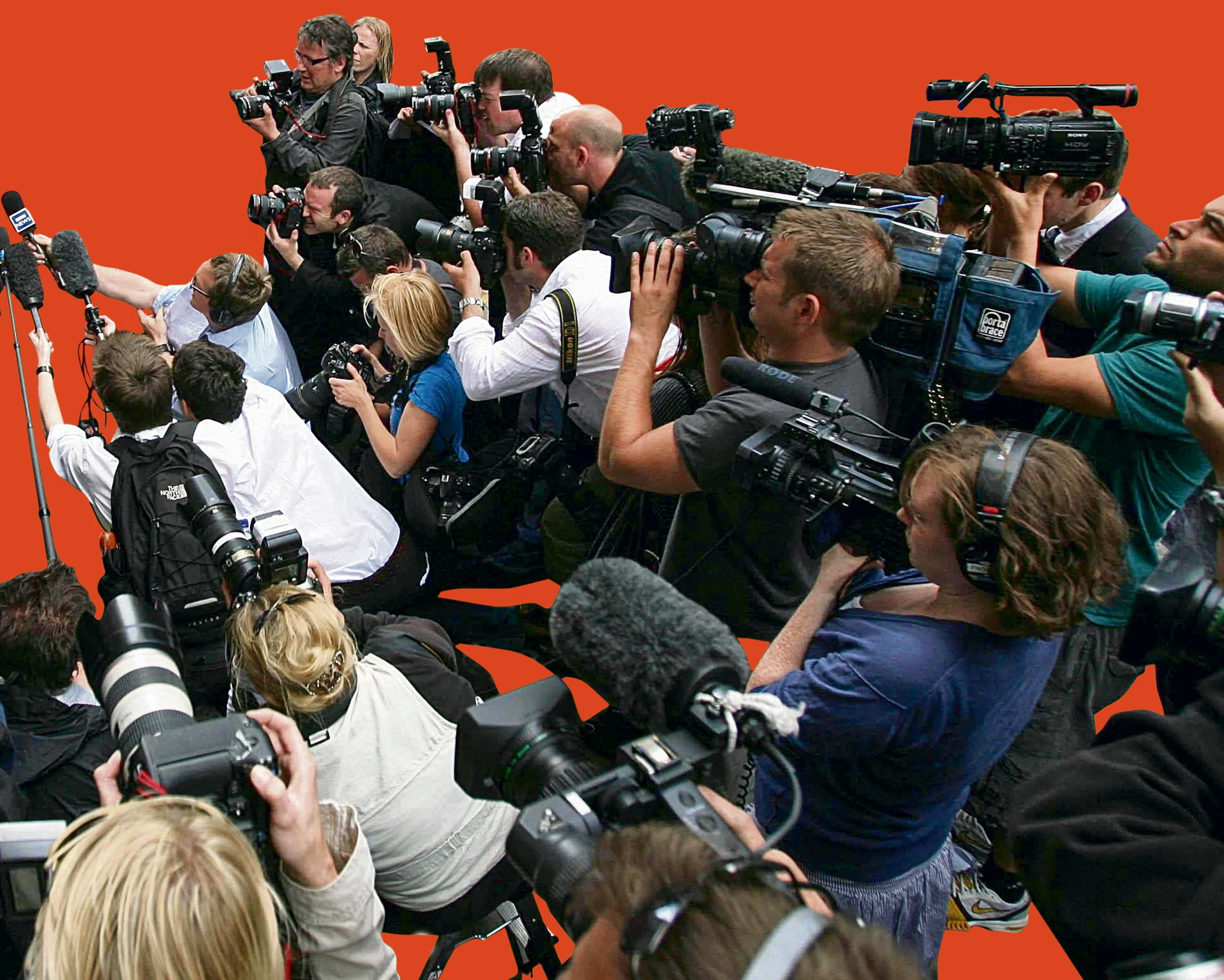
LONDON: Nearly half of journalists in the United Kingdom say concerns about their personal safety have influenced how they report the news, with many admitting they have altered or avoided coverage of sensitive issues because of threats, harassment and intimidation, according to a new government-backed study.
The independent research, based on a survey of 531 journalists and 55 in-depth interviews, found that almost half of respondents said safety concerns affected how they covered certain stories, while around one-third acknowledged changing or avoiding reporting on particular topics altogether. Issues most frequently cited included right-wing anti-immigration protests, the administration of U.S. President Donald Trump, and debates surrounding transgender rights.
Journalists reported that online abuse, threats on social media and increasing public hostility have become routine aspects of their work. Many said the rise of video journalism and their greater public visibility have made them more vulnerable to harassment, while female journalists described experiencing disproportionate levels of gender-based and sexualized abuse.
The study also found that reporters covering protests and demonstrations, particularly in Northern Ireland, faced an elevated risk of intimidation and physical threats. Respondents linked the deteriorating environment to declining public trust in traditional media and the growing influence of so-called citizen journalism on digital platforms.
Although the report noted that the UK remains a relatively safe country for journalists compared with many parts of the world, it warned that threats and abuse are becoming increasingly normalized within the profession. The National Union of Journalists (NUJ) called for stronger action by social media companies, employers and public authorities to better protect journalists and safeguard press freedom.
The findings have renewed concerns about the potential impact of intimidation on independent journalism, with media organizations and press freedom advocates warning that self-censorship driven by safety fears could undermine the public’s access to accurate and impartial reporting.