 111
111 2
2 3
3
The revelation that the United States has used “virtually all” of its Army Tactical Missile Systems (ATACMS) and Precision Strike Missiles (PrSM) during the five-month conflict with Iran marks more than a battlefield statistic—it underscores a growing challenge for Washington’s global military posture. According to Reuters, the extensive consumption of long-range precision munitions has raised concerns among defense officials and analysts about America’s preparedness for potential simultaneous crises involving major powers such as China or Russia.
Long-range precision missiles have become indispensable in modern warfare because they enable militaries to strike strategic targets from safe distances while minimizing risks to personnel. The heavy reliance on these systems during the Iran conflict demonstrates how high-intensity wars rapidly consume advanced munitions that require years—not months—to replenish. Reuters reports that, in addition to ATACMS and PrSM, the United States has also expended significant portions of its Tomahawk cruise missile inventory, along with Patriot and THAAD interceptor missiles.
From a strategic perspective, the development highlights a broader issue confronting major military powers: industrial capacity has not kept pace with the demands of prolonged, high-tech warfare. Since the outbreak of the Russia-Ukraine conflict and subsequent tensions across the Middle East and Indo-Pacific, defense planners have increasingly warned that existing production lines are insufficient for sustained military campaigns. Modern precision-guided weapons are technologically sophisticated and costly to manufacture, making rapid replenishment difficult even for the world’s largest defense industry.
The reported depletion also raises questions about deterrence. Military strength is measured not only by the quality of weapons but also by the ability to sustain operations over time. A reduced stockpile may influence how allies and adversaries assess Washington’s readiness to respond to emerging crises. Potential rivals could interpret constrained inventories as a temporary vulnerability, while U.S. allies may seek reassurances regarding America’s long-term security commitments.
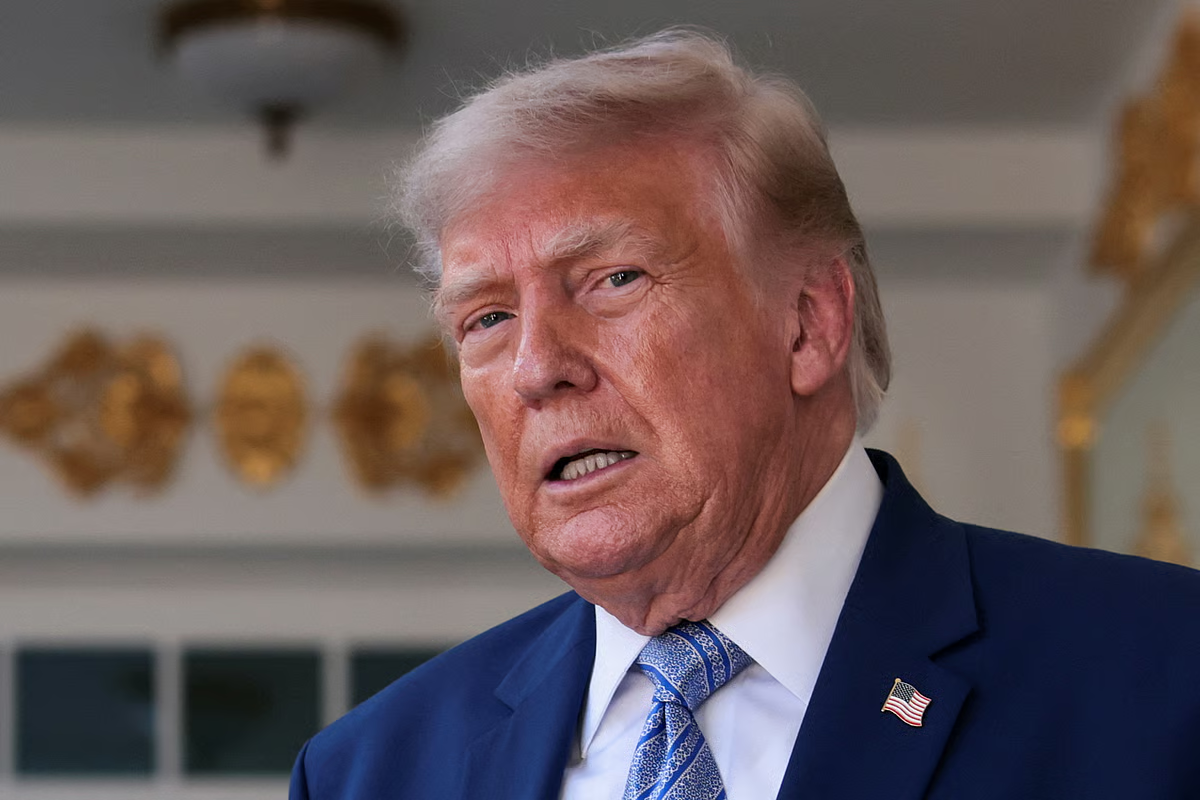
The situation is likely to accelerate efforts in Washington to expand domestic defense manufacturing. President Donald Trump has maintained that the United States possesses sufficient military capabilities and has pledged to increase weapons production significantly. However, defense analysts caution that expanding production of advanced missile systems requires substantial investments, specialized supply chains, and time before additional inventories become operational.
Beyond the immediate military implications, the episode illustrates a changing reality in contemporary warfare. Precision-guided munitions have become central to military strategy, but their effectiveness depends on sustained industrial resilience. The Iran conflict has therefore evolved into a case study in the importance of defense manufacturing, logistics, and stockpile management alongside battlefield tactics.
Ultimately, the reported strain on U.S. missile inventories may influence future defense planning, procurement priorities, and alliance strategies. Whether Washington can rapidly rebuild its precision-strike arsenal while maintaining deterrence across multiple theaters will be a key factor shaping the global security environment in the years ahead.