 111
 2
 3
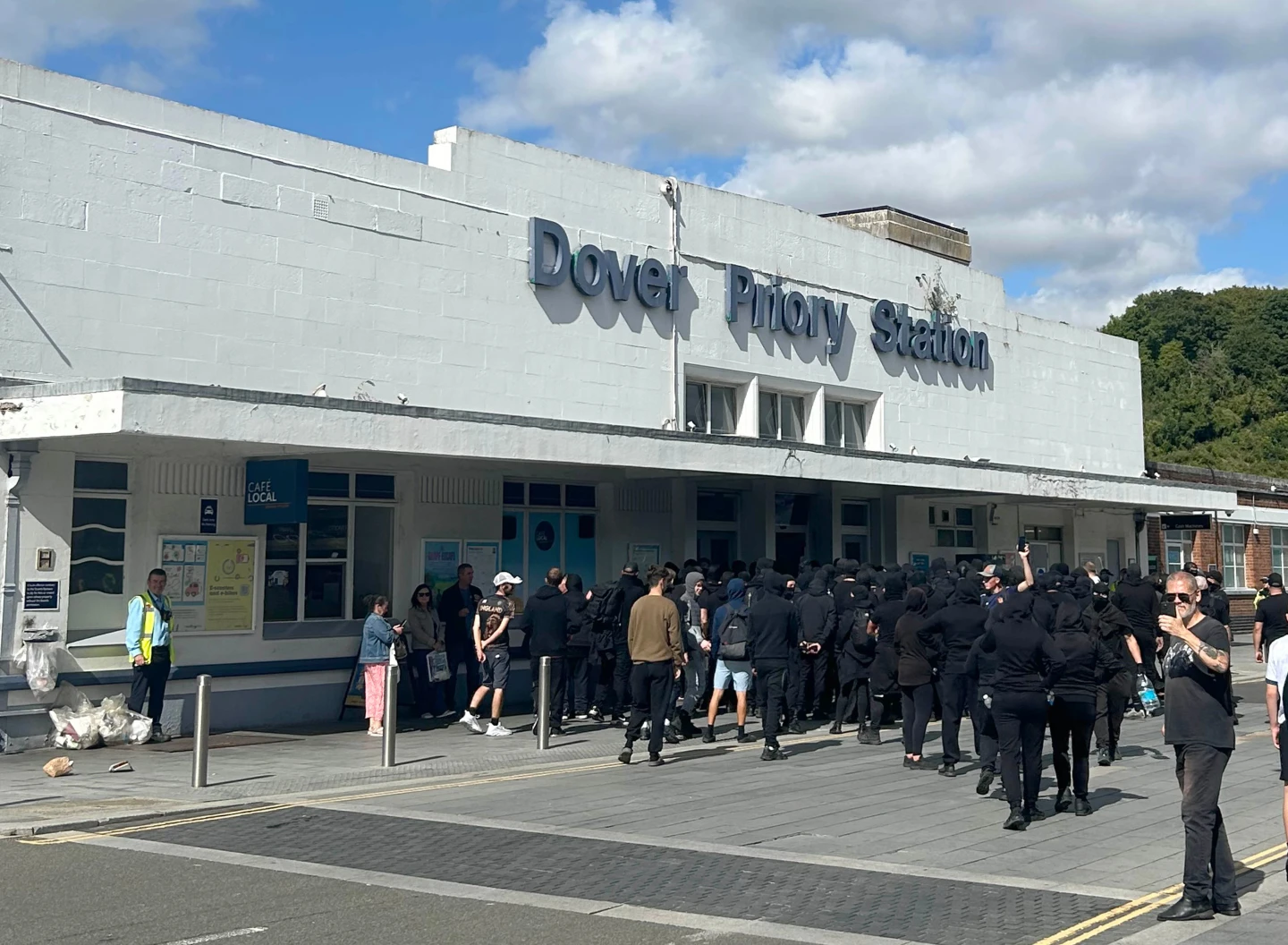
LONDON: The British government has condemned a protest by dozens of masked anti-immigration demonstrators who blocked roads leading to the Port of Dover on Saturday, disrupting passenger and freight traffic at one of the United Kingdom’s busiest ferry terminals.
The protesters, dressed in black and wearing balaclavas, blocked major access routes to the port, including the A20, bringing traffic to a standstill and causing a queue stretching about four miles (6.4 km). Video footage showed demonstrators linking arms across the road and chanting slogans including “stop the boats.”
The Port of Dover described the situation as an ongoing public-order incident and said all traffic entering and leaving the port had initially been stopped. Kent Police said officers were at the scene and engaging with the protesters.
The British government said the right to peaceful protest was fundamental to democracy but condemned the behaviour in Dover and the disruption caused to travelers and local residents.
Ferry operators were forced to manage delays caused by the blockade. P&O Ferries said its sailings were continuing as scheduled and that passengers who missed their departures would be accommodated on the next available crossing. Access to the port was restored before midday after the protesters dispersed.
The demonstration appeared to be linked to opposition to migrants crossing the English Channel in small boats from France. Dover has previously been a focal point for protests over irregular migration, an issue that remains politically contentious in Britain.
The British government said cooperation with France had helped reduce the number of people making the Channel crossing by more than 40% compared with the same period in 2025. Labour MP Mike Tapp, who represents Dover, criticized the protesters for causing disruption and argued that the decline in small-boat crossings demonstrated progress in efforts to address the issue.
The incident has renewed concerns about the impact of anti-immigration demonstrations on public order, transport links and the local community, while immigration and border control remain among the most politically sensitive issues in Britain.