 11
11
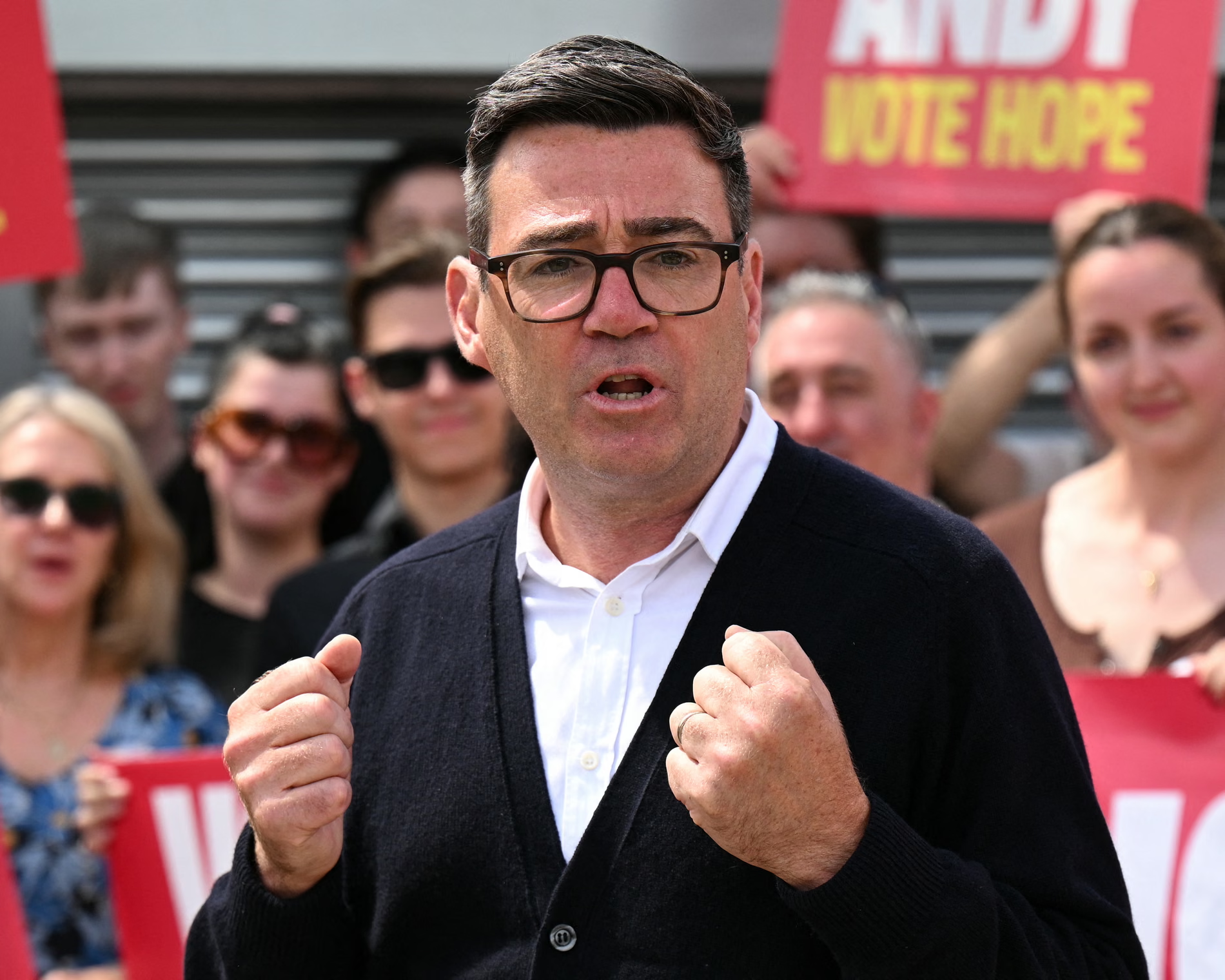
As the United Kingdom prepares for a political transition under incoming Prime Minister Andy Burnham, one of the most contentious policy debates concerns defence spending and whether increasing military expenditure should remain beyond political scrutiny.
The successive governments have increasingly treated defence as an untouchable priority, largely due to heightened geopolitical tensions following Russia’s invasion of Ukraine and broader concerns about European security. While acknowledging the importance of national defence, the author argues that every additional pound directed towards military capabilities inevitably limits resources available for healthcare, education, housing and local government services.
Britain, like many NATO members, has committed itself to raising defence expenditure in response to evolving security challenges. However, the analysis questions whether public debate has adequately examined the opportunity costs of these commitments. With economic growth remaining subdued and public finances under strain, policymakers face increasingly difficult choices over budget priorities.
In my suggestion, Andy Burnham’s incoming administration should resist political pressure to automatically endorse every proposed increase in defence spending. Instead, it argues that military investment should be subject to rigorous assessment alongside other national priorities, ensuring that spending decisions are based on strategic necessity rather than political convention or symbolic commitments.
Supporters of higher defence budgets maintain that the deteriorating international security environment justifies sustained investment. Russia’s continued military activities, growing global instability and commitments to NATO have reinforced arguments that Britain must strengthen its armed forces, modernise military capabilities and maintain credible deterrence. They argue that national security is a prerequisite for economic stability and long-term prosperity.
At the same time, the article reflects wider concerns over Britain’s fiscal constraints. The OECD has recently advised the UK to maintain budget discipline while addressing long-term pressures from healthcare, pensions and weak productivity. These competing demands mean that substantial increases in defence spending could intensify pressure on other government departments unless accompanied by stronger economic growth or higher public revenues.
Ultimately, the debate highlights a broader policy dilemma facing modern governments: how to balance national security with domestic investment during a period of limited fiscal capacity. Whether Andy Burnham chooses to challenge the prevailing political consensus on defence spending may become an early indicator of his government’s broader economic and fiscal philosophy.