 11
11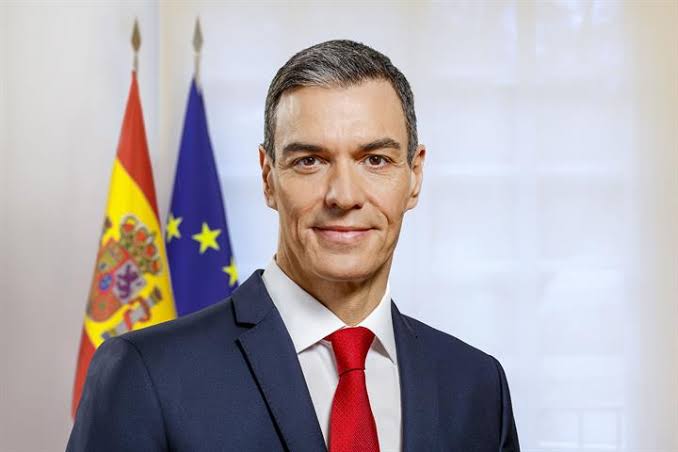
The migration crisis in Ceuta, Spain’s North African enclave, has evolved beyond a humanitarian emergency into a broader geopolitical and ideological test for Spanish Prime Minister Pedro Sánchez. The arrival of more than 70,000 migrants has exposed deep divisions within the European Union over migration, foreign policy, and the future direction of European politics.
Pedro Sánchez has increasingly distinguished himself from many European leaders through progressive domestic and foreign policies. His government has advocated relatively humane migration policies while also taking independent positions on international issues, including support for Palestinian statehood, criticism of aspects of Israeli military operations, continued backing for Ukraine, and maintaining diplomatic engagement with countries outside the traditional Western consensus.
However, Europe’s political center of gravity has gradually shifted toward stricter migration controls, stronger border enforcement, and growing influence of conservative and far-right parties. Leaders in countries such as Italy, Hungary, and several northern European states have increasingly prioritized border security over humanitarian considerations. This changing political climate has left Sánchez more isolated than during previous migration crises.
The mass crossings into Ceuta are not viewed merely as an immigration issue. Many analysts argue that Morocco has demonstrated its ability to use migration flows as diplomatic leverage during periods of political disagreement with Spain.
Ceuta and Melilla occupy a unique geopolitical position. Although internationally recognized as Spanish territories, Morocco continues to claim sovereignty over both enclaves, making migration an instrument of political pressure whenever bilateral relations become strained.
For Madrid, this creates a difficult balancing act. Spain depends on Morocco’s cooperation for border management, counterterrorism, and trade, yet excessive dependence also provides Rabat with significant diplomatic leverage.
During earlier migration crises, Spain generally received strong expressions of solidarity from European institutions. In the current crisis, however, several European leaders have instead criticized Sánchez’s migration policies, arguing that softer immigration approaches encourage irregular migration.
This reflects a broader transformation in European politics where migration has become one of the continent’s defining electoral issues. Right-wing parties have successfully framed border security as central to national sovereignty, influencing even mainstream political parties to adopt tougher positions.
The crisis also places Sánchez under considerable domestic pressure. Opposition parties have accused his government of failing to protect Spain’s borders, while some of his coalition partners have questioned aspects of Spain’s broader relationship with Morocco.
The situation therefore presents challenges from both directions:
The Guardian’s analysis suggests that Sánchez’s independent foreign policy has also contributed to his diplomatic isolation. His willingness to diverge from Washington and some European partners on Middle East issues has complicated Spain’s international positioning at a time when migration requires broad international cooperation.
Whether these factors directly influenced the Ceuta crisis remains open to debate, but they illustrate how foreign policy decisions increasingly intersect with domestic political vulnerability.
The Ceuta episode highlights several wider trends affecting Europe:
Pedro Sánchez’s handling of the Ceuta crisis represents more than a test of Spain’s border management capabilities. It illustrates the growing tension between progressive governance and an increasingly security-focused European political environment.
As migration, geopolitical competition, and domestic politics become more closely interconnected, Spain finds itself navigating a complex landscape in which humanitarian commitments, national security, diplomatic relations, and electoral pressures are increasingly difficult to reconcile. The outcome of this crisis may influence not only Sánchez’s political future but also Europe’s broader approach to migration and external border management.