 11
11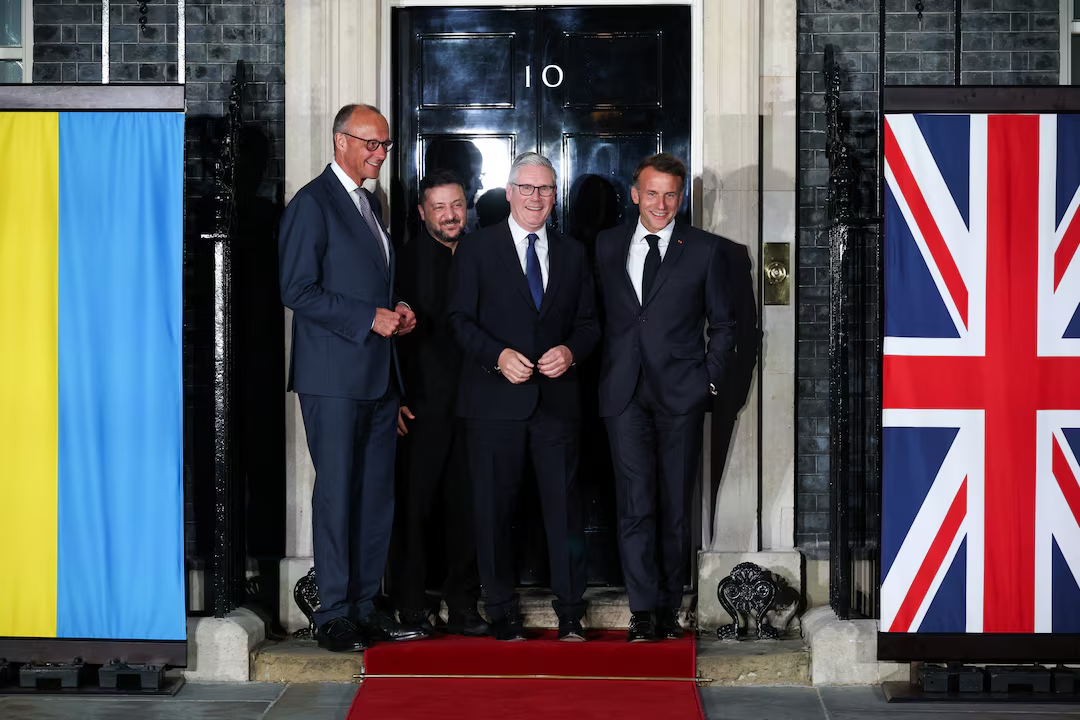
London: The leaders of Britain, Germany and France have expressed support for a proposal aimed at facilitating direct talks between Ukrainian President Volodymyr Zelenskiy and Russian President Vladimir Putin in an effort to achieve a ceasefire and advance peace negotiations in Ukraine.
In a joint statement issued on Sunday, British Prime Minister Keir Starmer, German Chancellor Friedrich Merz and French President Emmanuel Macron welcomed President Zelenskiy’s call for an end to the war through diplomatic means and endorsed his proposal for direct dialogue between Ukraine and Russia with active participation from both the United States and Europe.
The three leaders, who head the informal E3 security alliance—one of Ukraine’s key international support groups—met with Zelenskiy in London on Sunday to discuss the ongoing conflict and prospects for peace.
“Leaders commended President Zelenskiy’s call for an end to the war, negotiated by diplomatic means, as set out in his letter to the president,” the joint statement said.
The meeting came as Ukraine continues to face some of the most intense Russian aerial assaults since the conflict escalated in 2022, including major attacks on the capital, Kyiv.
In a post on X, Zelenskiy said he had also discussed Ukraine’s urgent need for additional air defence missiles with Starmer. He reiterated the importance of strengthening Ukraine’s defences against ballistic missile threats while continuing efforts to revive diplomacy.
“Russia is not winning on the battlefield, and our mid-range and deep strikes are significantly limiting its ability to expand its aggression. But it is also extremely important to have protection against ballistic threats, with which the Russians are terrorizing our cities and communities,” Zelenskiy said.
The Ukrainian president recently published an open letter proposing face-to-face talks with Putin to help end the war, now entering its fifth year. However, the proposal was rejected by the Russian leader, who questioned its sincerity and argued that any future settlement must be based on a long-term agreement.
In his letter, Zelenskiy argued that Russian society was increasingly feeling the impact of the war through economic pressures, including inflation and fuel shortages, and suggested that conditions were becoming more favorable for peace efforts.
He also stressed that Europe should not delay diplomatic initiatives while the United States remains focused on tensions in the Middle East, particularly the conflict involving Iran.
During their discussions in London, the four leaders outlined key conditions for achieving what they described as a “just and lasting peace.” These include an immediate and comprehensive ceasefire, negotiations based on the current line of contact, legally binding security guarantees for Ukraine—including the possible deployment of a multinational force—and the continued freezing of Russian assets until compensation is provided for war-related damages.
The leaders also emphasized the need to safeguard Europe’s broader security interests as part of any future settlement.
Zelenskiy said the talks focused on ways to reinvigorate diplomacy and strengthen Europe’s role in the peace process.
“For Ukraine, it has always been a priority that Europe’s position and voice in the negotiations be strong,” he said.