 11
Jerusalem: Palestinian citizens of Israel have achieved a rare political breakthrough, voting in record numbers and delivering the largest-ever number of Knesset seats to two Arab-led parties, a result that positions them as a potential kingmaker in efforts to unseat Prime Minister Benjamin Netanyahu.
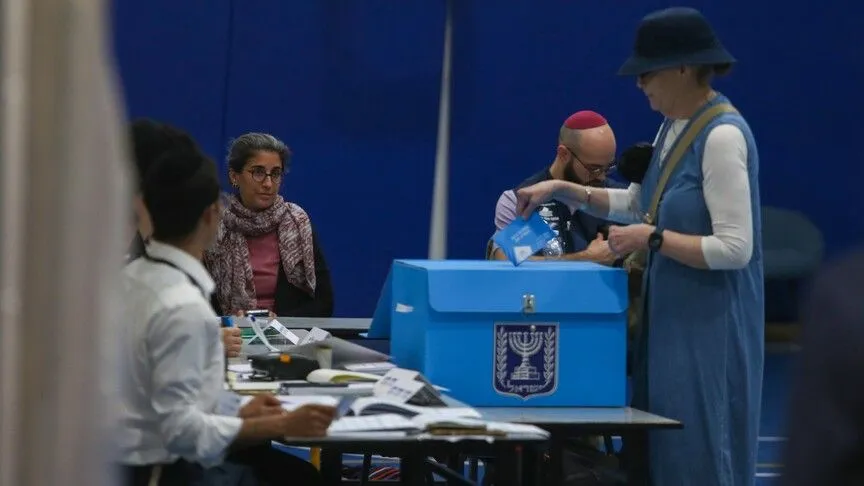
Hundreds of thousands of Arab citizens, many of whom had boycotted previous elections, turned to the ballot box in response to what they describe as years of demonisation and neglect under the most right-wing government in Israel’s history.
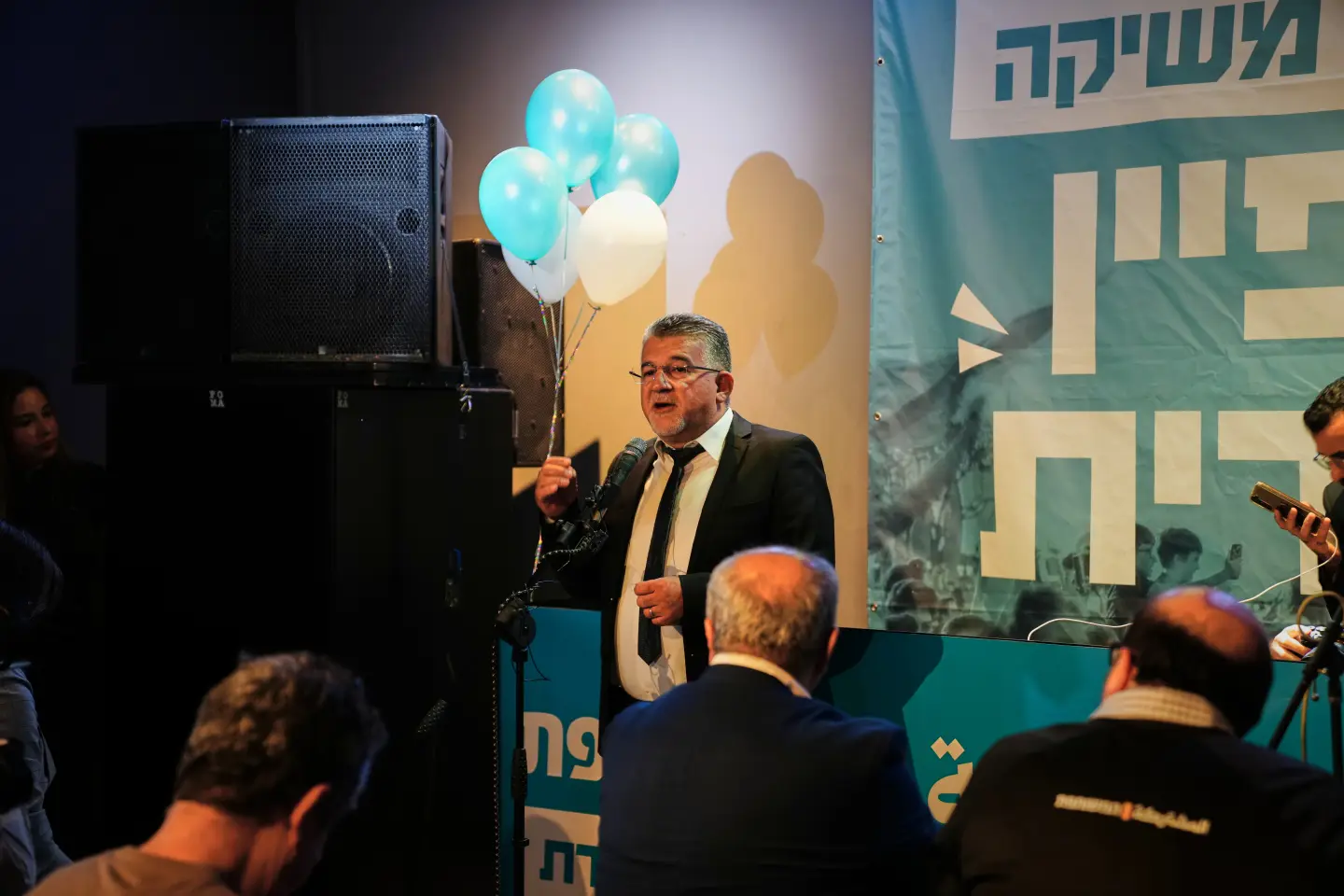
“We are here and we’re not on the sidelines,” declared Mansour Abbas, leader of the Ra’am party, as supporters gathered in a wedding hall on Tuesday night to watch the exit polls.
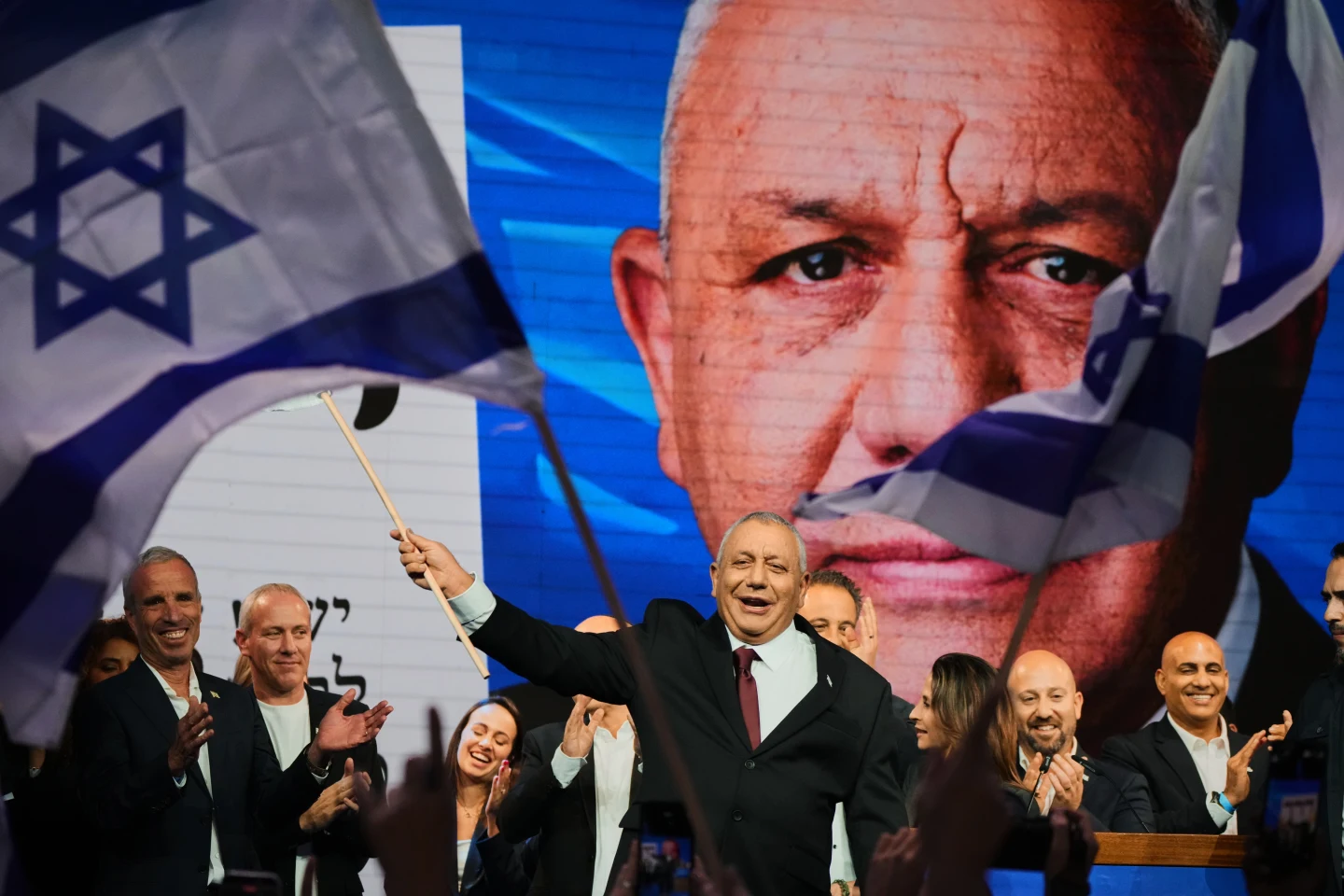
The surge has made the Arab-led parties a major political force capable of helping the opposition assemble a governing coalition. However, it remains uncertain whether Netanyahu’s main rival, Gadi Eisenkot, and other opposition leaders will be willing to ally with them. Only once in Israel’s history has an Arab-led party served in government. During the campaign, Netanyahu accused his opponents of planning such a coalition, a charge Eisenkot denied.
Netanyahu and his allies have since intensified their anti-Arab rhetoric, advancing unproven claims that foreign powers bribed voters to support Arab-led parties. In a post on X on Thursday, Netanyahu warned that any government formed with these parties would lead to the “Islamization of Israel.”
Historic Turnout Across Arab Communities
According to the Central Election Committee, more than 800,000 voters backed Ra’am and the Joint List, an alliance of three Arab-led parties, marking an increase of over 60 percent compared with the 2022 elections. The parties secured 19 seats in the 120-member Knesset, surpassing their previous record of 15.
Polling stations in Arab communities from the Negev Desert to the Galilee in the north saw large crowds. In Tarabin, a Bedouin village in the Negev where Netanyahu’s party had won majorities in the previous two elections, turnout nearly doubled and Ra’am captured 93 percent of the vote.
The northern town of Sakhnin recorded the country’s highest turnout at 87 percent. Its mayor, Mazen Ghnaim, a Ra’am supporter, said residents viewed voting as an emergency response to rising violent crime in Arab communities and incitement by Netanyahu’s far-right partners. “I want to protect my constituents from being killed, my children from being attacked at their universities and Arab doctors getting attacked at hospitals,” he said, referring to recent incidents of anti-Arab violence.
The parties invested heavily in overcoming long-standing voter apathy, holding community meetings in towns largely overlooked by Jewish-led parties, while a grassroots campaign went door-to-door in Bedouin villages to encourage women to vote.
A Response to the Far Right
Voters and candidates said the higher participation reflected not renewed confidence in Israeli democracy but a determination to remove Netanyahu from power. Two of his far-right allies, National Security Minister Itamar Ben Gvir and Bezalel Smotrich, have been associated with some of the country’s most hardline policies and anti-Arab rhetoric.
On Election Day, Ben Gvir sounded the alarm over Arab turnout, urging supporters to vote if they wanted Israel to “remain Jewish and Zionist.” Observers suggest such rhetoric, also echoed by Netanyahu and Smotrich, may have further mobilised Arab voters. “We see the government going from bad to worse,” said Awni Zoabi, 52, after voting in Nazareth. “We want to live, we want a future for our children, and we want a future for ourselves.”
Diverging Visions
Palestinian citizens of Israel, descendants of those who remained after the 1948 war when hundreds of thousands were expelled or fled, now constitute more than 20 percent of the population. While they hold full voting rights, many feel strong solidarity with Palestinians in Gaza and the West Bank.
Both Ra’am and the Joint List campaigned on tackling crime and securing investment for Arab communities, but differed sharply on the broader conflict. Ra’am emphasised the benefits of joining a governing coalition, avoided positions likely to alienate potential Jewish partners, and placed a Jewish former police official second on its list. Members of the Joint List, by contrast, described Israel’s campaign in Gaza as genocide and likened the West Bank occupation to apartheid South Africa, accusations firmly rejected by most Jewish Israelis.
“Of the two options, one is proposing a genocide, and the other is proposing apartheid. These are the choices: bad or worse,” said Sami Abou Shehadeh, leader of one of the Joint List’s constituent parties.
Uncertain Path to Government
Mainstream Israeli parties have historically resisted partnerships with Arab-led parties, portraying them as a threat to the country’s Jewish character. A notable exception came in 2021, when Netanyahu’s opponents brought Ra’am into a short-lived coalition in exchange for investment in Arab communities and legal recognition for Bedouin villages facing demolition, breaking a long-standing taboo.
Tamar Hermann, senior research fellow at the Israel Democracy Institute, said that given Israel’s rightward shift, Eisenkot would find it difficult to retain support if he partnered with Arab-led parties. She observed that Israel has been “moving away from a liberal democracy and moving toward an ethnic democracy.”
Ra’am and the Joint List could readily provide Eisenkot with the numbers required, and both have signalled openness to any arrangement that removes Netanyahu, including abstaining in a Knesset leadership vote to lower the threshold for a majority. Publicly, however, Eisenkot has set conditions, including that they affirm Israel as a Jewish and democratic state and declare Hamas a terrorist organisation “to be demolished.”
Leaders of both parties have condemned Hamas’s October 7, 2023 attack on Israel but have stopped short of labelling the group a terrorist organisation. Abbas recognised Israel as a Jewish state in 2021, while some Joint List leaders have questioned whether a state can be democratic while privileging members of one religion.
Abbas said on Tuesday he was confident Ra’am would join a government, though the party did not clarify whether it would accept Eisenkot’s conditions. Joint List leader Yousef Jabareen told The Associated Press he had not yet spoken with Eisenkot but was ready for talks, seeking protections and equality for Palestinian citizens and a revival of the peace process. “We have promised our community to do our best to get rid of this fascist government,” he said.