 111
 2
 3
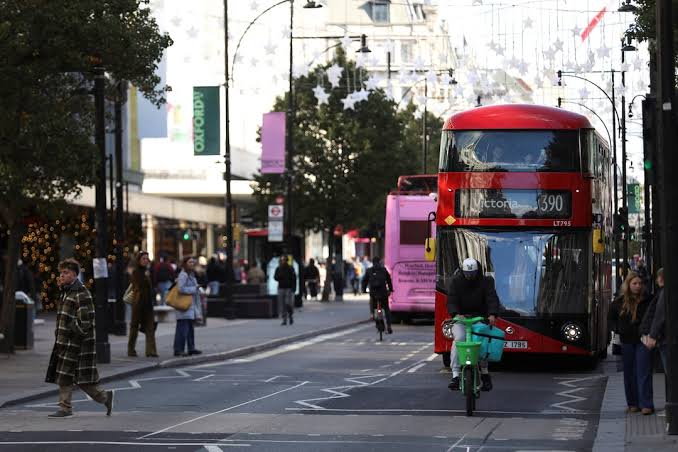
LONDON: A stretch of almost one kilometre of London’s Oxford Street, one of the world’s best-known shopping destinations, became free of traffic on Monday, bringing to life a pedestrianisation plan that had been debated for decades and repeatedly shelved.
The traffic-free section runs between Orchard Street, near Marble Arch, and Great Portland Street. Cars, buses, taxis, private hire vehicles, bicycles, scooters and pedicabs are now barred from this part of the street, although emergency vehicles keep full access and deliveries and servicing are permitted during designated overnight hours. The last buses and taxis travelled along the route shortly before 8pm on Sunday evening.
Mayor of London Sadiq Khan, who made the pedestrianisation of Oxford Street a central pledge when he first ran for office in 2016, welcomed the change as the beginning of a new era for the street. His earlier attempt stalled in 2017 when Westminster City Council withdrew its support. The project was revived through the creation of the Oxford Street Development Corporation, which took over planning powers for the area, and Mr Khan gave final approval in February 2026 following two rounds of public consultation. City Hall has said that a majority of respondents backed the scheme, and an earlier consultation found that 63 percent of Londoners supported it.
The UK government has also endorsed the project. Angela Rayner, Secretary of State for Housing, Communities and Local Government, described it as a new chapter for the street that would create a greener and livelier destination, attract visitors and investment, and support jobs and growth in central London.
The changes have required a significant reorganisation of the capital’s bus network. Transport for London has altered around sixteen routes, with services that previously ran along Oxford Street now diverted onto nearby Wigmore Street and Henrietta Place, roughly 200 metres away, and several routes, including the 7 and the 94, now ending at Marble Arch. Underground and rail services are not affected.
The scheme has drawn criticism from some local representatives and residents. Westminster councillor Elliot Keck warned that closing the street to through traffic would push vehicles onto surrounding residential roads and that cuts and diversions to bus routes would make some journeys harder for passengers. Others have questioned the decision to remove buses from a street where private cars were already largely restricted during daytime hours.
Officials describe the opening as the first stage of a phased transformation, with the initial layout designed to gather feedback from residents, businesses, visitors and accessibility groups. More than 50 new trees and over 100 new seats are expected to be installed by the end of spring 2027, as authorities seek to revive footfall on a high street that has faced pressure from online shopping and changing consumer habits in recent years.