 11
11
STOCKHOLM: Sweden is set to hold parliamentary elections on Sunday, with Prime Minister Ulf Kristersson seeking a second four-year term and former Prime Minister Magdalena Andersson leading the center-left opposition in a closely watched contest that could determine the country’s political direction.
More than 8 million eligible voters will cast ballots for Sweden’s 349-seat Riksdag, which will ultimately determine who can form the next government. The election has focused less on individual policy questions and more on which political bloc can assemble a parliamentary majority.
Kristersson has governed since 2022 through a three-party center-right coalition that relies on parliamentary support from the Sweden Democrats, an anti-immigration party with far-right roots. If the right-wing bloc retains power, the Sweden Democrats are expected to enter the government for the first time, after Kristersson said in April that his Moderate Party would allow the party to take Cabinet positions.
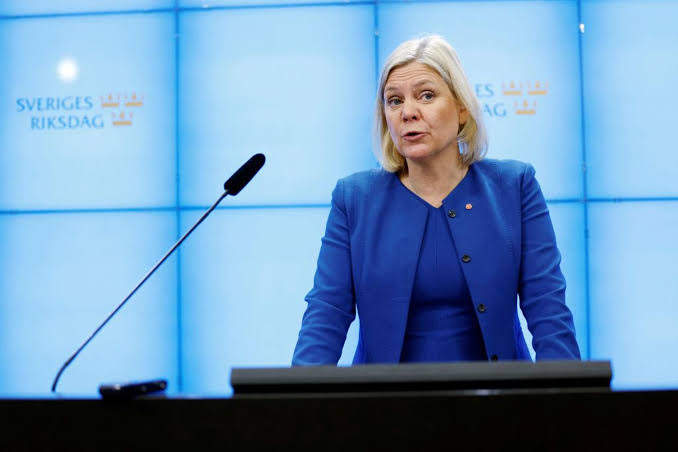
Andersson, leader of the Social Democrats, served as prime minister from 2021 to 2022 and is seeking to return the center-left to government. The Social Democrats have historically been Sweden’s dominant governing party, but the current campaign has been marked by competition among several parties and uncertainty over the formation of the next governing coalition.
Sweden’s political landscape is divided between two broad blocs, each comprising four parties. Parties must secure at least 4% of the national vote to win seats in parliament, making the performance of smaller parties potentially decisive in determining which side can command a majority.
The Sweden Democrats’ potential entry into government has emerged as one of the most significant features of this election. The party received 20.5% of the vote in 2022 and became the largest party on the right, while its past links to extremist groups continue to generate political controversy.
Foreign policy and national security are also important considerations. Sweden, which joined NATO in 2024 following Russia’s full-scale invasion of Ukraine, has maintained broad political support for Ukraine and strong opposition to Russia. Recent allegations concerning pro-Russian social media activity involving a parliamentary staffer linked to the Sweden Democrats have nevertheless added further scrutiny to the party during the campaign.
The election outcome will therefore determine not only whether Kristersson remains prime minister or Andersson returns to office, but also whether the Sweden Democrats enter the Cabinet and how Sweden’s political alliances evolve in the coming parliamentary term.