 11
11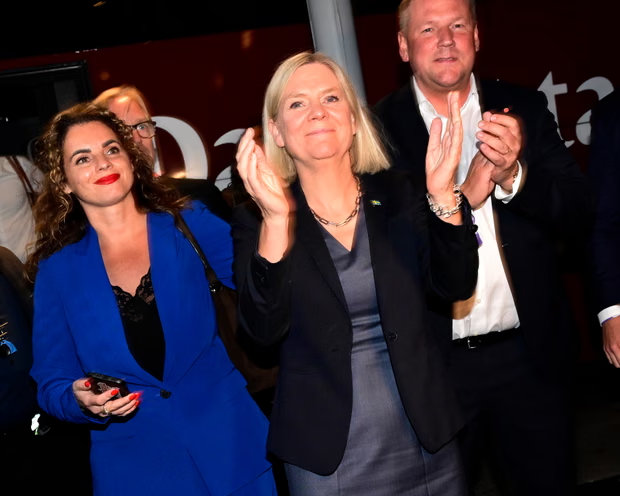
STOCKHOLM: Sweden’s parliamentary election remained too close to call as vote counting continued Monday, with the centre-left opposition holding a narrow one-seat lead over the governing right-wing bloc.
With around 80% of ballots counted, the opposition parties led by Social Democratic leader Magdalena Andersson had secured 175 seats, compared with 174 for the right-wing bloc headed by Prime Minister Ulf Kristersson. The final result could take several days, with overseas and late votes still to be counted.
The election has attracted particular attention because of the potential for the Sweden Democrats, the country’s major far-right and anti-immigration party, to enter government for the first time. The party has supported Kristersson’s centre-right government from outside the Cabinet since 2022 and has been promised a more prominent role, including ministerial positions, if the right-wing bloc retains power.
However, the Sweden Democrats suffered a setback in the election, falling from their previous position as Sweden’s second-largest party to third place. Despite the decline, their parliamentary strength could remain crucial in determining whether Kristersson can form another government.
Andersson, who previously served as prime minister, told supporters that Sweden could have a new government if the current projection is confirmed, while stressing that every vote must be counted. Kristersson, meanwhile, urged caution and said the final result would determine which government could lead the country.
The campaign was marked by intense political polarization, personal attacks between party leaders and disputes over immigration, crime, healthcare and the economy. The Sweden Democrats also faced criticism over controversial campaign advertisements and allegations involving links to Russian propaganda.
The two major blocs are composed of several parties, making coalition negotiations likely regardless of the final result. If the centre-left maintains its narrow advantage, Andersson would seek to form a government with support from the Social Democrats, Centre Party, Greens and Left Party.
The outcome is expected to have broader implications for Sweden’s approach to immigration, law enforcement and European security, while also determining whether the Sweden Democrats move from parliamentary support into formal government for the first time.