 11
11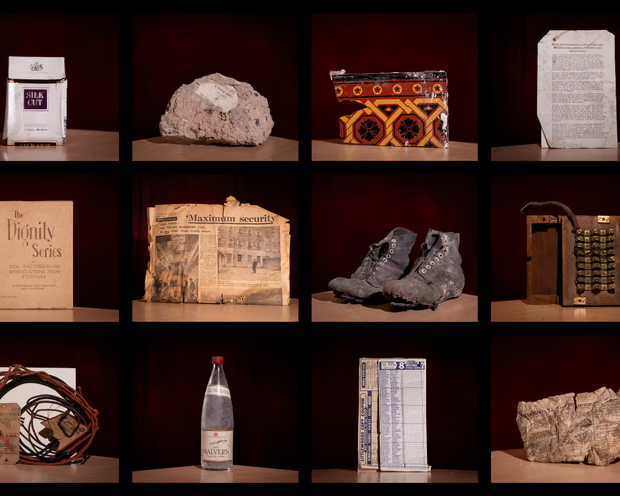
LONDON: A collection of long-forgotten objects linked to the daily lives of Buckingham Palace staff has been discovered during the ongoing £370 million restoration of the royal residence, offering rare insights into life behind the scenes at the palace over the past century.
Among the items uncovered beneath floorboards, inside walls and elsewhere in the building are a 1949 ticket for a Royal Household Social Club whist drive, blank Littlewoods football pool slips dating from 1957, a pair of worn hobnail boots and an empty Silk Cut cigarette packet.
Workers also found a fragment of an 1889 newspaper containing West End theatre listings, pages from a 1966 edition of the Daily Express reporting on the Great Train Robbers, and detailed instructions prepared for palace staff ahead of the 1977 Silver Jubilee Diplomatic Corps reception.
The 1949 whist-drive ticket, priced at sixpence, was discovered embedded in a piece of building material. It dates from the reign of King George VI, when Princess Elizabeth was still heir to the throne and had been married to Prince Philip for less than two years.
The documents relating to the 1977 reception provide a particularly detailed glimpse into the organization of royal events. Staff were instructed to ensure that members of the royal family moved around the ballroom in a clockwise direction, while some state rooms were designated as non-smoking areas. The event was also subject to a strict timetable and involved around 350 British guests and diplomats.
Other discoveries included sections of decorative Minton ceramic tiles dating to around the mid-19th century, a pewter tankard, a Schweppes bottle, a wooden electrical junction box and a faded box containing six Christmas cards.
The discoveries were made as part of Buckingham Palace’s decade-long reservicing programme, which began in 2017 and involves extensive upgrades to the building’s electrical, plumbing, heating and other essential infrastructure.
The restoration has also addressed fire-safety concerns, including the removal of ageing Vulcanised Indian Rubber (VIR) electrical cabling, which becomes brittle over time. Around 1.2 miles (2 kilometres) of the potentially hazardous cabling has already been replaced.
The extensive restoration is expected to be completed in 2027. The historical objects uncovered during the work are providing an unusual record of the ordinary routines, social activities and working lives of generations of people who served at one of Britain’s most famous royal residences.