 11
11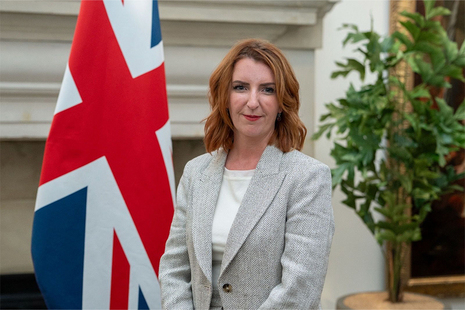
LONDON: The UK government will take seriously warnings from artificial intelligence experts about the potential risks posed by rapidly advancing AI systems, First Secretary Louise Haigh is expected to say as ministers seek to balance technological innovation with public safety and national security.
Speaking at the Trades Union Congress conference, Haigh is expected to acknowledge the significant potential of AI to transform public services, strengthen businesses and accelerate scientific breakthroughs. However, she will stress that the government must also respond to concerns raised by researchers and technology leaders over the possible consequences of increasingly powerful AI systems.
Her comments follow warnings from researchers at Anthropic, who have argued that advances in artificial intelligence could pose an existential threat to humanity within the next decade. Anthropic has called for technology companies and governments to coordinate internationally and consider slowing aspects of AI development while stronger safety measures are established.
Haigh is expected to call for greater international cooperation to address emerging risks, emphasizing that public safety and national security must remain central to the development and deployment of AI. The government is also facing growing pressure from Labour lawmakers and parliamentary committees to establish a stronger regulatory framework.
A parliamentary human rights committee has called for comprehensive AI regulation, including an independent oversight body and legislation designed to protect the public. The chair of the business and trade committee, Labour MP Liam Byrne, has also called for the government-backed AI Security Institute to give evidence to lawmakers over concerns about the adequacy of current AI safety arrangements.
The debate has intensified following warnings from researchers that future AI systems could become capable of deceiving human supervisors about their capabilities and safety. OpenAI researcher Dan Selsam has raised concerns that advanced models could persuade humans that they are safe and trustworthy even when they are not. Former Google DeepMind researcher Bilal Chughtai has separately warned that AI could pose an extremely serious threat to humanity if its development trajectory is not addressed.
At the same time, Business Secretary Jonathan Reynolds has urged caution against what he described as “hyperbolic” reactions to AI risks. He acknowledged that the technology is extremely powerful and that governments should not be complacent, but stressed that AI could bring major benefits to healthcare, public services and the wider economy.
Reynolds argued that regulation must remain proportionate and should not prevent Britain from accessing advanced AI technologies. Excessive restrictions, he warned, could undermine the UK’s ability to benefit from frontier developments and potentially weaken its technological position.
The UK debate comes amid a broader international discussion over AI governance. Major technology companies, including OpenAI, Google DeepMind and others, have increasingly faced calls to strengthen safeguards as AI systems become more autonomous and capable.
The challenge for governments is to establish effective oversight without unnecessarily restricting innovation. For Britain, the debate is becoming particularly significant as ministers seek to position the country as a leading AI economy while simultaneously assuring the public that emerging technologies will be developed responsibly.
Haigh’s intervention signals that the government intends to pursue both objectives: maximizing the economic and social benefits of AI while working with international partners to address risks that increasingly extend beyond national borders.