 11
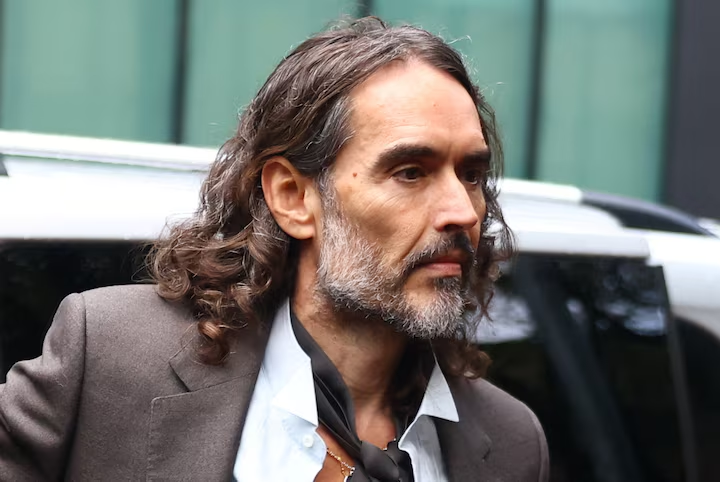
London: Ian Winter KC, the barrister who represented Russell Brand, has referred himself to the Bar Standards Board after he was accused of confronting a journalist moments after a jury found his client guilty of rape.
The incident took place on Thursday afternoon outside the courtroom door at Southwark Crown Court, in full view of a group of reporters. Mr Winter is alleged to have approached Rosamund Urwin, the Sunday Times journalist whose investigation prompted Brand’s victims to come forward, and told her: “I hope you are pleased with yourself.” When Ms Urwin replied that she was pleased justice had been done, Mr Winter reportedly responded: “Well, it wasn’t. You f***ed it,” before adding, “Congratulations.”
In a statement issued on Friday, Mr Winter said that, having seen how the matter had been characterised in the press, his professional duty required him to self-report the allegations to the Bar Standards Board so that they could be subject to proper scrutiny. “I have made such a report,” he said.
It is understood that several complaints have also been lodged with the regulator. The Bar Standards Board said it would not comment on whether it had received information about potential misconduct by any barrister, adding that complaints are usually handled confidentially unless they proceed to a disciplinary tribunal hearing.
The confrontation followed the conclusion of a four-week trial in which a jury convicted Brand, 51, of one count of rape and three counts of sexual assault. He was acquitted of two further rape charges and one charge of attempted indecent assault. Brand had denied all the allegations, arguing through his legal team that he had been wrongly accused and was the victim of a media conspiracy. He was convicted of raping a 21-year-old fan in 2009 and of sexually assaulting three women in separate incidents between 2004 and 2009. He remains in custody and is due to be sentenced on Monday.
Speaking on a Times podcast after the verdict, Ms Urwin said she had approached Mr Winter because her name had been raised repeatedly during the trial and she considered introducing herself a legitimate thing to do. She said she was surprised to be confronted and addressed in that manner.
Ben Taylor, editor of the Sunday Times, strongly defended his chief news correspondent, describing Mr Winter’s conduct as extraordinary and saying he had never seen or heard of a barrister behaving in such a way. He stressed that it was not Ms Urwin who found Brand guilty, but a jury of eight men and four women who had carefully weighed the evidence and the defence case. By impugning her integrity, Mr Taylor said, Mr Winter was impugning the integrity of the entire case, including the jury and the presiding judge, and he described the conduct as reprehensible.
The comedian Katherine Ryan also criticised the barrister on her podcast, Telling Everybody Everything, calling his behaviour unprofessional, inappropriate and aggressive.
During the trial, Mr Winter had argued that coverage by the Times, the Sunday Times and a Channel 4 Dispatches documentary had “poisoned the well,” making a fair trial impossible. In pre-trial submissions, Brand’s defence had gone further, describing the journalists who exposed him in 2023 as “criminals” and suggesting they may have perverted the course of justice. The trial judge, Mr Justice Bennathan, rejected the bid to halt proceedings, ruling that Brand could be tried by jurors who had not seen the earlier reporting.
The case has also renewed calls for legal reform on so-called “rape myths.” In his closing speech, Mr Winter told the jury that none of the complainants had resisted, screamed or tried to leave during their encounters with Brand. Claire Waxman, the Victims’ Commissioner for England and Wales, is seeking a change in the law to require that juries be warned against such assumptions, criticising outdated and harmful beliefs that genuine victims must scream, fight back or report an offence immediately. While judges routinely issue directions cautioning against these stereotypes, her office argues that the principle should be set out plainly in legislation to ensure consistency. In Brand’s trial, Mr Justice Bennathan directed the jury not to assume that a delay in reporting meant the allegations were untrue.
Deniz Ugur, deputy director of the End Violence Against Women Coalition, said it was appalling to see defence lawyers deliberately rely on tired tropes and myths about rape, adding that such myths have no place in the courtroom.
Metropolitan Police Commissioner Sir Mark Rowley told BBC Radio 4’s Today programme that he supported Ms Waxman’s call, warning that what had been reported came very close to victim-blaming. He said the evidence clearly shows there is no single way of reacting to rape: some victims fight, some freeze, some report immediately, and others remain silent for years.
A No 10 source said on Friday that Prime Minister Andy Burnham believed Ms Waxman’s proposals should be examined. A Ministry of Justice spokesperson said rape myths have absolutely no place in the courts and that victims should never feel as though they are the ones on trial. The spokesperson added that the government is already changing the law to prevent irrelevant sexual history and previous allegations from being weaponised against rape victims, and will carefully consider the Victims’ Commissioner’s proposals.