 11
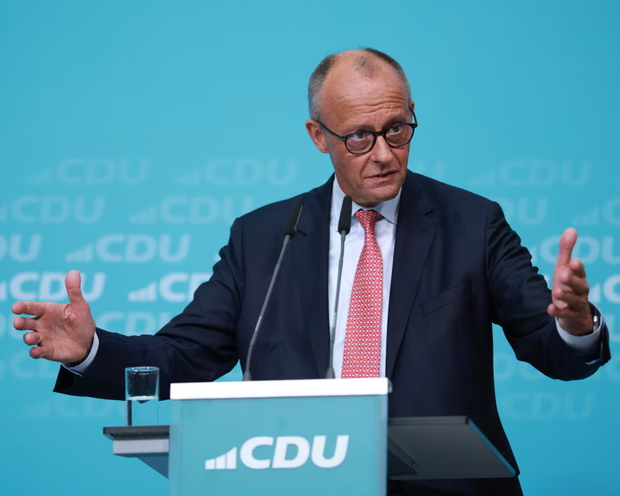
Germany’s September 20 state elections in Berlin and Mecklenburg-Western Pomerania have become a significant test of Chancellor Friedrich Merz’s political authority, following the Alternative für Deutschland’s (AfD) decisive victory in Saxony-Anhalt earlier this month. The immediate importance of the elections lies not only in the state-level results but also in what they may reveal about voter confidence in Merz’s Christian Democratic Union (CDU) and his federal coalition with the Social Democrats.
The AfD’s performance in Saxony-Anhalt has fundamentally altered the political backdrop. The party won 43.8% of the vote there, compared with 17.2% for the CDU, and fell only three seats short of an outright parliamentary majority. The result demonstrated the scale of the AfD’s support in an eastern German state and intensified scrutiny of Merz, who has been in office since May 2025.
The upcoming elections therefore carry a broader significance for the CDU. In Mecklenburg-Western Pomerania, the AfD has been particularly strong, while in Berlin the CDU faces competition from parties across the political spectrum. A weak CDU performance in either state could intensify internal debate about the party’s strategy and Merz’s leadership.
Merz entered office promising to revive Germany’s struggling economy and reduce the appeal of the AfD, including through tougher policies on irregular migration. Yet economic stagnation, the cost of living and continuing concerns over migration have remained important political issues.
The AfD has capitalized on these concerns by combining anti-immigration positions with criticism of the established political parties. Merz has responded by emphasizing stricter migration controls while maintaining a distinction between irregular migrants and foreign workers who contribute to Germany’s economy.
This creates a difficult political balance for the CDU: addressing voters’ concerns about migration without allowing its policies to become indistinguishable from those of the AfD, while simultaneously demonstrating progress on economic issues.
Another important feature of Germany’s political landscape is the continued refusal of mainstream parties to formally cooperate with the AfD. The CDU has maintained that it will not govern with the party, while the AfD has sought to portray this political isolation as evidence that established parties are unwilling to accept voters’ demands for change.
The Saxony-Anhalt result has nevertheless exposed the practical difficulties created by this arrangement. The AfD emerged as the largest party but lacked enough seats to govern alone, leaving other parties to consider how to form a workable administration without cooperation with it.
Merz’s leadership has consequently become part of the political discussion. Several CDU state leaders publicly backed him before the September 20 elections, emphasizing the need for stability. Among those supporting him are politicians who have themselves been mentioned in media discussions about possible future leadership of the party.
At the same time, replacing the chancellor would not automatically resolve the CDU’s underlying challenges. The party would still have to address the AfD’s electoral growth, Germany’s economic difficulties, migration concerns and dissatisfaction with the federal coalition.
The Greens have also warned that an internal leadership struggle could create further instability. Their co-leader Felix Banaszak argued that a change at the top could potentially lead to new elections, while noting that the next scheduled federal election is not due until 2029.
The September 20 contests are therefore best understood as an indicator of Germany’s changing political environment rather than simply a referendum on one politician. A continued rise in AfD support would demonstrate that the party’s momentum extends beyond Saxony-Anhalt, while CDU losses could increase pressure for changes in the party’s political strategy.
However, state elections do not directly determine the composition of Germany’s federal government. Their principal significance is political: they can influence party leadership debates, coalition dynamics and the national conversation ahead of the next federal election.
For Merz, the central challenge is to demonstrate that his government can deliver on economic and social concerns while maintaining the CDU’s established position on cooperation with the AfD. The results in Berlin and Mecklenburg-Western Pomerania will provide another important measure of how voters are responding to that approach.