 11
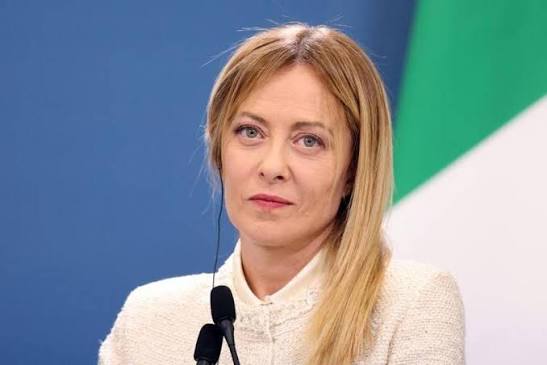
On October 22, Giorgia Meloni marked four years since she was sworn in as Italy’s first female prime minister. In a country where governments have historically lasted little more than a year on average, that milestone is no small thing. Her cabinet has already overtaken Silvio Berlusconi’s second government to become the longest continuously serving administration in the Italian Republic’s history. By most conventional measures, Meloni has achieved what her critics in 2022 said was impossible: stability, a credible place at Europe’s top table, and a reputation in Brussels and Washington as a pragmatic conservative rather than a firebrand.
Yet the anniversary arrives with an uncomfortable twist. The most serious threat to Meloni’s dominance of the Italian right does not come from the left. It comes from a former army general who argues that she has not been right-wing enough.
The rise of ‘Il Generale’
Roberto Vannacci’s path into politics was unconventional even by Italian standards. A career officer who served in the Balkans, Iraq and Afghanistan, and who was military attaché at Italy’s embassy in Moscow until the outbreak of the war in Ukraine, he became a national figure through a self-published book whose views on migration, sexuality and national identity provoked outrage and fascination in equal measure. Matteo Salvini’s League recruited him for the 2024 European elections, where he won the second-highest personal vote count in the country, behind only Meloni herself.
The partnership with Salvini did not last. In February 2026, Vannacci broke away, prompting Salvini to brand him a traitor, and founded his own party, Futuro Nazionale. He was expelled from the Patriots for Europe group in the European Parliament and turned instead toward the bloc that includes Germany’s Alternative für Deutschland, a party mainstream European conservatives still treat as untouchable.
Vannacci rejects the “far-right” label and presents his movement as the “authentic right.” His pitch is not that Meloni abandoned the nationalist agenda, but that she has failed to deliver on it. On migration, security, national identity, Russia and NATO spending, he positions himself as the voice of voters who believe the prime minister was tamed by power.
A meteoric rise, then a stall
For much of the year, the numbers backed him. Futuro Nazionale reportedly gathered around 130,000 members in under six months and drew seven lawmakers away from the governing coalition. By late summer, polls placed it between 7 and 8 percent, and at its peak close to 9, making it the fourth- or fifth-largest force in the country and pushing ahead of both the League and Forza Italia.
That surge exposed the fragility of Meloni’s electoral arithmetic. Several surveys suggested that her coalition would fall short of a majority without Vannacci’s voters, while with them it could comfortably clear the bar. The stakes are sharpened by proposed changes to the electoral law that would hand a large bonus of seats to any coalition crossing roughly 42 percent of the vote. On some estimates, the existing centre-right alliance would miss that threshold on its own.
October, however, has told a different story. The latest polling averages show Futuro Nazionale slipping below 7 percent, overtaken once again by Forza Italia, while Meloni’s Brothers of Italy has recovered to around 28 percent. One survey published on the eve of the anniversary put Vannacci as low as 5.6 percent and showed the centre-right narrowly ahead of the centre-left without him. The so-called “novelty effect” that analysts credited for his early momentum appears to be fading.
Meloni’s strategic dilemma
The prime minister’s dilemma is nonetheless real, and it will not disappear with a few weaker polls.
If she keeps Vannacci at arm’s length, she risks splitting the right-wing vote in an election that must be held by 2027 and could come sooner. Meloni has already accused his movement in parliament of doing the left’s work by attacking the coalition, and she has publicly declined to commit to an alliance, insisting that politics is not simply arithmetic.
If she embraces him, the costs could be greater. Vannacci’s sympathies toward Moscow, his hostility to the European Union and his alignment with the AfD cut directly against the foreign policy brand Meloni has spent four years building. His deputies voted against military aid for Ukraine before turning against the government in a confidence vote. A pact with Futuro Nazionale could alienate Forza Italia, unsettle moderate voters and undermine the trust she has earned among European partners and in Washington.
Italian voters on the right appear divided on the question too. Some surveys over the summer showed a majority of Brothers of Italy supporters favouring a pact with Vannacci, while more recent polling found a narrow majority of the wider public opposed to bringing him into the coalition.
The economy beneath the culture war
It would be a mistake to read Vannacci’s rise purely as a story about identity politics. Italy’s economic fundamentals remain stubbornly weak. Real wages are still below their 2021 level and are projected to fall again this year as energy prices push inflation higher. Under such conditions, a message that fuses security, migration and national pride with a sense of economic grievance finds receptive audiences, particularly among younger and disaffected voters who consume politics largely through social media rather than traditional outlets.
This is the deeper lesson for Meloni. Her government’s stability has not translated into a sense of material progress for many Italians. Vannacci did not create that frustration; he gave it a uniform and a microphone.
What it means for Europe
The Italian case carries significance well beyond Rome. Meloni has often been cited as proof that a party with post-fascist roots can be absorbed into the European mainstream once in office. Vannacci’s emergence shows the other side of that process: moderation in government can open space for a new challenger further out on the flank, one who accuses the incumbent of betrayal precisely because she became respectable.
Similar dynamics are visible elsewhere on the continent, where governing or near-governing nationalist parties face pressure from even harder-line rivals. How Meloni handles this test will be studied closely in capitals from Paris to Berlin to Vienna.
The road to the ballot box
Four years in, Meloni remains the dominant figure in Italian politics, and October’s polls suggest the general’s advance may have peaked. But political momentum in Italy can shift quickly, and the question of whether the right fights the next election united or divided is far from settled.
Her choice is stark. She can trust that her own record and personal popularity will win back the voters who drifted toward Futuro Nazionale, or she can gamble on an alliance that might secure victory at the price of the moderate, pro-European image that has defined her premiership. Either way, the anniversary that should have been a celebration of longevity has instead become a reminder that, in Italian politics, the most dangerous opponent is often the one standing closest to you.