 11
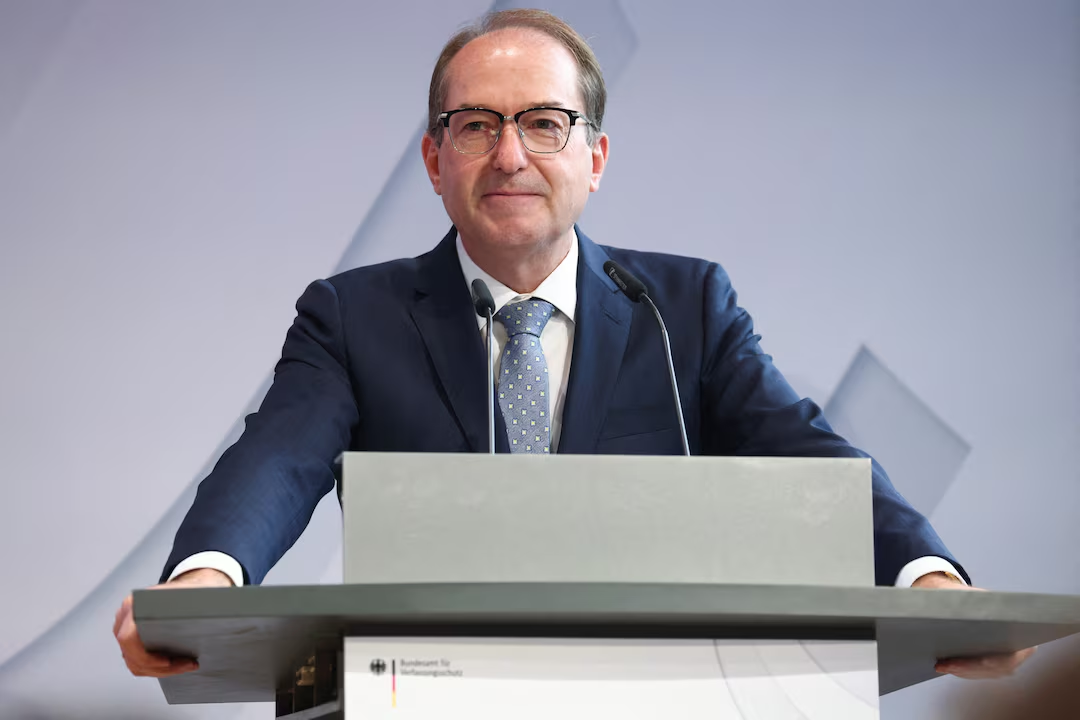
Berlin: German Interior Minister Alexander Dobrindt warned on Monday that Germany is confronting a “shadow war” broader in scope than the Cold War. He said the threat highlights the need to strengthen the Federal Office for the Protection of the Constitution (BfV), the country’s domestic intelligence agency.
“The shadow war we are witnessing today has an objective that extends far beyond anything seen during the Cold War,” Dobrindt told a BfV press conference in Berlin. “Its clear aim is to destabilise us – to destabilise us fundamentally,” he added, without naming Russia directly.
For months, officials in numerous Western countries have warned that Russia is conducting sabotage, cyberattacks and other hybrid operations across Europe aimed at weakening support for Ukraine. Moscow rejects these accusations as baseless and the product of anti-Russian hysteria.
Dobrindt’s remarks follow a warning earlier this month from the head of the Federal Intelligence Service (BND), Germany’s foreign intelligence agency, that the country risked being drawn into a violent conflict with Moscow.
Separately on Monday, the security service of the neighbouring Czech Republic said Russia could undertake riskier and more significant operations within months in NATO member states that support Ukraine.
Drone Incident Adds Urgency
Calls to expand the powers of Germany’s intelligence services have intensified since a failed attack in August involving an explosives-laden drone at an airport in Leipzig. German authorities attributed the incident to Russia, while the Kremlin has dismissed it as fabricated.
BfV President Sinan Selen said Russia uses virtually every available instrument in its hybrid operations, from disinformation and information manipulation to sabotage and assassination plots prepared on German soil. “This is a fact we must deal with,” Selen said. Asked about the Leipzig incident, he said he expected further actions of a similar kind.
Reform Bill Under Review
The government’s reform bill would grant the intelligence services wider powers, including the authority to take active defensive measures. It is currently under examination by parliamentary committees following its first reading in September.
“Germany cannot be a second- or third-rate player when it comes to developing services and capabilities; we must remain at the forefront, given the challenges we face,” Dobrindt said.
Germany’s intelligence services were established after the Second World War, when memories of Nazi rule were still vivid. As a result, they have traditionally operated under tighter constraints than their counterparts in allied countries such as France, Britain and the United States.