 11
Whatever Tuesday’s verdict, the 2026 midterms close one chapter of American politics and open a fierce struggle over who will define the next one
America goes to the polls on Tuesday with both of its major parties standing at a crossroads. The contest is being fought over seats in Congress, but the deeper stakes concern identity: what the Republican Party becomes once Donald Trump no longer leads it, and what the Democratic Party stands for beyond opposition to him. The results will not settle those questions. They will, however, determine the terms on which the battle over them begins.
A party built around one man
A decade after he began to remake the Republican Party in his own image, President Trump, now 80 and a lame duck, faces the possibility of a voter rebellion that could force conservatives to reconsider their loyalty to him and his “Make America Great Again” movement. Some Republican candidates have already begun to put distance between themselves and the president, a telling sign of nervousness in a party that has rarely tolerated dissent from its leader.
The difficulty for the GOP is structural. For generations the party rested on Ronald Reagan’s three-legged stool: fiscal conservatism with small government and free trade, traditional social values, and a muscular foreign policy. Trump broke that stool. What replaced it is not a fixed doctrine but a fluid populism that has shifted with the instincts of one man. More than any policy or principle, Trump himself became the party’s unifying force.
That transformation brought real gains. Trump moved the Republicans away from the country club and towards a broader working-class coalition, drawing in growing numbers of Hispanic, African American and young voters who were once reliably Democratic. The question now is whether that coalition belongs to the party or only to Trump. Republican strategist David Urban put it plainly: if those voters stay home on Tuesday, disaffected by the economy, war or other grievances, the party will face hard questions about who can carry its banner next.
Former Senator John E. Sununu, seeking a return to the New Hampshire Senate seat he lost in 2008, captured the mood when he warned that Trump’s departure would leave “a tremendous vacuum” and asked where the country goes next.
The succession question
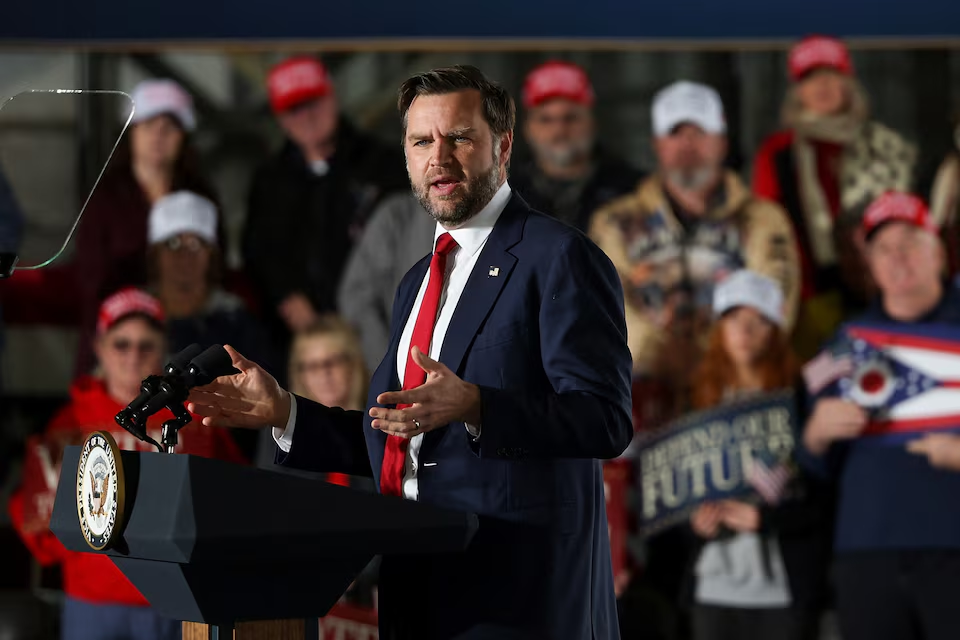
For now, most talk of 2028 centres on Vice President JD Vance. At 42, the former Ohio senator has travelled from Trump critic to Trump loyalist, and he faces the classic dilemma of a sitting vice president: how to build an independent identity while serving as the president’s deputy. Secretary of State Marco Rubio, another frequently mentioned contender, carries a similar burden. A poor Republican night on Tuesday could dent both men’s prospects, since each is closely tied to the administration’s record.
Such a setback could open space for others: Texas Senator Ted Cruz, Florida Governor Ron DeSantis, or even an outspoken Trump critic such as former New Jersey Governor Chris Christie, 64, who is weighing a comeback. That a Christie candidacy is discussed at all suggests some in the party are beginning to imagine a post-Trump future that is not simply a continuation of the present.
Yet any obituary for Trump’s influence would be premature. He will remain in office for two more years regardless of the outcome, and even a weakened Trump would dominate Republican politics and shape the next nomination fight. Urban likened him to the Colossus of Rhodes, the ancient statue of the sun god Helios, predicting he will loom over the party for as long as he lives.
Democrats: momentum without a map
Democrats approach Tuesday with greater confidence. Most expect a strong night even if they fall short of winning both chambers. But momentum has not translated into popularity; the party remains unpopular with many voters, and it is deeply divided over what should come next.
The establishment is celebrating the rise of Representative Hakeem Jeffries, who would become the first Black Speaker of the House if Democrats win the majority. To many progressives, however, Jeffries and Senate Democratic Leader Chuck Schumer embody the problem rather than the solution. They want sweeping change in both the people and the policies that steer the party.
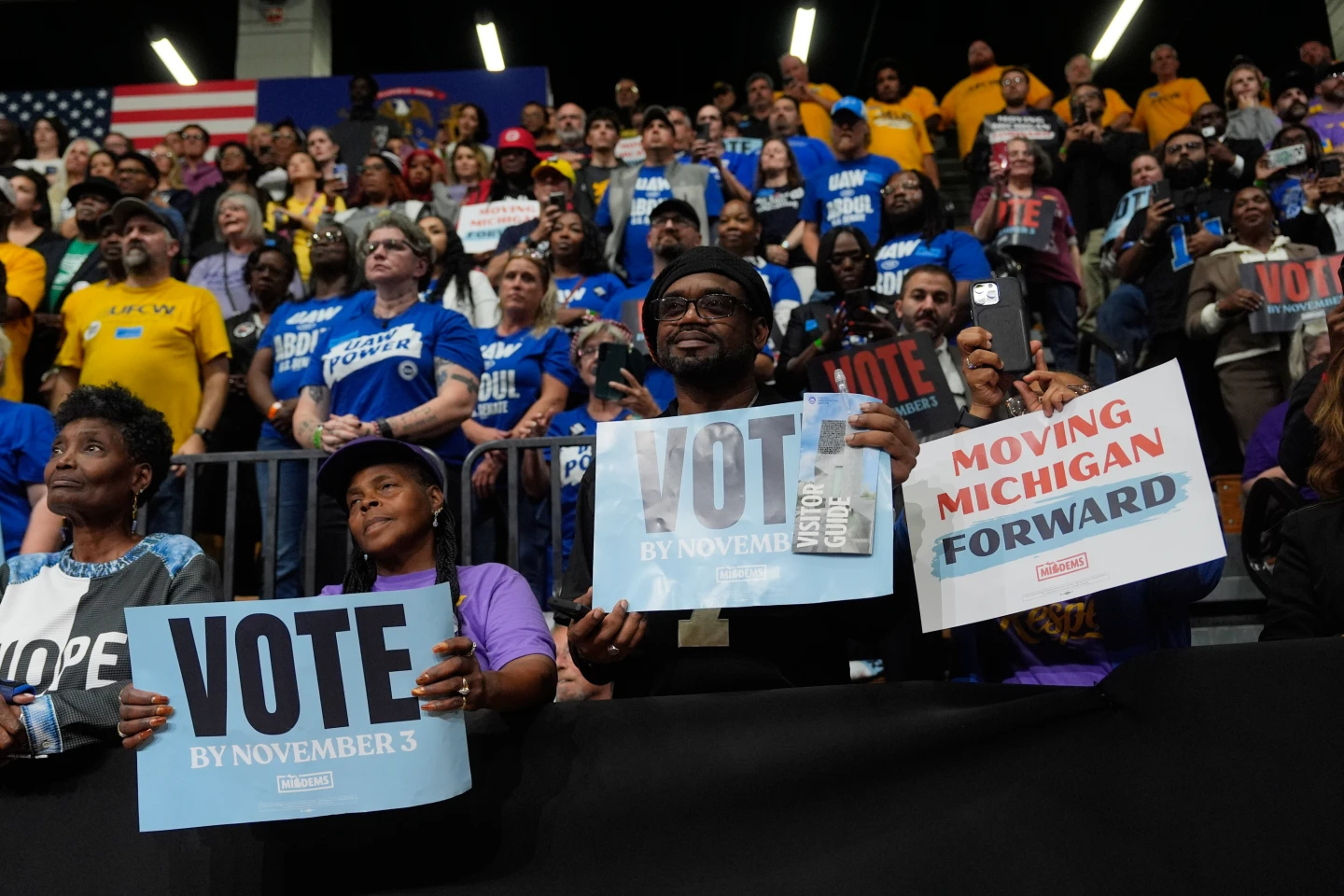
That pressure is sharpest among Democrats aligned with the Democratic Socialists of America. Only two DSA-backed members sit in the House today, but that figure is expected to rise to at least seven in the new Congress, largely thanks to primary victories by candidates backed by New York Mayor Zohran Mamdani. In Michigan, Senate candidate Abdul El-Sayed, though neither DSA-endorsed nor a self-described democratic socialist, would add another prominent voice on the left.
Corbin Trent, a former adviser to Representative Alexandria Ocasio-Cortez, framed the election as a rejection of the status quo and argued that the party’s Washington leadership has proven unable to meet what he sees as a transformational moment on healthcare, housing and infrastructure.
The Moore model
Between these camps stands figures such as Maryland Governor Wes Moore, a potential presidential candidate himself up for reelection. Asked directly whether he welcomed the DSA into the party, Moore declined to say so. Instead, he called for “commonsense leaders” ready to disrupt the status quo and deliver quickly, insisting that Democrats must stop being “a party of no and slow” and become “a party of yes and now.”
Moore’s language of urgency echoes the impatience of the activist base, but the substance differs. Where the left seeks structural transformation, Moore offers speed and competence within a more conventional framework. Whether that balance can hold, or whether the left flank grows louder after the midterms, will shape the Democratic primary field for 2028.
The fight that begins on Wednesday
The irony of this election is that its most important consequences may arrive only after the votes are counted. Republicans must decide whether Trumpism can survive without Trump, and whether the working-class coalition he assembled can be inherited by anyone else. Democrats must decide whether a midterm victory signals approval of their leadership or simply rejection of their opponents, and whether their future lies with the institutionalists or the insurgents.
Supporters of each party’s current direction have reasonable arguments. Trump’s defenders point to the coalition he built as proof that his populism reshaped American politics durably, not temporarily. Democratic establishment figures argue that disciplined, broadly acceptable leadership is what wins competitive seats, and that a lurch to the left would squander gains. Their critics counter that a party defined by one personality cannot outlast him, and that cautious leadership has failed to inspire the voters both parties need.
As new members arrive in Washington and the 2028 race accelerates, these debates will move swiftly to the centre of American life. Tuesday’s result will tell each party where it stands. It will not tell them where to go.