 11
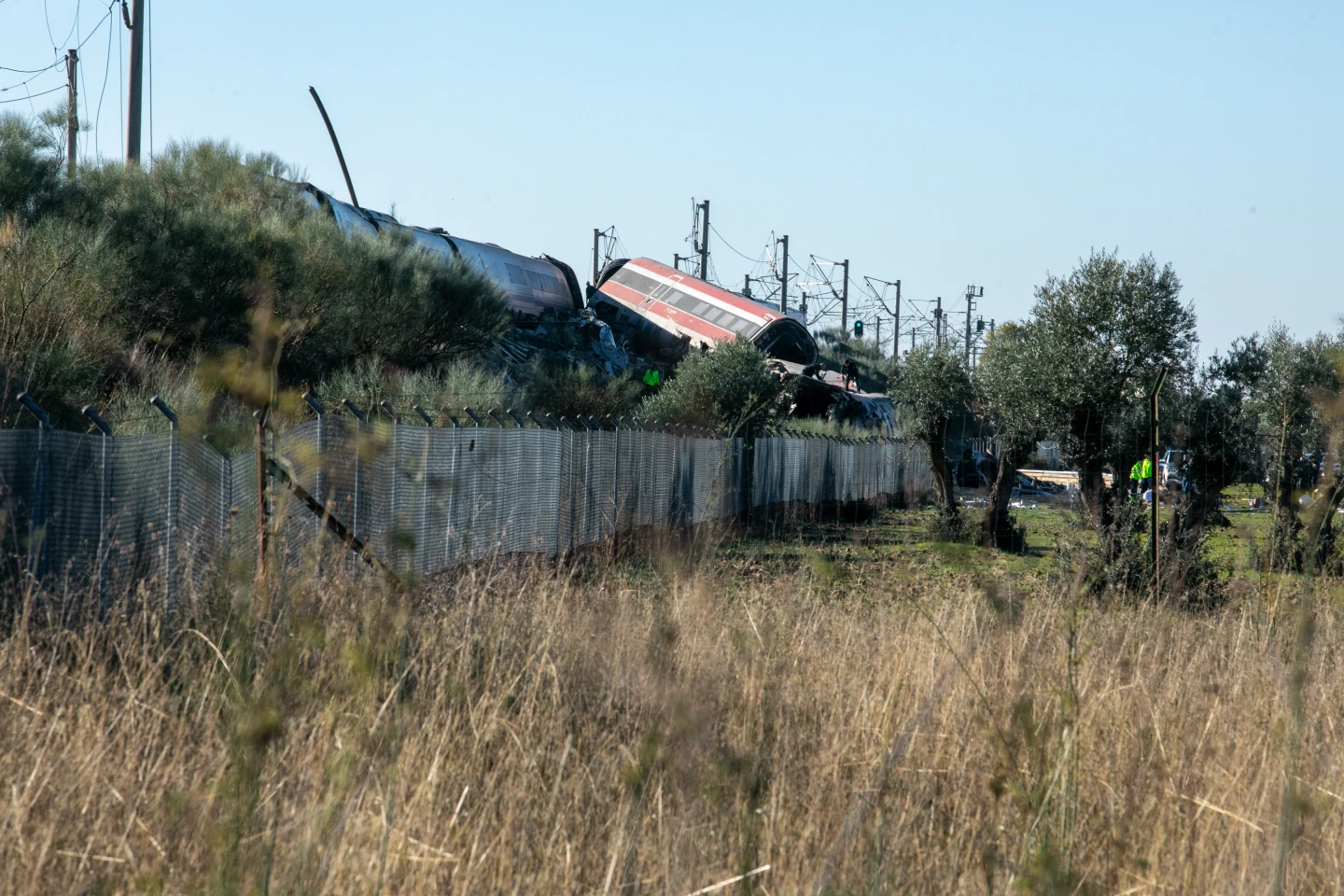
As blame flies between government and unions after the Toledo collision, a deeper question emerges about whether Spain’s celebrated high-speed network has outgrown the systems meant to keep it safe
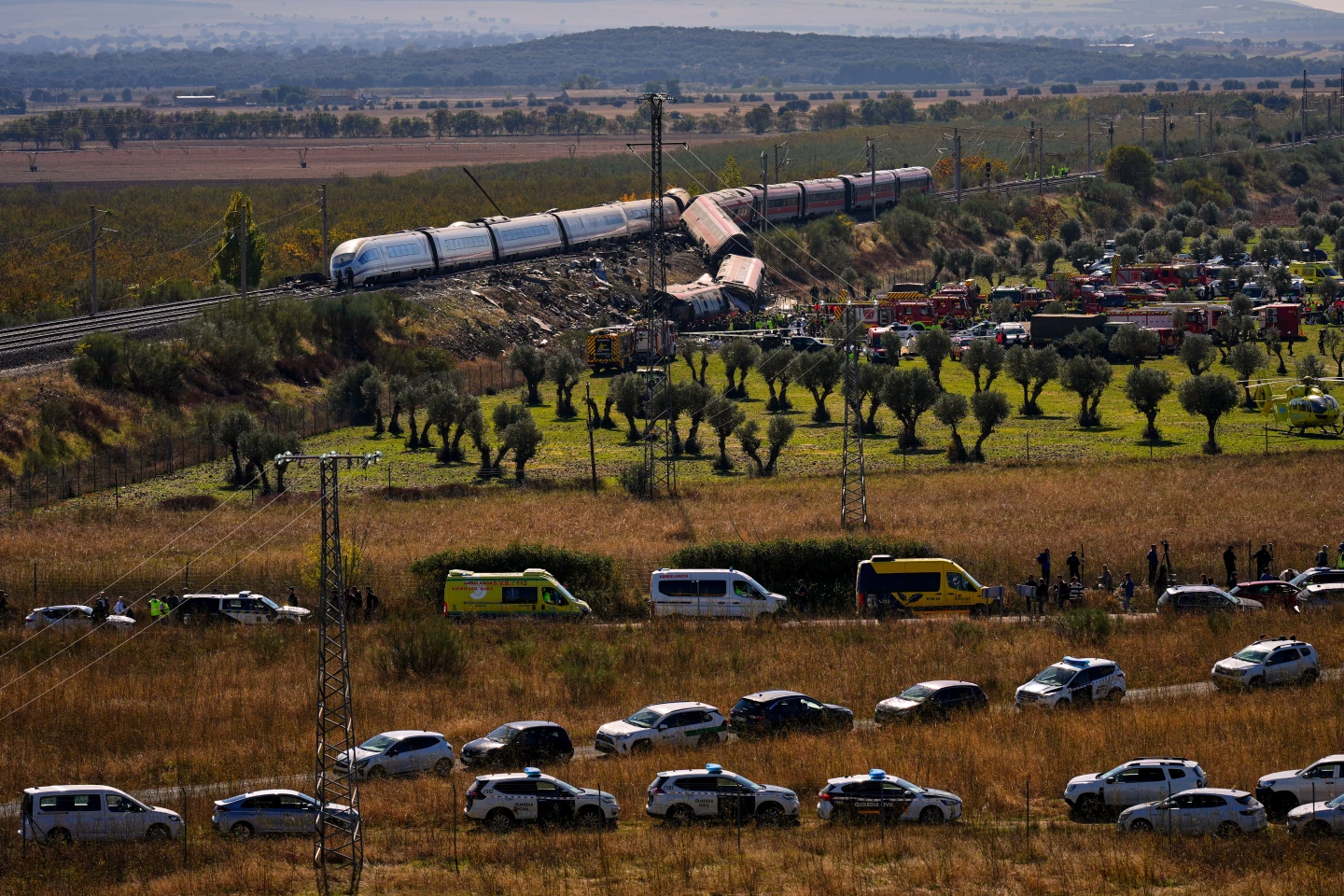
For more than three decades, Spain’s high-speed rail network stood as one of Europe’s great infrastructure achievements. The world’s second-largest after China’s, it was held up as a triumph of state industrial policy and, until this year, had never suffered a fatal crash. That record now lies in ruins. Wednesday’s collision in Toledo province killed 69 people, the second deadly disaster on the Madrid–Seville line in 2026 after January’s crash, which claimed 46 lives when one train left the track and struck another travelling in the opposite direction.
Two catastrophes on the same line within ten months have forced a reckoning. The question at the heart of it is deceptively simple: was this the fault of one person, or of a system?
Twenty-three minutes to disaster
The government’s timeline makes clear how quickly events unfolded. At 8:30 a.m., the communication link underpinning the line’s LZB safety system failed. LZB tracks train positions and can automatically brake trains to prevent collisions. With it down, controllers at a Madrid control post assumed full manual responsibility for a 63-kilometre stretch where six trains were believed to be operating.
At 8:36, a controller cleared a train operated by state-owned RENFE to resume normal speed. A second train, run by private operator IRYO about 25 kilometres down the line, also attempted to restart, but its engineer could not override the automatic stop and reported this to the controller. Seventeen minutes later, at 8:53, the RENFE train, travelling at an estimated 160 to 200 km/h according to preliminary findings, struck the stationary IRYO train.
The minister’s verdict
Transport Minister Óscar Puente, now under pressure to resign, moved swiftly to identify a cause. He described the controller’s decision to send the RENFE train forward while a stop signal remained active and another train sat stationary as “erroneous” and “inexplicable.”
On its face, the argument is strong. A red signal was showing, and a train was known to be stopped ahead. Whatever the surrounding pressures, the instruction that set the RENFE train in motion was the decisive act in the chain. Those who share the minister’s view would argue that safety-critical roles exist precisely for moments when automation fails, and that responsibility for a clear procedural breach cannot be diluted by broader complaints about working conditions.
The unions’ counter-argument
Rail unions reject that framing as too narrow. Raquel Ayllón of the traffic controllers’ union SCF said controllers have pleaded for more staff for years while safety systems repeatedly fail, and accused the minister of scapegoating a worker operating under worsening conditions. Human error, she argued, is understandable; a safety system that routinely breaks down is not.
The train engineers’ union SEMAF reinforced the point. Its spokesperson, Diego Martín, said the three-decade-old LZB system, which is being phased out but remains in use on the Madrid–Seville line, should have been replaced long ago and has gone offline on several previous occasions, leaving human operators to manage alone.
The unions’ case is that the controller’s decision did not occur in a vacuum. When an automated safeguard drops out and a single control room must manually track multiple high-speed trains, the margin for error shrinks dramatically. In that view, the true failure lies in allowing such a scenario to arise repeatedly without adequate staffing or modern backup technology.
Tensions have been heightened further by the leak to Spanish media of audio recordings capturing frantic exchanges between engineers and controllers in the minutes before the crash, a disclosure unions have condemned as irresponsible. Train workers also went ahead with a previously planned strike on Thursday, demanding the government honour safety commitments made after January’s disaster.
The liberalisation question
Beneath the immediate dispute lies a structural issue. Spain opened its high-speed network to private operators in 2021, and traffic has since surged. Between Madrid and Barcelona alone, average daily trips rose from 56 to 89 between 2019 and 2024, according to SCF figures. Notably, both of this year’s fatal crashes involved one RENFE train and one IRYO train.
Joan Rodríguez of the train workers’ union was careful not to call liberalisation a determining cause, but said he was unconvinced that maintenance of the lines had kept pace with the growth in traffic. That distinction matters. Competition has brought more services and, for many passengers, lower fares. The question is whether investment in signalling, personnel and infrastructure expanded alongside it, or whether a network designed for a state monopoly is now carrying a load it was never fully equipped to bear.
Defenders of liberalisation would note that two crashes involving both operators do not by themselves establish a causal link, and that busier networks elsewhere in Europe operate safely. Critics would respond that the coincidence of rising traffic, ageing systems and stretched staff is precisely the combination safety experts warn against.
Awaiting answers
A judge and a special government commission are conducting separate investigations, and the trains’ black boxes have been handed to the Civil Guard. Prime Minister Pedro Sánchez has pledged a full accounting, and King Felipe VI, after visiting the injured in a Toledo hospital, called for the inquiry to establish how and why the disaster happened and for measures to prevent a repeat.
The likeliest truth is that both sides hold part of it. A controller appears to have made a fatal decision; that decision was made inside a system whose automatic safeguard had failed, not for the first time, on a line busier than ever. Assigning blame to an individual may satisfy the demand for accountability, but it will not by itself make Spain’s railways safer. The real test for Madrid is whether the investigations lead to replacing ageing technology, staffing control rooms adequately, and ensuring that the expansion of rail competition is matched by investment in the network’s foundations.
For a country that built its modern identity partly on the speed and reliability of its trains, restoring public confidence will depend on more than finding someone to blame.