 11
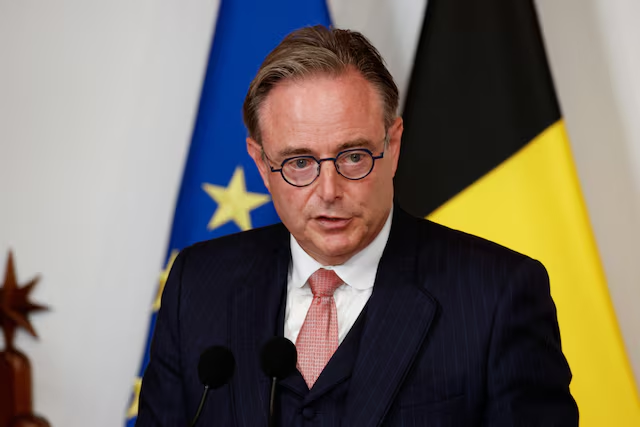
Brussels: Belgium’s King Philippe on Monday sought to contain a deepening political crisis after overnight budget negotiations broke down, leading Prime Minister Bart De Wever to offer his resignation.
De Wever submitted his resignation during a 90-minute audience with the King on Monday morning, after the governing coalition parties failed to resolve a months-long impasse over next year’s budget. The Royal Palace said the King would consider the offer while also consulting the leaders of the other coalition parties from Tuesday.
“In light of the large geopolitical uncertainty and severe economic challenges, the country can’t afford a long political crisis,” the Palace said in a statement.
Deadlock Over Cuts and Taxes
The coalition has been divided for months over €10 billion ($11.2 billion) in spending cuts and tax increases that De Wever says are essential to stabilise Belgium’s public finances. His Flemish nationalist N-VA party and the liberal MR have been unable to reach a compromise with their socialist and centrist partners.
The N-VA and MR have advocated deeper reductions in public spending, including in healthcare, whereas their coalition partners are insisting on higher taxes on wealth to generate additional revenue.
Deputy Prime Minister Maxime Prévot of the francophone centrist party Les Engagés reiterated that demand on Monday, shortly after De Wever’s meeting with the King. “A contribution from those with substantial financial means is legitimate,” he wrote on X, adding that sharing the burden between the wealthiest and other citizens was “a matter of balance for the future.”
Speaking to the broadcaster VRT, Prévot put the likelihood of fresh elections at “50/50” and urged the coalition parties to resume negotiations. Opposition parties, trade unions and business organisations likewise joined in calling on the governing parties to return to talks and prevent a budget crisis.
Rising Debt and Market Pressure
Like France, Italy and other European countries, Belgium is grappling with the challenge of reining in mounting public debt while facing public demands for increased spending on services such as education. In recent weeks, protesters have clashed with police in several countries, including France, Spain, Italy and Belgium.
Should no agreement be reached, Belgium would have to operate next year under provisional spending arrangements, limiting monthly expenditure to one-twelfth of the current year’s budget.
The political turmoil comes amid heightened strain in financial markets, where borrowing costs have climbed sharply on government bonds of Belgium, France and other European states perceived as having fragile public finances.
In its May forecast, the European Commission projected Belgium’s debt-to-GDP ratio at 110.5 percent this year, the fourth highest in the euro zone after Greece, Italy and France, with a general government deficit expected at 5.2 percent of GDP.
On Monday afternoon, Belgium’s benchmark 10-year bonds were yielding 4.39 percent, compared with 4.90 percent for France and 3.29 percent for Germany. Four months earlier, Belgian 10-year yields stood at 3.48 percent.
De Wever has repeatedly cautioned against an “interest snowball,” warning that without spending cuts Belgium could end up borrowing merely to meet the cost of servicing its existing debt.
The King is scheduled to meet De Wever again on Friday. If he ultimately accepts the Prime Minister’s resignation, he may invite other parties to attempt to form a new coalition or call early elections.