11
Imagine waking up to find a humiliating video of yourself, filmed without your knowledge, circulating across social media. Perhaps you were sweating at the gym, working, sitting in a bar or walking down the street, unaware that the stranger pestering you for your number was secretly recording you for a social media channel devoted to shaming women who reject him.
This week, ministers signalled a potential crackdown on so-called “pervert glasses,” Wi-Fi-enabled spectacles that allow wearers to film people around them, following multiple reports of men using them to harass women. Although the devices carry a small flashing light intended to show when recording is under way, it is easily missed and, worryingly, easily disabled.
If the government acts, it would be a modest victory in what often seems an endless struggle against big tech. But it would restore to young women a small sense of control over their lives, and that may matter more than it first appears.
Sweating the Small Stuff
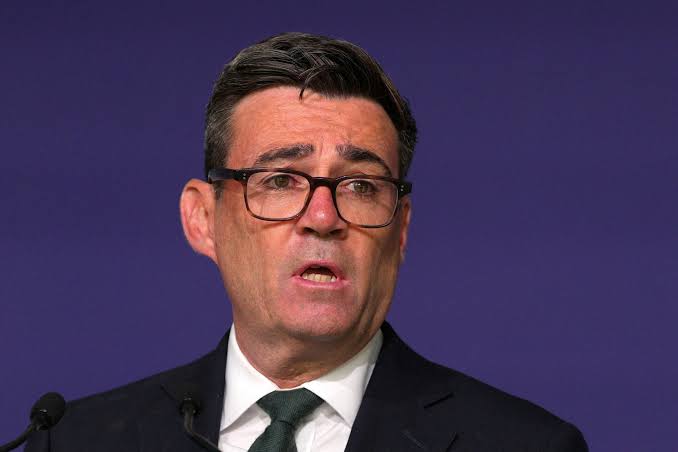
The proposed measure fits a broader pattern in Prime Minister Andy Burnham’s approach to government. Last month, when he took aim at people playing loud music on buses without headphones, he was mocked for fiddling while Rome burns. Yet rather than retreat, Burnham has doubled down on tackling everyday irritations.
In a week in which unidentified disruptions affected food supplies and grounded flights across Europe, the Prime Minister personally intervened on the problem of hire bikes abandoned in the middle of city pavements, a genuine hazard for blind people and those navigating with pushchairs or wheelchairs, but usually the kind of issue left to junior ministers. He has also involved himself in efforts to save Poundland stores.
A Theory of Control
The logic behind this agenda becomes clearer through the work of Claire Ainsley, a former strategist to Keir Starmer, whose new book, Control: How We Lost It and How to Take It Back, argues that many such policies are about restoring a sense of control in situations where people feel it has been taken away.
Ainsley notes that the classic advice for anxious times is to focus on the small things within one’s power and deal with larger worries later, ideally from a calmer position. Burnham appears to be applying the same principle to an anxious nation with no shortage of reasons for concern.
There is little the Prime Minister can realistically do about Donald Trump, Vladimir Putin, oil prices or a stock market slump that some fear could signal the bursting of an AI bubble. But tackling small acts of selfishness, which have a surprisingly powerful effect on how people feel about their lives, their high streets and the public spaces they share, lies squarely within his reach.
From Hire Bikes to Dirt Bikes
The ability to unlock a Lime bike and ride away has undoubtedly improved city life, but it has also brought a whiff of disorder. Hire bike users have gained a reputation for jumping red lights, riding on pavements, colliding with pedestrians and leaving bikes wherever they please.
Transport Secretary Heidi Alexander’s consultation will also examine illegal and antisocial riding, responding to persistent reports from outside the major cities of something more intimidating: groups of balaclava-clad young men tearing through housing estates on dirt bikes and illegal e-scooters, shouting abuse at anyone who intervenes and fuelling a perception that police have lost control of neighbourhoods.
Such behaviour is not new; two decades ago, the problem was teenage joyriders in stolen cars. But when parents no longer feel safe taking their children to the park, the effect is deeply corrosive. Darlington MP Lola McEvoy recently told Parliament that illegal e-bike riders in her constituency represented a visible erosion of the collective social contract.
State Failure Close to Home
The government’s summer crackdown on fly-tipping, again fronted personally by the Prime Minister, follows a similar logic. Burnham’s new Makerfield constituency was for years home to an illegal dump filled with rotting, rat-infested waste. Despite repeated efforts, the previous MP, Josh Simons, was unable to persuade authorities to remove it until it caught fire, forcing a nearby primary school to close. In Ainsley’s book, Simons describes the first year in office for many new Labour MPs as a crash course in state failure.
Small Wins or a Bigger Vision?
Critics argue that if petty crackdowns are all Burnham can offer while global crises mount, his project is destined to fail. Keir Starmer, they point out, also spoke before the last election about small steps to rebuild trust with disillusioned voters, with little lasting success. Opponents on the right contend that the government should be focused on economic growth and national security rather than headphones and hire bikes, while civil liberties advocates warn that restrictions on technologies such as smart glasses could prove difficult to enforce and risk overreach.
Supporters, however, see potential in the approach. “Take back control” proved a powerful slogan for Vote Leave for good reason. If Labour can reinterpret it to mean a country where the state functions properly, where big tech is held accountable for the human consequences of its products, where predators cannot act with impunity, and where pensioners can safely make their way down a pavement, then its defenders argue that this is simply what governing used to mean.