 11
11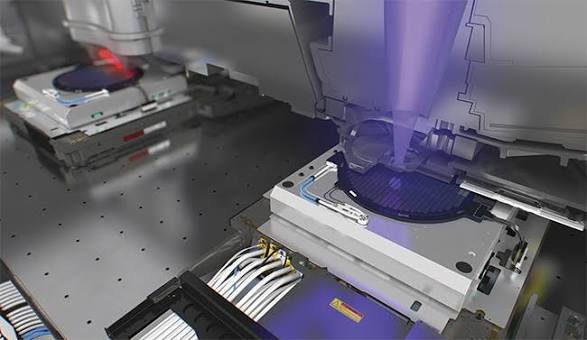
China’s reported start of mass production of domestically developed immersion deep ultraviolet (DUV) lithography machines is more than a technological achievement—it is a strategic declaration that the global semiconductor landscape is entering a new phase of competition.
For years, advanced lithography has represented one of the most formidable barriers to China’s ambition of achieving semiconductor self-reliance. Western export controls, particularly restrictions on the sale of cutting-edge chipmaking equipment, were designed to slow Beijing’s technological progress. Instead, they appear to have accelerated China’s determination to build indigenous alternatives.
Although China’s newly developed immersion DUV machines are not yet considered a direct replacement for the highly sophisticated systems manufactured by Dutch technology leader ASML, their emergence demonstrates that technological isolation does not necessarily halt innovation. Rather, it often redirects investment toward domestic research, manufacturing capacity, and long-term industrial resilience.
The immediate commercial impact on global semiconductor equipment suppliers may be limited. Industry analysts rightly point out that performance, reliability, production scale, and customer confidence remain significant hurdles for China’s new systems. ASML continues to possess a substantial technological advantage, particularly in extreme ultraviolet (EUV) lithography, which remains indispensable for manufacturing the world’s most advanced chips.
However, focusing solely on today’s performance gap risks overlooking the broader strategic picture. Semiconductor leadership is measured not only by current technology but also by the ability to sustain innovation over decades. China’s investment in domestic lithography reflects a national commitment that extends beyond commercial profitability into economic security and geopolitical resilience.
This development also illustrates an unintended consequence of technology restrictions. While export controls may delay competitors in the short term, they can also encourage the creation of parallel industrial ecosystems that reduce long-term dependence on established suppliers. If China succeeds in building a viable domestic lithography industry—even one initially serving only its internal market—the global semiconductor supply chain could gradually become more fragmented and regionally diversified.
For multinational companies, this evolving environment presents both risks and opportunities. Western equipment manufacturers may face increasing competition within the Chinese market, while global chipmakers may need to navigate a more complex landscape shaped by geopolitical considerations as much as technological capability.
Ultimately, China’s homegrown DUV production should not be viewed merely as another chapter in the U.S.-China technology rivalry. It represents a broader shift toward technological sovereignty, where nations increasingly seek control over critical industries that underpin economic growth, national security, and digital transformation.
The semiconductor race is no longer defined solely by who possesses the most advanced technology today. It is increasingly about who can build resilient, self-sustaining innovation ecosystems capable of enduring geopolitical uncertainty. In that respect, China’s latest milestone may prove to be less about matching current leaders and more about reshaping the future architecture of the global semiconductor industry.