 111
111 2
2 3
3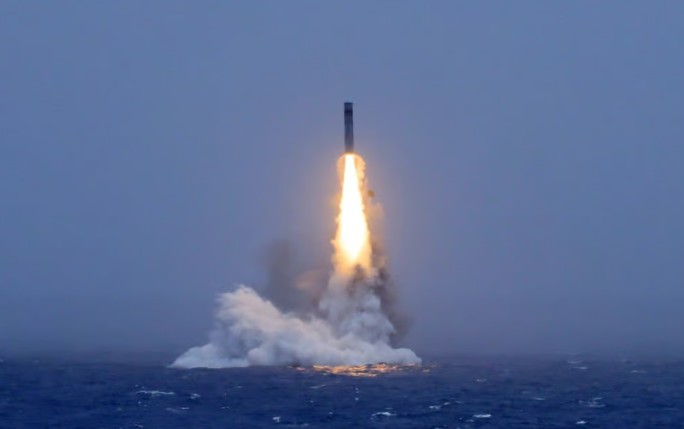
China’s recent submarine-launched ballistic missile (SLBM) test over the South Pacific represents more than a routine military exercise. It is a carefully calibrated strategic message highlighting Beijing’s growing confidence in its nuclear deterrence capabilities and its ambition to reshape the security balance in the Indo-Pacific. The launch has intensified concerns among the United States, its allies, and Pacific Island nations, reflecting the increasingly complex nature of great-power competition in the region.
The most significant aspect of the test is not merely the missile itself but the platform from which it was launched—a nuclear-powered ballistic missile submarine. A credible sea-based nuclear force is considered the most survivable component of a country’s nuclear deterrent because submarines can remain hidden underwater for extended periods, making them difficult to detect and destroy.
By successfully conducting the launch, China demonstrated that it is approaching a more robust “second-strike capability”—the ability to retaliate with nuclear weapons even after suffering a first nuclear attack. Such a capability is a cornerstone of strategic deterrence and places China closer to the long-established nuclear posture maintained by the United States and Russia.
Although Chinese officials described the launch as a routine test conducted in accordance with international law, many defence analysts view it primarily as strategic signaling directed at the United States.
The timing comes amid growing military competition over Taiwan, the South China Sea, and the broader Indo-Pacific. It also coincides with increased U.S. military cooperation with allies such as Australia, Japan, and the Philippines.
Demonstrating that Chinese submarines can launch long-range ballistic missiles from the Pacific reinforces Beijing’s message that it possesses increasingly credible options to deter military intervention during any future regional conflict.
The reaction has not been limited to Washington and its allies. Pacific Island nations have expressed concern because the missile passed through waters associated with the South Pacific Nuclear Free Zone established under the Treaty of Rarotonga.
Many Pacific countries remain deeply sensitive to nuclear-related activities due to the legacy of Cold War-era nuclear testing conducted by the United States, France, and the United Kingdom. Consequently, even conventional missile tests involving dummy warheads carry considerable political and symbolic weight in the region.
Another source of concern is transparency. Several governments criticized the short notice provided before the launch, arguing that advance notification is essential for aviation safety, maritime operations, and regional confidence-building.
China is not a member of the Hague Code of Conduct against Ballistic Missile Proliferation, which encourages pre-launch notifications and transparency measures. As Beijing seeks recognition as a major global military power, international expectations regarding openness and strategic communication are likely to increase.
The missile test is likely to reinforce ongoing defence modernization efforts among U.S. allies and partners. Australia is expected to continue strengthening the AUKUS security partnership, while Japan and other regional states may accelerate investments in missile defence, intelligence-sharing, and maritime surveillance.
Rather than dramatically altering the strategic balance overnight, the launch contributes to a broader trend of intensified military competition in the Indo-Pacific, where technological advances and strategic messaging increasingly shape regional security dynamics.
China’s submarine missile test illustrates that strategic competition is expanding beneath the oceans as much as it is occurring on land and in the air. As Beijing enhances its sea-based nuclear deterrent, the United States and its allies are likely to respond with stronger military cooperation and expanded deterrence measures.
Whether this evolving balance contributes to long-term stability through mutual deterrence or fuels a new regional arms race will depend largely on future diplomacy, military transparency, and effective crisis-management mechanisms between the world’s major powers.