 11
The conflict has done more than damage Europe’s standing abroad. It is reshaping how Europe treats its own Muslim citizens, and the debate is far from settled
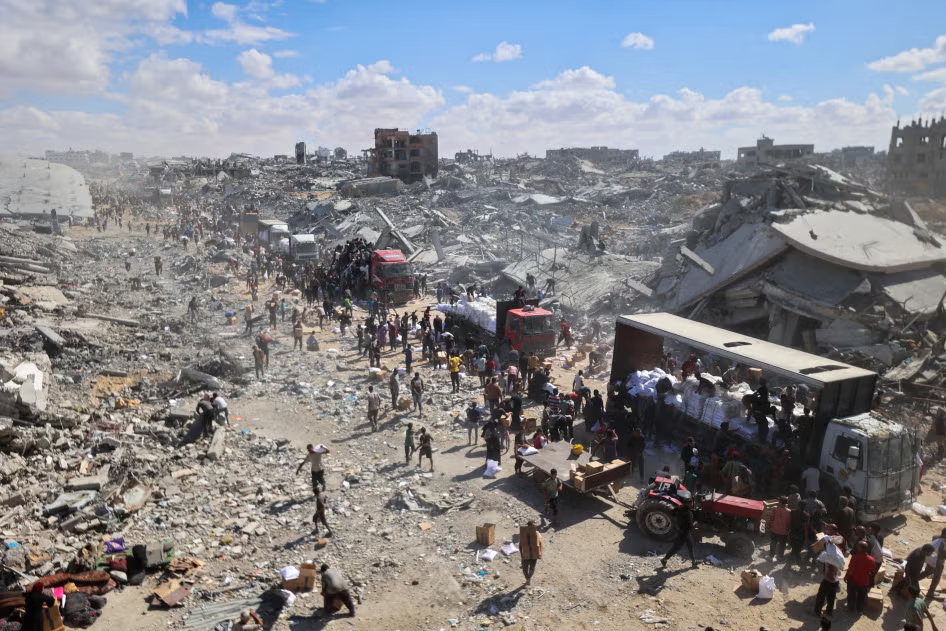
Three years after the Hamas attacks of 7 October 2023 and the Israeli offensive that followed, the war in Gaza has become one of the defining tests of European politics. The Palestinian death toll has passed 74,000, most of the territory lies in ruins, and international surveys this year have recorded sharply negative views of Israel and declining confidence in the United States as a reliable partner. Yet the most important consequence for Europe may not be reputational at all. Gaza is changing Europe itself.
From Lost Credibility to Internal Fracture
Europe’s failure to hold the Israeli government to account has already cost the EU credibility and influence, especially in the Global South. Many governments there see a double standard between Europe’s firm response to Russia’s invasion of Ukraine and its hesitation over Gaza. Critics across the continent have gone further, describing Israel’s campaign as genocidal, a characterisation that Israel and many European governments reject but that has gained ground in public debate.
The deeper concern now lies within Europe’s borders. Public sympathy for Palestinian suffering is increasingly treated with suspicion, while European institutions are moving toward measures that many Muslim citizens regard as a collective targeting of their communities. The cracks this has opened are growing wider week by week.
The Trigger: Strasbourg’s Muslim Brotherhood Resolution
On 8 October 2026, the European Parliament adopted a resolution by 381 votes to 167, with 15 abstentions, calling for a common EU strategy against what it terms “Islamist entryism” and the influence of Muslim Brotherhood networks. Drafted by the centre-right European People’s Party, the text urges member states to consider placing Brotherhood-linked individuals and organisations on the EU terrorist list, calls for stricter checks so that EU funding does not reach groups tied to political Islam, and names the Forum of European Muslim Youth and Student Organisations, which denies any Brotherhood connection.
Supporters say the measure is a long-overdue defence of democratic institutions against organised networks that seek influence through charities, youth bodies and civil society. They point to similar moves in national parliaments, including a French resolution in January seeking a terrorist listing for the Brotherhood. The liberal Renew Europe group also negotiated wording stating that the resolution is not aimed at Muslims in general.
Critics see it very differently. European Muslim organisations and anti-racism groups, including the European Network Against Racism, condemned the text, warning that it blurs the line between violent extremism and ordinary Muslim civic activity. Their concern is that vague concepts such as “entryism” and “ideological platforms” can be used to cast suspicion on any Muslim organisation that takes part in public life, particularly one that speaks out on Palestine.
This is the heart of the disagreement. Two sincere concerns, about extremist influence on one side and about collective suspicion of a religious minority on the other, are now colliding in Europe’s institutions, and Gaza has made that collision sharper.
Streets Versus Governments
There is also a widening gap between European publics and their leaders. Large demonstrations continue across the continent, including a major gathering in Amsterdam on 11 October calling for an end to violence against Palestinians. Over the past three years, several European states have recognised Palestine, some leaders have shifted to supporting sanctions on Israel, and the EU has reviewed its association agreement with Israel. But many citizens still feel their governments have moved too slowly and too cautiously.
When large parts of the public believe their concerns are being ignored, and when Muslim communities feel that expressing solidarity with Palestinians brings suspicion rather than a hearing, trust in democratic institutions suffers. That loss of trust is perhaps the most lasting damage of all, because it does not end when a war ends.
The Counterarguments
A fair assessment must also weigh the other side. Many in Europe argue that antisemitic incidents have reached record levels since October 2023, that some pro-Palestinian protests have crossed into hostility toward Jews, and that governments have a duty to protect Jewish communities and to scrutinise organisations with ideological links to groups such as Hamas. Defenders of the resolution say naming specific networks is not the same as targeting all Muslims, and that Europe’s openness should not extend to organisations that oppose its democratic values. There is also a factual dispute over how much influence Brotherhood-linked networks actually have in Europe, with security services and academic researchers reaching differing conclusions.
The challenge for European policymakers is to do both things at once: to confront genuine extremism and antisemitism while making sure that measures meant to protect democracy do not stigmatise millions of law-abiding Muslim citizens or criminalise legitimate political expression on Palestine.
What It Means for Europe
The war in Gaza is no longer only a foreign policy question for Europe. It now touches on freedom of expression, minority rights, social cohesion and public trust in institutions. With a fragile ceasefire framework in place in Gaza and reconstruction still uncertain, the war’s effects inside Europe may outlast the fighting itself. How the EU handles the Brotherhood resolution, from the Council’s response to the way national governments apply it, will show whether Europe can defend its security without weakening the pluralism it claims as a core value.