 111
111 2
2 3
3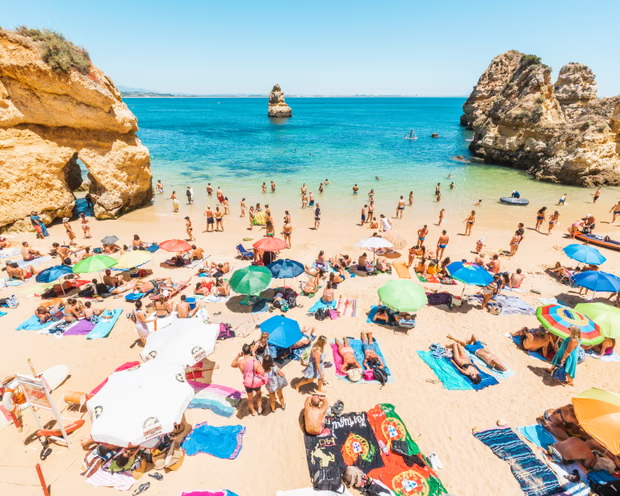
Europe’s long-running struggle with overtourism is entering a new phase. While anti-tourism protests have often appeared to target holidaymakers, a growing movement across southern Europe is shifting its attention towards large investors, luxury real estate developers and government policies that critics say are transforming public spaces into private commercial assets.
The latest commentary in The Guardian argues that tourists themselves are not the primary cause of public frustration. Instead, the author contends that multinational investors and politically connected business groups are benefiting from large-scale tourism projects while local communities face rising housing costs, restricted access to public beaches and growing pressure on infrastructure.
Recent demonstrations in Portugal’s Arrábida Natural Park illustrate this shift. Protesters opposed plans linked to the privatisation of beaches for luxury developments, arguing that natural resources should remain accessible to local residents rather than becoming exclusive tourist destinations. Similar concerns have emerged in Albania, where proposed luxury resort projects have sparked widespread protests over environmental protection, transparency and public ownership of coastal areas.
The debate extends beyond individual developments. Critics argue that years of economic liberalisation, foreign investment incentives and relaxed property regulations have made many Mediterranean destinations increasingly dependent on tourism while simultaneously making housing and everyday living less affordable for local populations. Young people in countries such as Portugal, Spain and Greece are facing rising living costs despite economic growth driven partly by tourism and international investment.
The European Parliament and tourism experts have long warned that overtourism cannot be solved simply by reducing visitor numbers. Sustainable tourism policies require balanced planning, stronger regulation of property development, investment in local infrastructure and measures that protect residents’ quality of life while preserving tourism’s economic benefits.
The evolving protests suggest that Europe’s tourism debate is no longer centred on visitors carrying cameras or suitcases. Instead, it reflects broader concerns about inequality, urban planning, environmental conservation and who ultimately benefits from the continent’s booming tourism industry.
As European governments seek to balance economic growth with sustainable development, policymakers face increasing pressure to regulate large-scale commercial investments, preserve public access to natural resources and ensure that local communities share fairly in the benefits generated by tourism. Whether these reforms materialise may determine if Europe’s most popular destinations remain welcoming to both residents and visitors in the years ahead.