 11
11
KATHMANDU: Satellite imagery has provided new evidence of a massive collapse of bedrock and glacier on Nepal’s Langtang Lirung peak, offering scientists important clues into the chain of events that triggered catastrophic flooding along the Nepal-China border.
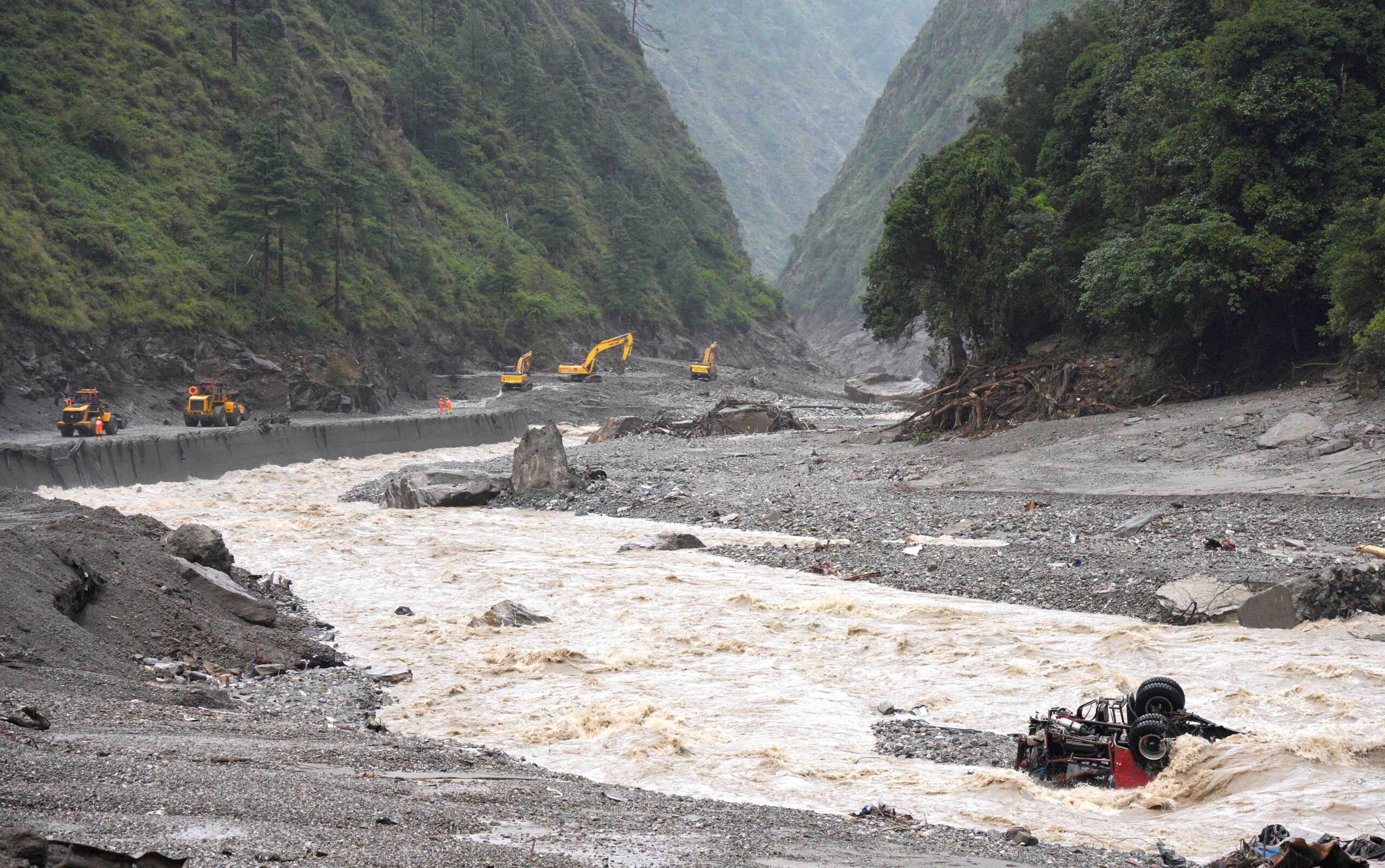
The disaster caused widespread destruction in mountainous areas of Nepal and Tibet, with hundreds of people killed and many others reported missing. Rescue teams continue to search for survivors as authorities assess the scale of the devastation.
According to scientists examining satellite images, a major section of bedrock beneath a glacier collapsed, sending ice, rocks and debris cascading into the valley. The resulting surge overwhelmed rivers, including the Trishuli, which rapidly became wider and filled with mud and sediment.
Communities and infrastructure in the affected areas suffered extensive damage. The town of Syapru Besi in Nepal was among the areas severely impacted, with buildings swept away and debris altering the course of rivers.
The findings have raised renewed concerns over the growing risks posed by climate change in the Himalayan region. Scientists say rising temperatures can contribute to the degradation of permafrost and destabilize high-altitude slopes, increasing the likelihood of landslides, glacier collapses and sudden floods.
However, experts caution that a direct link between climate change and the specific collapse that triggered the latest disaster has not yet been conclusively established. They say further scientific investigation is required to determine the precise causes and contributing factors.
The incident has highlighted the vulnerability of communities living in the Himalayas, where steep terrain, rapidly changing glaciers and limited early-warning infrastructure can magnify the consequences of sudden natural disasters.
Scientists have warned that as the Himalayan region continues to warm, glacier-related hazards could become increasingly frequent and severe, underscoring the need for stronger monitoring systems, early-warning mechanisms and greater regional cooperation to protect vulnerable communities.