 11
11
BEIJING: Typhoon Dolphin, the most powerful tropical cyclone to strike China this year, made landfall on the country’s eastern coast on Sunday, bringing torrential rain and powerful winds while triggering warnings of flooding and landslides.
The typhoon made landfall near Yuhuan in Zhejiang province at around 5:30 p.m. local time, with maximum sustained winds of about 151 kilometres per hour near its centre, equivalent to a Category 1 hurricane on the Saffir-Simpson scale.
Authorities had taken extensive precautionary measures, including moving offshore workers to safety, ordering vessels back to port and increasing inspections at reservoirs, mountain streams, landslide-prone areas, construction sites and tourist locations.
Forecasters warned that parts of Zhejiang could receive between 250 and 500 millimetres of rainfall. Heavy rain was also expected across Zhejiang, Shanghai, northern Fujian, northeastern Jiangxi, central and southern Anhui, and much of Jiangsu.
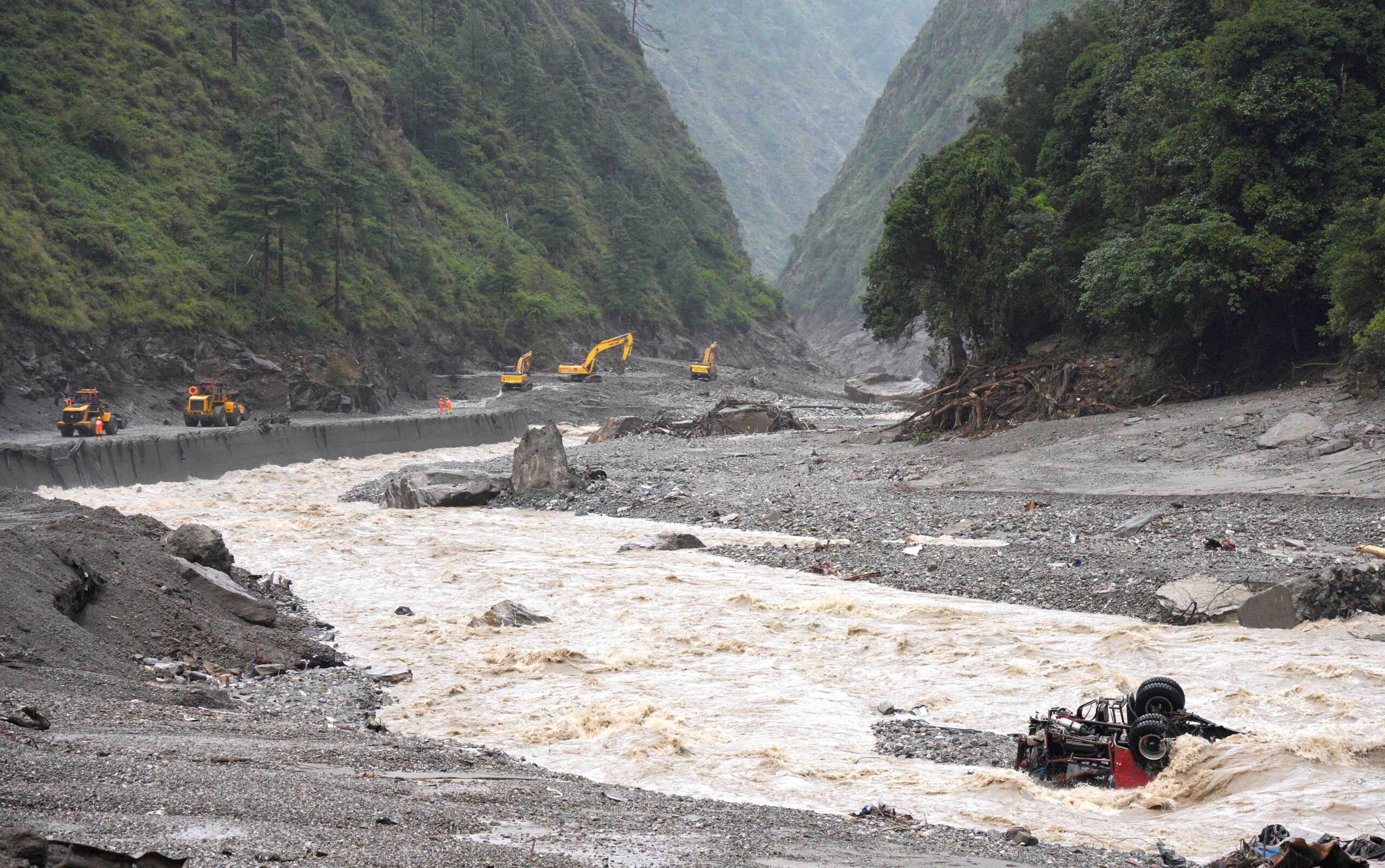
The storm was forecast to move westward after making landfall before gradually weakening over central and southwestern China. However, authorities warned that prolonged rainfall could increase the risk of flooding and landslides, particularly in mountainous areas and along smaller rivers.
More than one million people were evacuated from their homes across eastern China. In Shanghai, more than 30,000 people were relocated and approximately 1,500 flights were cancelled. Neighbouring Zhejiang province saw more than 900,000 residents relocated in Wenzhou, where more than 1,000 emergency shelters were opened.
In Fujian province, nearly 99,000 people were evacuated from high-risk areas, while dozens of coastal passenger ferry routes were suspended and offshore construction projects halted. Hundreds of construction vessels were also moved to sheltered waters.
Shanghai’s Yangshan Port also cleared vessels from its berths and moved more than 500 small and medium-sized ships to sheltered locations ahead of the storm.
Before reaching China, Typhoon Dolphin swept through Japan’s southern Okinawa prefecture, injuring six people and leaving more than 50,000 buildings without power.
The storm has underscored growing concerns over extreme weather in the region, with scientists noting that global warming is making extreme weather events, including stronger typhoons, more likely.