 11
11
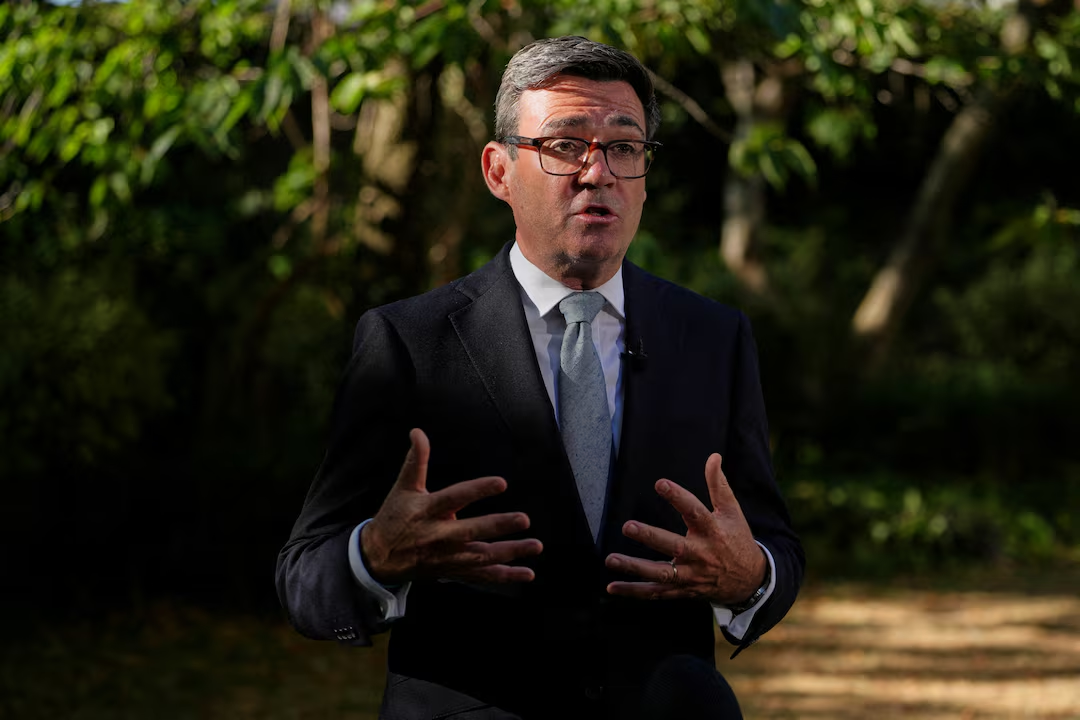
Andy Burnham’s decision to abandon his proposed cap on political donations represents an early and potentially significant test of the new Labour government’s commitment to political reform. The issue raises a broader question: can Burnham reduce the influence of wealth in British politics while remaining dependent on the existing political funding system?
Burnham had previously indicated support for limiting individual political donations to £500,000 a year, with the possibility of reducing the ceiling over time. Even such a limit would be relatively modest because wealthy individuals would still retain substantially greater financial influence than ordinary voters. Nevertheless, the proposed cap was seen as an important first step toward reducing the ability of extremely wealthy individuals to exercise disproportionate influence over political parties.
The significance of the U-turn therefore extends beyond the precise £500,000 figure. It concerns whether political parties should be able to rely heavily on a small number of extremely wealthy individuals for their financial resources.
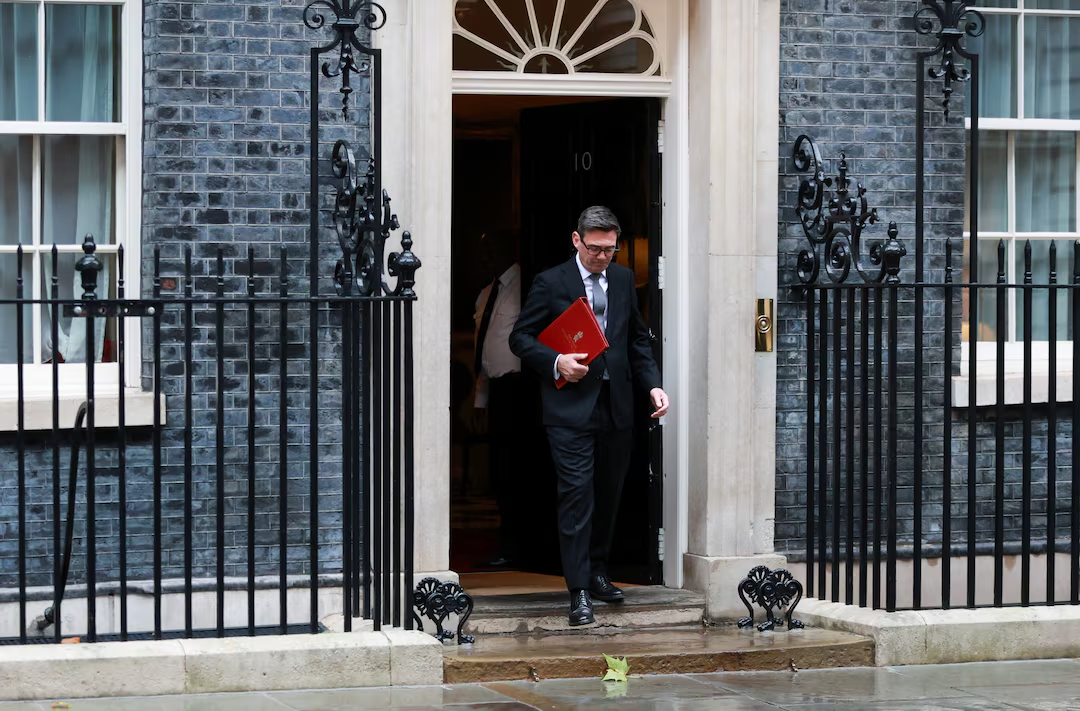
From a political-strategy perspective, the reversal creates a credibility problem for Burnham at a particularly sensitive moment. Having entered Downing Street promising a different style of government, abandoning an early reform pledge risks reinforcing public cynicism about politicians changing their positions once they gain power.
The wider concern is that voters are increasingly frustrated not simply because governments fail to deliver, but because politicians appear to retreat from commitments soon after taking office. In this interpretation, the donations issue could become symbolic of whether Burnham represents genuine political change or merely a change of personnel at the top.
One of the most complicated aspects of the debate is Labour’s relationship with trade unions. Critics of a universal donation cap have raised concerns that restricting large contributions could affect Labour’s traditional union funding.
However, an alternative approach could impose a £500,000 annual cap on donations while exempting trade unions that comply with existing political-funding rules. The argument is that collective contributions from thousands of members are fundamentally different from a wealthy individual making a multimillion-pound personal donation.
This could provide Burnham with a possible route to support a donation ceiling without necessarily placing traditional trade-union financing on the same footing as large individual donations.
The debate has become more significant because large political donations have grown substantially in recent years. A £9 million contribution to Reform UK from businessman Christopher Harborne has highlighted the scale of financial influence that individual donors can exercise in British politics.
Such developments demonstrate why the issue is no longer simply theoretical. If parties can receive multimillion-pound contributions from individuals, political competition can increasingly resemble a fundraising contest in which parties seek wealthy benefactors to compete with their opponents.
The danger is not necessarily that donors directly dictate individual policies. The deeper concern is structural: politicians may become more attentive to the preferences of people capable of providing enormous sums of money.
There is a genuine political dilemma for Burnham. A donation cap could strengthen his democratic-reform credentials, but it could also disrupt established sources of political financing.
Maintaining the existing system, meanwhile, provides parties with financial flexibility but exposes Labour to accusations that it has abandoned reform when confronted with powerful interests.
Burnham therefore faces a choice between preserving the current fundraising environment and pursuing a reform agenda that could place restrictions on wealthy political donors.
The most important issue is not Burnham personally. It is whether Britain’s political system can maintain public confidence when financial resources are distributed so unevenly.
Ordinary citizens influence politics primarily through voting, campaigning, membership and collective organisation. Extremely wealthy individuals possess another instrument: the ability to finance political activity on a scale unavailable to almost everyone else.
A credible reform programme therefore needs to address both the size and transparency of political donations, as well as overall campaign spending.
Burnham still has an opportunity to turn the controversy into a political advantage. Supporting a parliamentary process for establishing a donation ceiling would allow him to argue that the government remains committed to reducing the influence of big money while giving Parliament an opportunity to determine the precise long-term limit.
A comprehensive reform package could include:
Burnham’s reversal on political donations represents more than a disagreement over a particular financial limit. It raises fundamental questions about his government’s commitment to political reform and its willingness to challenge established sources of influence.
If he restores his commitment to limiting excessive political donations, he could turn a damaging U-turn into evidence that his government is willing to reconsider its decisions. If he maintains the reversal, opponents may portray him as another political leader who abandoned reform once faced with the practical realities of governing.
Ultimately, the debate concerns a fundamental democratic principle: political influence should be determined primarily by citizens, not by the size of an individual’s bank account.