 11
11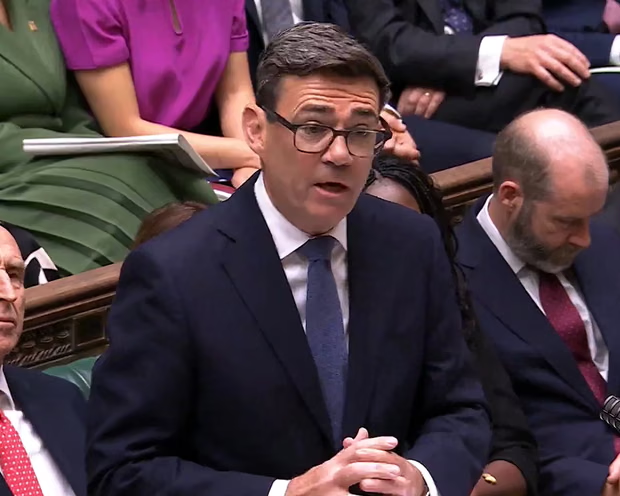
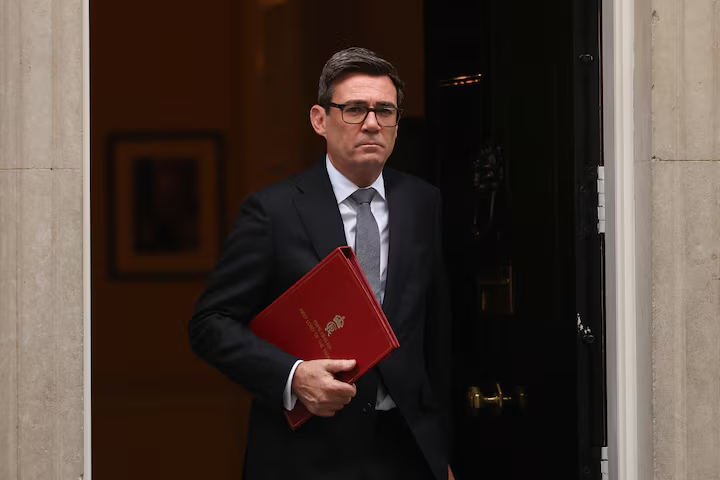
LONDON: British Prime Minister Andy Burnham has blamed the previous Conservative governments for leaving the UK economy vulnerable to current market turbulence, as government borrowing costs climbed to their highest level in more than 18 years.
During his first Prime Minister’s Questions session, Burnham rejected criticism from Conservative leader Kemi Badenoch, who compared the market pressures facing his government with the turmoil that followed Liz Truss’s 2022 mini-budget.
Badenoch challenged Burnham over the government’s spending commitments and pressed him to clarify whether taxes would be increased in the October budget. Burnham declined to rule out tax rises, saying the budget would be the responsibility of Chancellor John Healey.
The prime minister defended his government’s economic record, arguing that its policies had been properly funded and that it remained committed to fiscal discipline. He pointed to recent tax reductions, including a cut in VAT on energy bills, and said the government would continue to operate within its fiscal rules.
Burnham attributed the latest market turbulence largely to international developments, particularly higher global oil prices, rather than his government’s economic policies. He argued that the Conservative administrations had left Britain with weak economic growth and a higher debt burden, making the country more exposed to external shocks.
UK government borrowing costs rose further on Wednesday, with yields on 10-year government bonds reaching their highest level since June 2008. The increase has reduced the government’s fiscal room for manoeuvre ahead of the October budget.
The market pressures have also generated concerns within Burnham’s political circle. Economist Jim O’Neill, an ally of the prime minister, warned that investor confidence would depend on the government demonstrating a credible commitment to controlling debt and public spending.
Burnham nevertheless maintained that his administration was taking a different approach from its predecessors, citing economic growth, falling borrowing and efforts to reduce the deficit. He said the government would combine fiscal responsibility with measures designed to ease pressure on household living costs.
The prime minister also criticised Badenoch’s decision to appoint Andrew Griffith, who served as a Treasury minister under Truss, as shadow chancellor. Burnham argued that the Conservatives should reflect on the economic consequences of the Truss administration before criticising his government’s approach.
The confrontation comes at a challenging time for the new Labour government, with rising borrowing costs, renewed inflation concerns and higher oil prices creating additional pressure ahead of the October 28 budget.
Burnham’s government now faces the difficult task of maintaining its spending and reform commitments while convincing financial markets that public finances remain under control. The outcome of that balancing act is likely to be central to the government’s economic credibility in the months ahead.