 11
11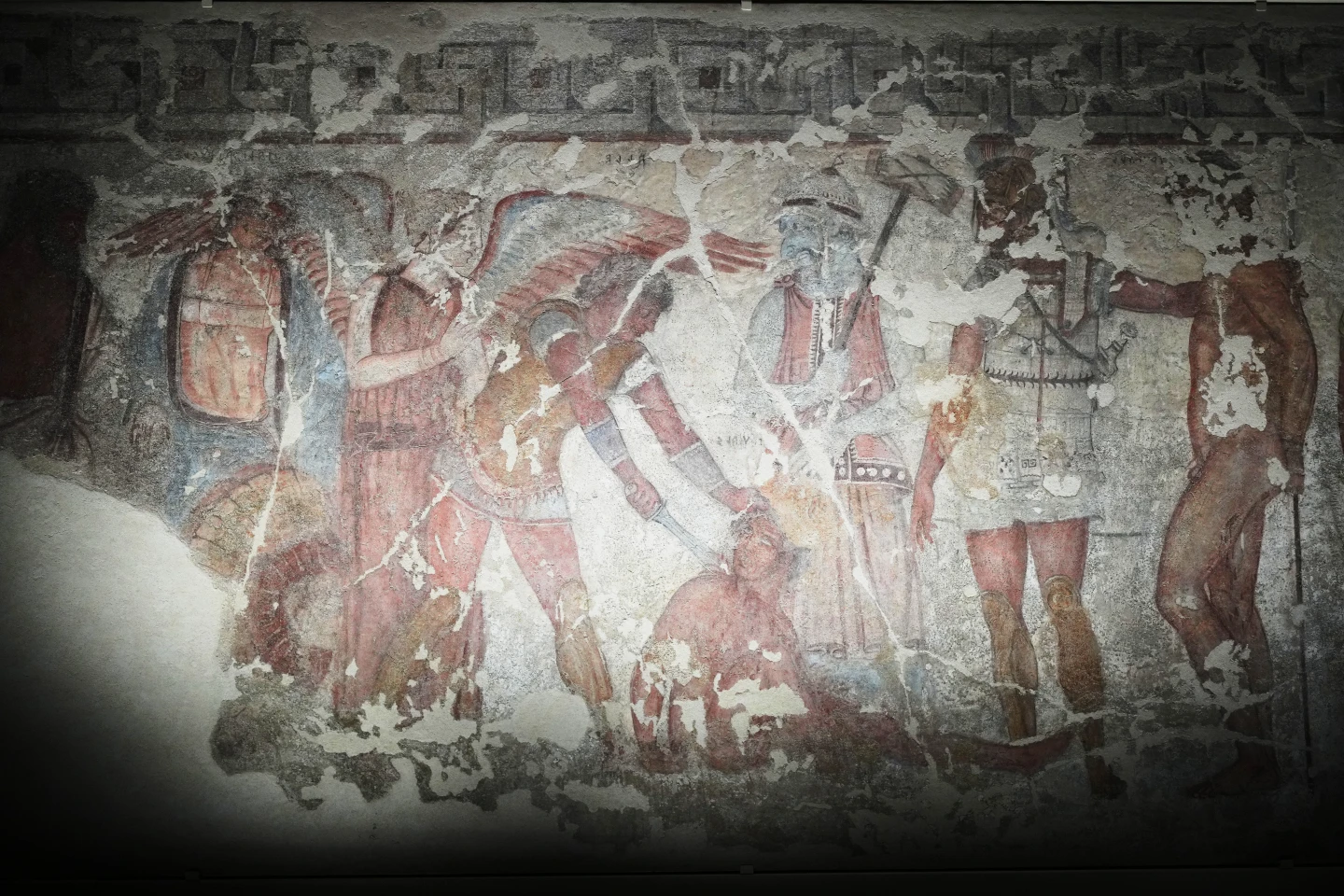
ROME: Italy has unveiled one of the most significant additions to its national cultural heritage with the public display of the famed fresco panels from the ancient François Tomb, following their acquisition for €15 million from the historic Torlonia family.
The fourth-century BC frescoes, regarded as one of the finest surviving examples of Etruscan painting, have gone on permanent display at the National Etruscan Museum of Villa Giulia in Rome. The exhibition opened after decades of efforts by the Italian government to bring the artwork into public ownership.
The François Tomb was discovered in 1857 by French archaeologist Alessandro François at the ancient Etruscan city of Vulci. Its frescoes were detached from the burial chamber in 1863 and remained in the private Torlonia collection for more than 160 years, while many of the tomb’s original contents were dispersed among museums and private collections.
To mark the acquisition, the museum has reunited the frescoes with a collection of Etruscan jewelry, painted vases, bronzes and other artifacts originally recovered from the tomb and loaned by museums across Europe, offering visitors a rare opportunity to view the assemblage together for the first time in generations.
The paintings depict dramatic scenes from Greek mythology alongside episodes from Etruscan history, including the sacrifice of Trojan prisoners by Achilles and battles involving Etruscan heroes, illustrating the close cultural links between the two civilizations. Experts describe the monument as one of antiquity’s greatest artistic achievements and a vital source for understanding Etruscan society and beliefs.
The purchase forms part of the Italian Culture Ministry’s broader initiative to reclaim and preserve nationally significant artworks. Officials said the ministry has prioritized acquiring a smaller number of historically important masterpieces, including works by renowned Renaissance and Baroque artists, to strengthen Italy’s public cultural collections.