 11
11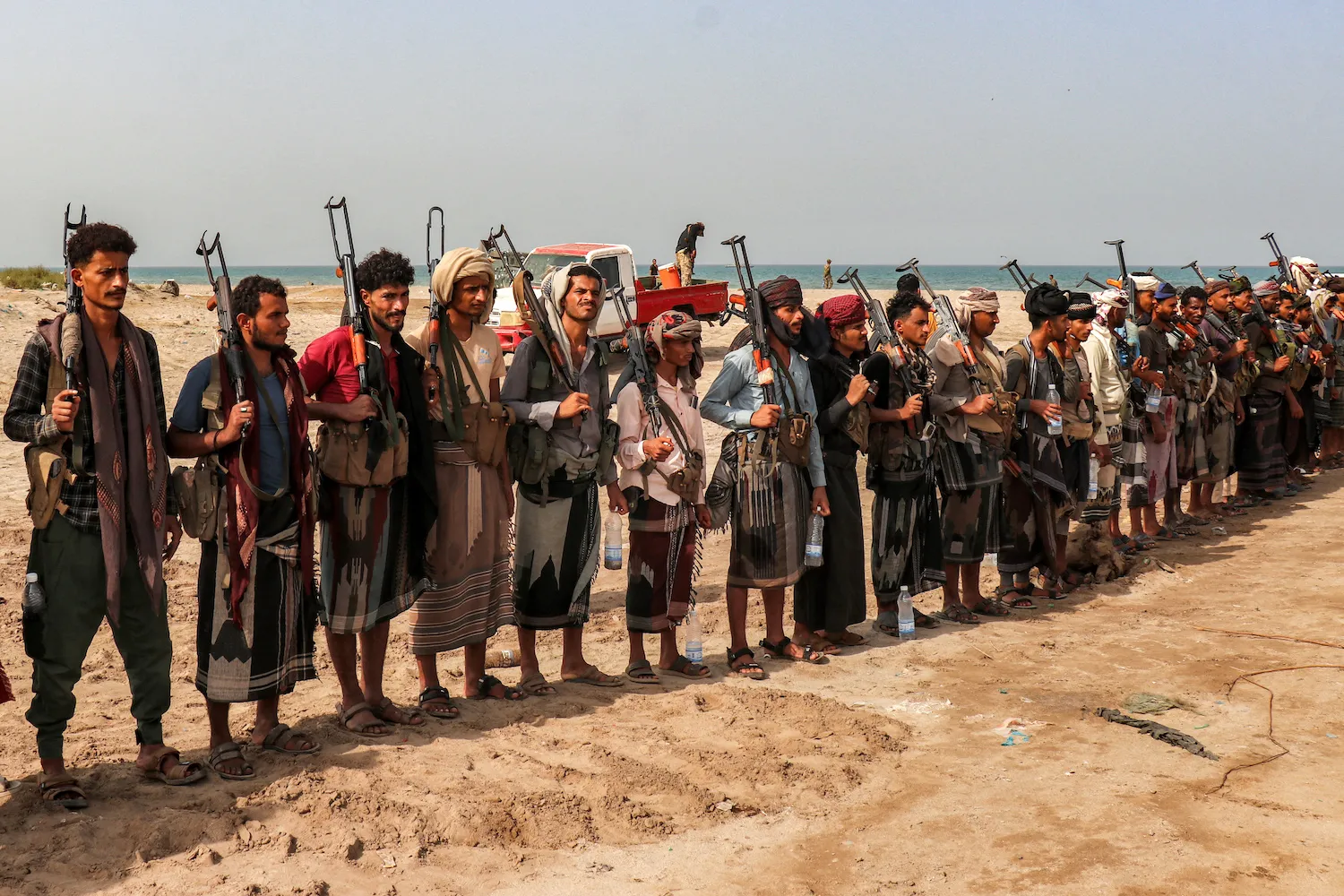
The reported transfer of senior Islamic Revolutionary Guard Corps (IRGC) commanders and advanced missile equipment from Iran to Yemen marks a potentially significant escalation in the Middle East’s already volatile security environment. According to a Reuters report citing regional and Western sources, Tehran has intensified its direct support for Yemen’s Houthi movement following months of heightened confrontation with the United States and its regional allies. If confirmed, these developments would represent a shift from indirect assistance toward a more active operational role in one of the region’s most strategic conflict zones.
For years, Iran has been accused by the United States, Saudi Arabia, and other Gulf states of providing the Houthis with weapons, training, intelligence, and financial assistance. Tehran has consistently denied supplying military equipment in violation of United Nations restrictions, maintaining that its support for the Houthis is political and humanitarian.
The latest reports, however, suggest a more direct level of involvement. The deployment of IRGC commanders alongside missile-related equipment indicates that Iran may be seeking not only to strengthen Houthi military capabilities but also to improve operational coordination and command structures. Such a move would increase the Houthis’ ability to conduct sophisticated missile and drone operations against maritime and regional targets.
The Houthis have transformed the Red Sea into one of the world’s most dangerous shipping corridors. Their repeated attacks on commercial vessels and energy infrastructure have disrupted global trade, increased shipping insurance costs, and forced many shipping companies to reroute vessels around Africa, significantly increasing transportation expenses.
Any improvement in Houthi missile capabilities could further threaten one of the world’s busiest maritime chokepoints. The Bab el-Mandeb Strait serves as a critical gateway linking the Red Sea to the Gulf of Aden, carrying a substantial share of global oil exports and international commerce. Continued instability in this corridor has implications that extend well beyond the Middle East, affecting global supply chains and energy markets.
The reported deployment also fits within Iran’s broader regional security doctrine, which relies on partnerships with allied armed groups across the Middle East. Tehran has long viewed these relationships as a means of extending strategic influence while maintaining a degree of plausible deniability.
By strengthening the Houthis, Iran potentially gains another pressure point against the United States and its regional partners. This comes at a time when tensions between Washington and Tehran have intensified following U.S. military strikes on Iranian-linked targets and growing confrontations over maritime security.
For Washington, the reported Iranian moves reinforce longstanding concerns that Tehran continues to expand its military influence through regional partners. Recent U.S. statements warning of stronger military responses against both Iran and the Houthis suggest that Washington may increasingly treat the two actors as part of a single strategic challenge.
Saudi Arabia and the United Arab Emirates also face renewed security concerns. Although Riyadh has pursued dialogue with the Houthis in recent years, enhanced missile capabilities in Yemen could threaten critical energy infrastructure and complicate efforts to achieve a durable political settlement.
Perhaps the greatest concern is the increasing possibility of miscalculation. A sophisticated Houthi attack causing major casualties or significant disruption to international shipping could trigger broader military retaliation against Iranian assets. Such a cycle of escalation risks drawing additional regional and international actors into an already complex conflict.
The presence of IRGC personnel on Yemeni territory, if verified, could also blur the distinction between proxy conflict and direct state involvement, potentially altering how future military responses are calibrated.
The reported developments are likely to intensify diplomatic pressure at the United Nations and among Western governments. Calls for stricter enforcement of sanctions, enhanced maritime security operations, and renewed diplomatic engagement with both Iran and Yemen are expected to grow.
At the same time, achieving a comprehensive political settlement in Yemen may become increasingly difficult if external military support continues to strengthen the capabilities of armed groups operating outside the internationally recognized government.
The reported transfer of IRGC commanders and missile equipment to Yemen, if independently verified, represents more than a tactical military development. It reflects a broader strategic competition unfolding across the Middle East, where regional rivalries, proxy conflicts, and global economic interests increasingly intersect.
As tensions between Iran, the United States, Israel, and Gulf Arab states continue to rise, developments in Yemen are no longer confined to a localized civil conflict. Instead, they have become a central component of a wider geopolitical contest that carries significant implications for regional stability, international shipping, global energy markets, and international security.