 11
11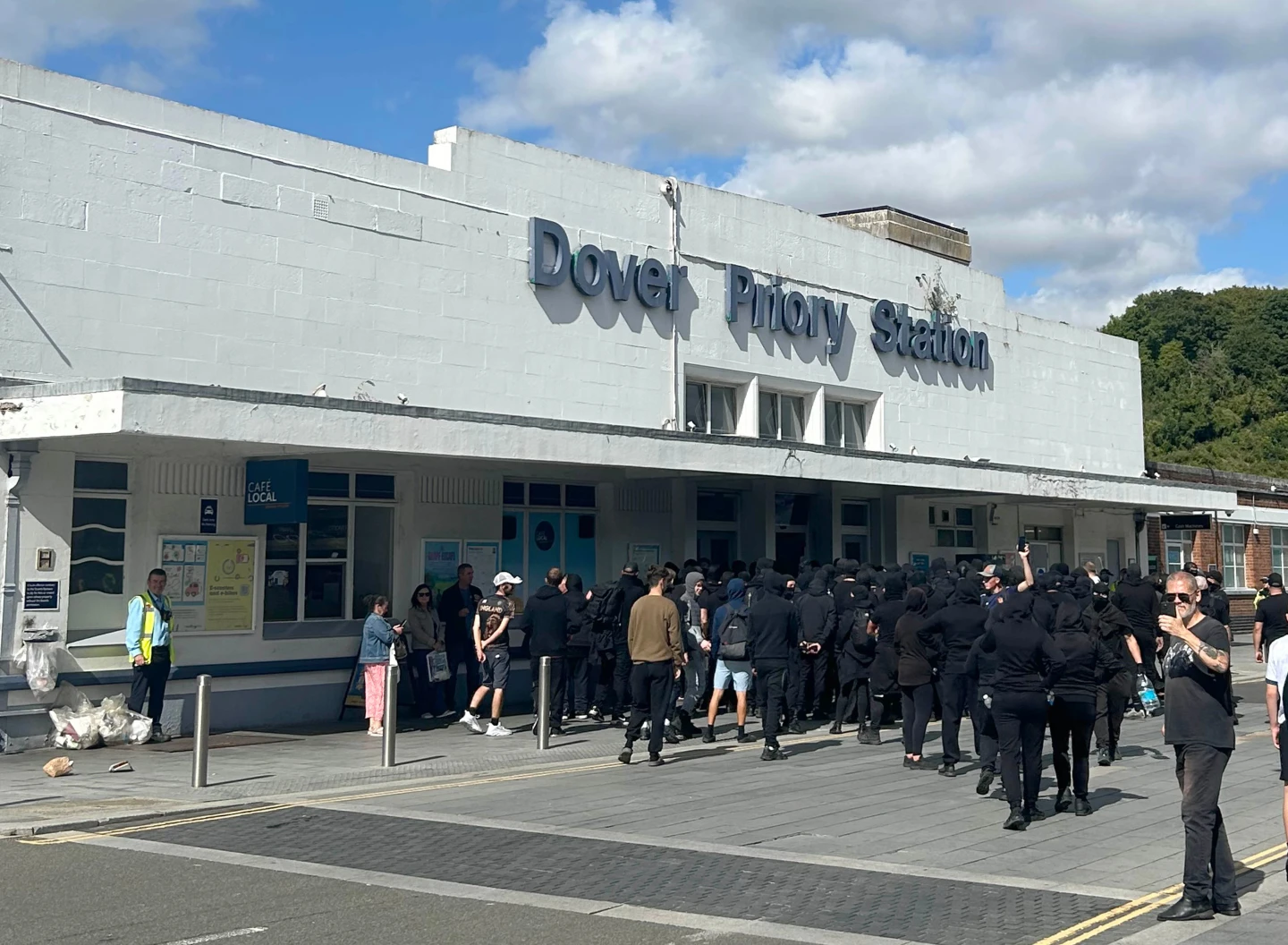
Recent disturbances in Dover and Portsmouth indicate that Britain’s far-right movement may be entering a more organised and confrontational phase, with emerging networks demonstrating an ability to mobilise supporters rapidly, disrupt public infrastructure and target asylum seekers.
The incidents highlight a growing convergence between anti-immigration activism and organised street mobilisation. Hundreds of masked men reportedly gathered in Dover and blocked roads around the port, while a separate group assembled in Portsmouth following the arrival of a boat carrying asylum seekers.
At the centre of these developments is Patriot Platform, a recently established network that brings together several local anti-migrant groups. The organisation promotes themes centred on border protection, British identity and opposition to irregular migration, while critics have characterised its activities as part of the growing far-right movement.
One of the most significant aspects of the recent incidents is the organisational model behind them. Rather than relying solely on conventional public demonstrations, emerging groups increasingly use private online channels and direct communications to coordinate supporters and mobilise rapidly.
This presents a growing challenge for law-enforcement agencies. The Dover demonstration reportedly caused serious disruption to traffic entering and leaving the port, while the scale of the mobilisation raised questions about police preparedness and intelligence gathering.
The Portsmouth incident demonstrated how quickly similar groups can respond to developments involving asylum seekers. Protesters gathered after the arrival of migrants and attempted to obstruct their movement, prompting police intervention and the issuance of a dispersal order.
Such developments raise the prospect of a decentralised network capable of activating local groups whenever an immigration-related incident attracts public attention.
The protests come amid continuing political controversy over irregular migration in Britain. Although government figures indicate that small-boat arrivals have declined compared with the previous year, immigration remains one of the most politically sensitive issues in the country.
The arrival of asylum seekers in Portsmouth was particularly significant because the city has not traditionally been among the main locations associated with Channel migration.
The emergence of new arrival points could place additional pressure on local authorities while providing far-right organisations with opportunities to mobilise around highly visible migration-related events.
This creates a difficult environment for policymakers. Authorities must address genuine concerns surrounding border management, accommodation and pressure on local services while preventing those concerns from being exploited to promote intimidation, disorder or vigilantism.
The incidents in Dover and Portsmouth also expose potential weaknesses in police preparedness.
If groups can coordinate large numbers of people through relatively closed online networks and mobilise them within a short period, conventional approaches to managing demonstrations may no longer be sufficient.
Law-enforcement agencies will increasingly need effective intelligence-sharing mechanisms, rapid coordination and clear strategies for distinguishing lawful protest from obstruction, intimidation and violence.
The government faces the additional challenge of maintaining public order without undermining the right to peaceful protest. The distinction is crucial: democratic societies must protect legitimate political expression while taking firm action against threats to public safety and attempts to intimidate vulnerable communities.
The broader significance of the Dover and Portsmouth incidents lies in the possibility that far-right activism in Britain is becoming more organised, decentralised and operationally flexible.
The use of coordinated groups, rapid mobilisation and direct action around ports and migrant facilities represents a potentially more serious development than conventional political demonstrations.
If such tactics become normalised, public infrastructure and locations associated with migration could increasingly become targets for organised disruption.
For the British authorities, the challenge is therefore not simply to manage individual demonstrations but to understand and respond to a developing network of groups capable of moving quickly from online mobilisation to street-level action.
The developments also underline the need for political leaders to address immigration concerns through effective policy rather than allowing the issue to become dominated by street confrontation.
Failure to manage migration effectively can fuel public frustration, while failure to respond firmly to intimidation can create space for extremist groups to portray themselves as alternative authorities.
Britain therefore faces a delicate balancing act: strengthening border management, addressing pressure on local communities and maintaining public confidence while ensuring that political disagreements do not descend into vigilantism or violence.
The events in Dover and Portsmouth demonstrate that Britain’s immigration debate is no longer confined to Parliament or political campaigns. It is increasingly being played out on the streets, where the combination of migration pressures, political polarisation and organised far-right mobilisation could create increasingly serious challenges for public order and social cohesion.