 11
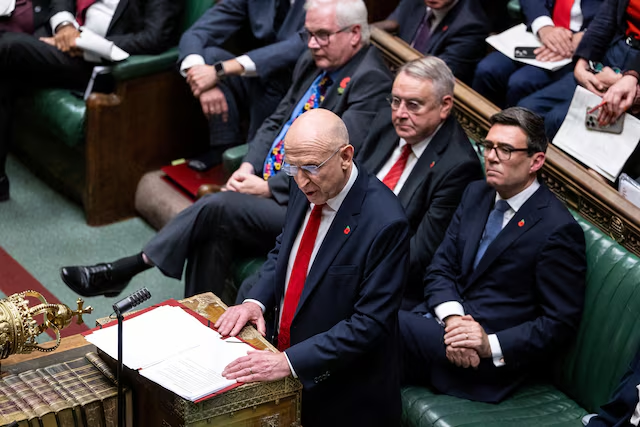
London: British Finance Minister John Healey’s first budget passed with little reaction in financial markets, in sharp contrast to the leaks, policy reversals and bond market jitters that marked the run-up to his predecessor’s budget a year ago.
Government bonds, known as gilts, ended Wednesday’s trading session largely unchanged following the announcement of a budget that offered support to households and motorists affected by rising global energy costs, while raising taxes on banks. Bank shares had, however, moved earlier in the day following a media report on those plans, before Healey delivered his statement.
In a sign of how carefully expectations had been managed, Healey’s plans set borrowing for the current financial year at £112 billion ($149 billion), precisely matching the forecast of primary dealers in a Reuters poll published last week. Planned gilt issuance for 2026/27 stood at £250.6 billion, just £1 billion above the dealers’ consensus.
“Judging by the tempered reaction in sterling and gilts, his statement has done its job to placate markets looking for evidence of fiscal credibility,” said Kit Rees, investment strategist at Quilter.
No Repeat of 2025 Turmoil
The calm stood in marked contrast to the period preceding Rachel Reeves’s November 2025 budget. Reeves had used a pre-budget speech to prepare voters and markets for what appeared to be a politically difficult increase in income tax rates. Days later, however, a Financial Times report said she had dropped the plan, triggering a sell-off in gilts as investors questioned the government’s fiscal headroom and the coherence of its strategy.
The turbulence deepened on budget day, when the Office for Budget Responsibility inadvertently made its economic and fiscal forecast available online before Reeves had presented her statement to parliament.
A person familiar with this year’s budget preparations said Healey had been determined to make a clean break from that experience. “John took the decision to bring the budget date forward, and brought in military-style compartments to prevent uncertainty and speculation,” the person said, referring to ring-fenced groups of officials permitted to view details of only specific policies.
“He was personally determined to ensure this went smoothly and held the department to account on it,” the person added, noting that the Treasury had also upgraded its IT systems so that protected policy measures were accessible solely to those within each compartment.
Bank Tax Details Leaked
Despite these measures, the budget was not entirely leak-free. Meg Hillier, chair of parliament’s Treasury Committee, wrote to the finance ministry and the Financial Conduct Authority on Wednesday after Bloomberg reported that Healey would raise taxes on banks by less than expected, lifting bank share prices.
“I would welcome your confirmation that the Department is undertaking work to understand what happened in this case,” Hillier wrote. “I would also welcome confirmation that banks (or any representatives of them or their trade bodies) were not told of the changes in outline or with specifics before the publication of the budget and the chancellor’s statement to the House (of Commons).”
A Treasury spokesperson said: “We do not comment on budget speculation.”
The finance ministry also continued its practice of granting certain newspapers exclusive early access to embargoed announcements ahead of the budget, a strategy intended to generate public interest but one that gives selected outlets an advantage. The Treasury did not respond to questions about the practice or about any changes it had made since last year’s budget.