 11
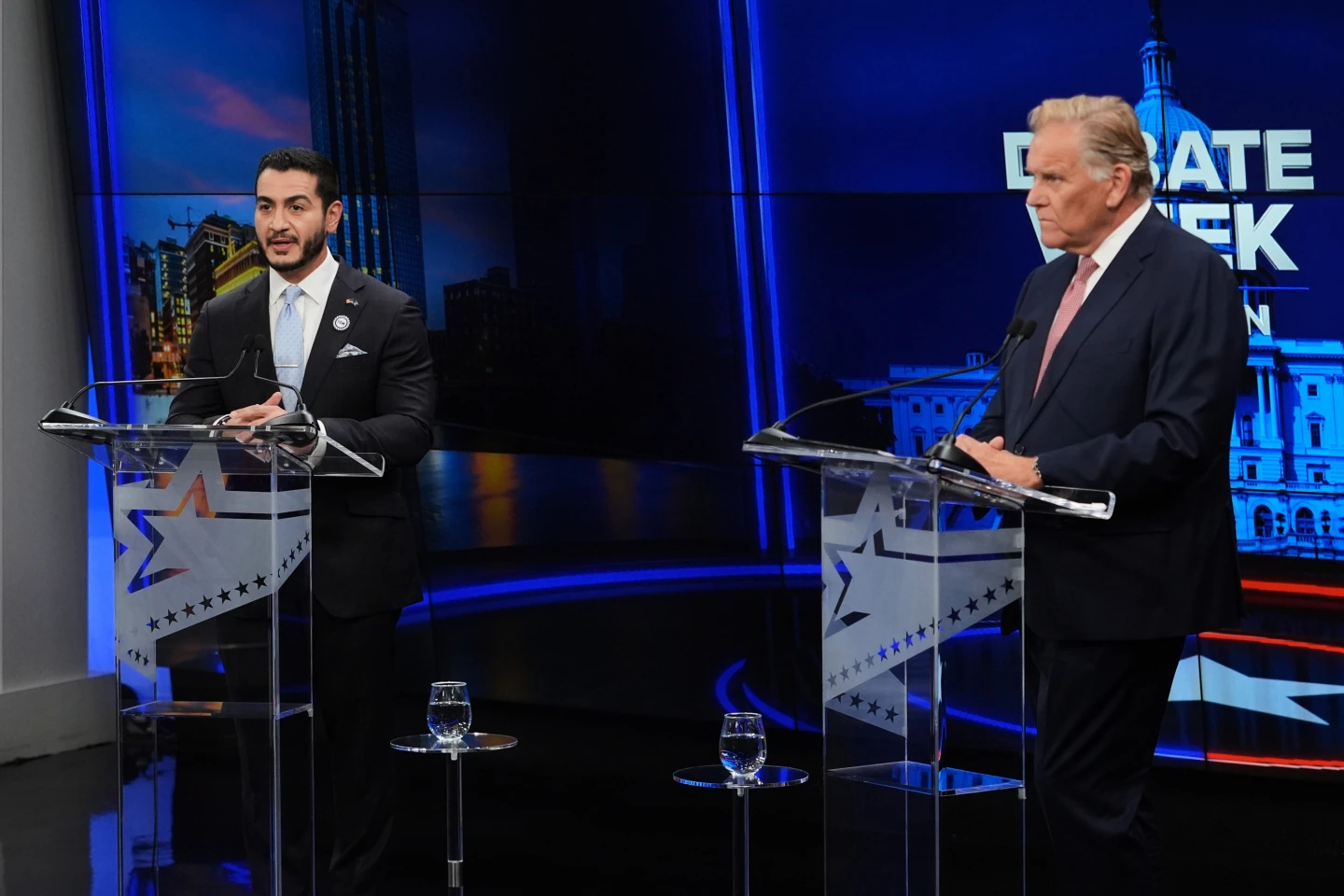
GRAND RAPIDS, Michigan – Democrat Abdul El-Sayed and Republican Mike Rogers met on Thursday for the first televised debate in the contest for Michigan’s open U.S. Senate seat, an hour-long encounter marked by frequent interruptions, personal accusations and sharp disagreements on foreign policy, immigration and trade, with less than a month remaining before the November 3 midterm elections.
The debate, held at the WOOD-TV studios in Grand Rapids and moderated by political reporter Rick Albin, was the candidates’ first face-to-face meeting after Rogers declined to take part in a September debate in Detroit over objections to the moderator. The race is widely regarded as a toss-up and is seen as pivotal to Democratic hopes of regaining control of the Senate.
Throughout the evening, the two candidates repeatedly spoke over one another, prompting the moderator to appeal to them on several occasions to allow the discussion to proceed. El-Sayed, a former Wayne County health director, sought to portray Rogers as a wealthy figure disconnected from the concerns of ordinary Michigan voters. Rogers, a former member of the U.S. House of Representatives endorsed by President Donald Trump, accused his opponent of being weak on terrorism and suggested he held foreign sympathies. In one exchange over surveillance cameras, Rogers alluded to the possibility of a relative on a terrorism watch list, drawing a pointed challenge from El-Sayed to state his accusation openly. If elected, El-Sayed would become the first Muslim member of the U.S. Senate.
On foreign policy, both candidates agreed that the U.S.-Israeli war with Iran should be brought to an end, though they differed sharply on its justification. El-Sayed attributed rising fuel prices and inflation to the conflict and to the disruption of shipping through the Strait of Hormuz, while Rogers defended the campaign, arguing that it had significantly set back Iran’s uranium enrichment programme. On Israel, Rogers voiced continued support for American aid, while El-Sayed called for redirecting those funds toward domestic priorities such as education, healthcare and childcare.
On immigration, Rogers acknowledged that recent high-profile enforcement operations in Minnesota had been handled inappropriately and said such actions should be carried out more discreetly, while maintaining that the administration’s policies had removed dangerous criminals from the streets. El-Sayed defended his previous call to abolish Immigration and Customs Enforcement, saying the agency had moved beyond its enforcement mandate.
The candidates also clashed over the Trump administration’s trade dispute with Canada, an issue of particular economic weight for Michigan. El-Sayed linked Rogers to past free trade agreements he blamed for the loss of manufacturing jobs, while Rogers said he favoured reaching a deal with Ottawa and the removal of Canadian tariffs on American goods.
The two contenders are scheduled to meet again on October 21 in a second debate to be moderated by Detroit station WXYZ, less than two weeks before Election Day.