 11
11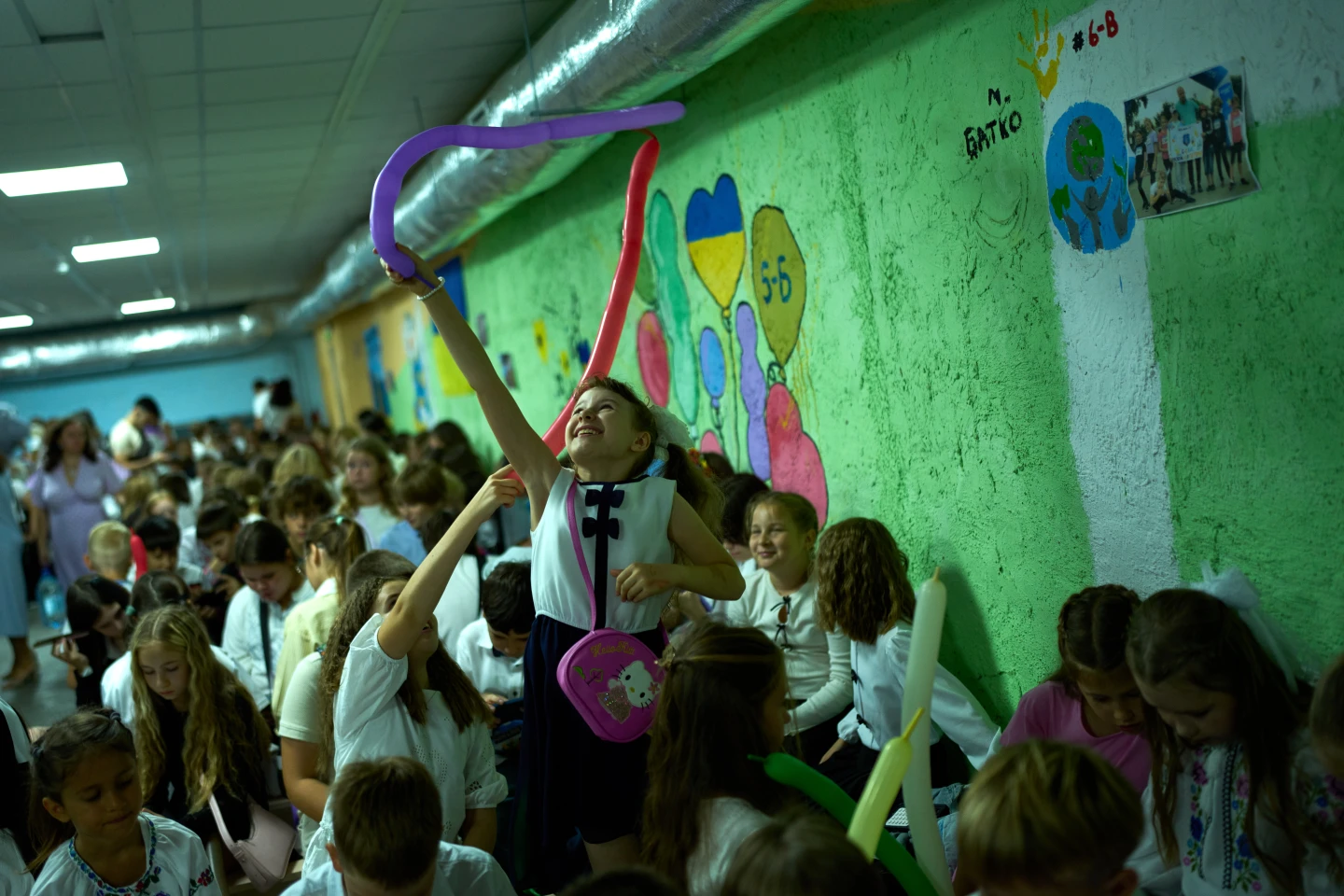
KYIV — The start of the new school year in Kyiv was disrupted by air raid alerts and explosions on Tuesday, hours after Russian ballistic missiles struck the Ukrainian capital, forcing children and parents to abandon traditional school-opening ceremonies and seek shelter.
Despite the security threats, schools across Kyiv attempted to welcome students for the beginning of the academic year. At one school in the Obolon district, children and parents gathered in festive clothes as balloons were released and music played. The ceremony was quickly interrupted when an air raid siren sounded, sending the crowd to safety.
Ukrainian students are beginning their fifth school year since Russia launched its full-scale invasion. Thousands of schools have been forced to adapt to the continuing conflict by shifting to remote or blended education, conducting lessons in shelters or closing altogether in areas that have been destroyed or remain under Russian occupation.
Ukraine’s Education Ministry said that 8,424 general secondary schools are operating in person this academic year, while 1,306 are conducting classes remotely and 2,211 are using a blended format. As a result, nearly one-third of schools cannot operate fully in person.
The war has also inflicted extensive damage on Ukraine’s education infrastructure. Russian attacks have destroyed an estimated one million textbooks, while Kyiv alone has recorded damage to 318 educational facilities, including 156 schools, according to city education officials. Some schools have been struck repeatedly.
Education officials and activists have warned that the prolonged disruption is causing significant learning losses and contributing to a decline in the country’s student population. The number of schoolchildren in Ukraine has fallen by more than 755,000, or 17.5%, since the 2021-22 academic year. In Kyiv, the number of first-graders has declined by about 40% since 2022.
Schools are increasingly relying on underground shelters, digital education platforms and flexible schedules to maintain learning amid frequent attacks. Ukraine’s national Mriia education platform is also being used to connect students, parents, teachers and school administrators and facilitate remote learning.
Educators say the consequences extend beyond immediate interruptions to schooling. Prolonged learning losses, population displacement and damage to educational facilities could affect Ukraine’s future workforce, economic productivity and social cohesion.
The disruption came as Russia continued a sixth consecutive night of heavy aerial attacks on Kyiv and other Ukrainian regions. Ukrainian authorities said at least 12 people were killed and more than a dozen wounded in the overnight strikes, which involved ballistic and cruise missiles and drones.
For many Ukrainian families, the return to school therefore represents not only the beginning of another academic year but also another test of their ability to preserve normal childhood routines amid the continuing war.