 11
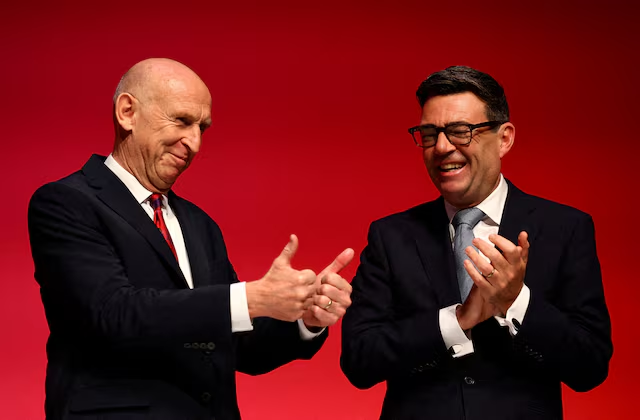
When a new prime minister arrives promising to end “40 years of neoliberalism,” his first budget is expected to carry his signature. Andy Burnham’s first fiscal event, delivered by Chancellor John Healey, carried someone else’s. In the assessment of a growing number of commentators, this was neither a Burnham budget of bold reinvention nor a Healey budget of cautious repair. It was, in spirit and in substance, a Martin Lewis budget.
The man outside government who shaped it
Lewis, founder of MoneySavingExpert, reaches around 10 million subscribers each week with practical advice on mortgages, energy deals and everyday bargains. He is probably better known than almost every MP at Westminster, and since Russia’s full-scale invasion of Ukraine sent energy prices soaring, he has become steadily more political and more influential.
His imprint on this budget was unmistakable. On budget morning he received a personal briefing from the chancellor in Downing Street before the cabinet’s own pre-budget meeting, and he, rather than any minister, was the headline interview on BBC Radio 4’s Today programme. Several of the budget’s most visible measures came straight from his wishlist: scrapping standing charges on gas bills, shielding more pensioners from income tax, and linking energy bill credits to council tax bands.
His influence extends to Burnham’s style of governing. At last year’s Labour conference, Lewis advised any incoming prime minister to identify a hundred everyday irritations and fix one each day for the first hundred days. Burnham has followed that template closely, pledging to end loud phone use on public transport, crack down on unfair parking fines and install more postal drop boxes.
Many measures, little money
The appeal for ministers is obvious. After a difficult period under Keir Starmer, a stream of consumer-friendly fixes allows the government to present itself as permanently on the public’s side, and such micro-policies cost very little. The budget contained 98 separate measures, an unusually high number, yet their combined cost was modest.
The scale comparison is stark. Rachel Reeves’s first budget announced additional spending worth £74bn by the end of the forecast period. Healey’s announced around £380m, roughly 0.5% of that figure. For a prime minister who presents himself as a changemaker with a ten-year plan, critics argue, the gap between rhetoric and resources is hard to ignore.
Conservative leader Kemi Badenoch seized on exactly that point, mocking a prime minister who promised to end four decades of neoliberalism and delivered four pence off gherkins. The jibe landed partly because it echoed concerns already voiced privately by some of Burnham’s own advisers and MPs, and because it contrasted sharply with earlier, bigger ambitions such as bringing Thames Water into public ownership.
Lewis’s own warning
There is an irony at the heart of this approach. Lewis has never claimed to be a politician and is careful about the limits of his role. He has increasingly argued that consumer tips cannot solve problems for people who can no longer help themselves, and that structural change is needed. A government borrowing his toolkit, critics say, has adopted his remedies while overlooking his diagnosis.
A grim economic backdrop
The budget’s modesty looks more consequential against the official forecasts. The Office for Budget Responsibility expects earnings not to rise at all next year in the face of high inflation, and projects that by 2030 household take-home pay will be only about 2% above its pre-Covid level of 2020. A £100 energy credit, set against typical household fuel bills expected to exceed £2,000, looks small by comparison, especially with a harsh El Niño winter in prospect. Some observers expect the government will need a further energy intervention before the new year.
Politically, the government is squeezed from both directions. Badenoch can argue that ministers are dodging the big structural questions, while the Greens, Plaid Cymru and the Scottish nationalists can press the case that their voters are not being helped enough. On these forecasts, talk of a snap election delivering Labour a fresh majority appears unrealistic.
Caution versus ambition
The central debate is whether restraint was necessary. The government faces record-high taxes, public debt of around £3tn, sluggish growth and an expensive interest bill. Defenders of the cautious approach would argue that, with borrowing costs far above the cheap-money years, protecting fiscal credibility is itself a form of protecting households, and that a stable base must come before grander reforms.
Critics, including commentators sympathetic to Burnham, counter that markets gave the government room to be bolder. Gilt traders, they note, were unruffled even as the government ran down its fiscal buffer, and Britain is not facing a bond-market revolt. On this view, Healey could have borrowed substantially more to invest in social and affordable housing, arguing credibly that it would reduce benefit costs over time.
Verdict: still waiting for Burnham
Supporters of the prime minister see in him a leader who speaks sincerely about the damage done by past economic policy, who is more at ease with his party than his predecessor, and who has assembled a less insular team. But even sympathisers warn that grand rhetoric must eventually translate into a programme of real change. If it does not, voters may conclude that this summer’s removal of a recently elected prime minister was driven more by Labour MPs’ self-preservation than by any larger purpose.
The government’s defenders would say this budget was always meant as a first step, with Burnham’s ten-year plan and the next spending review still to come. His critics on both left and right will judge him on whether that bigger agenda ever arrives. For now, Britain has had its Martin Lewis budget. The Burnham budget it was promised has yet to appear.