 11
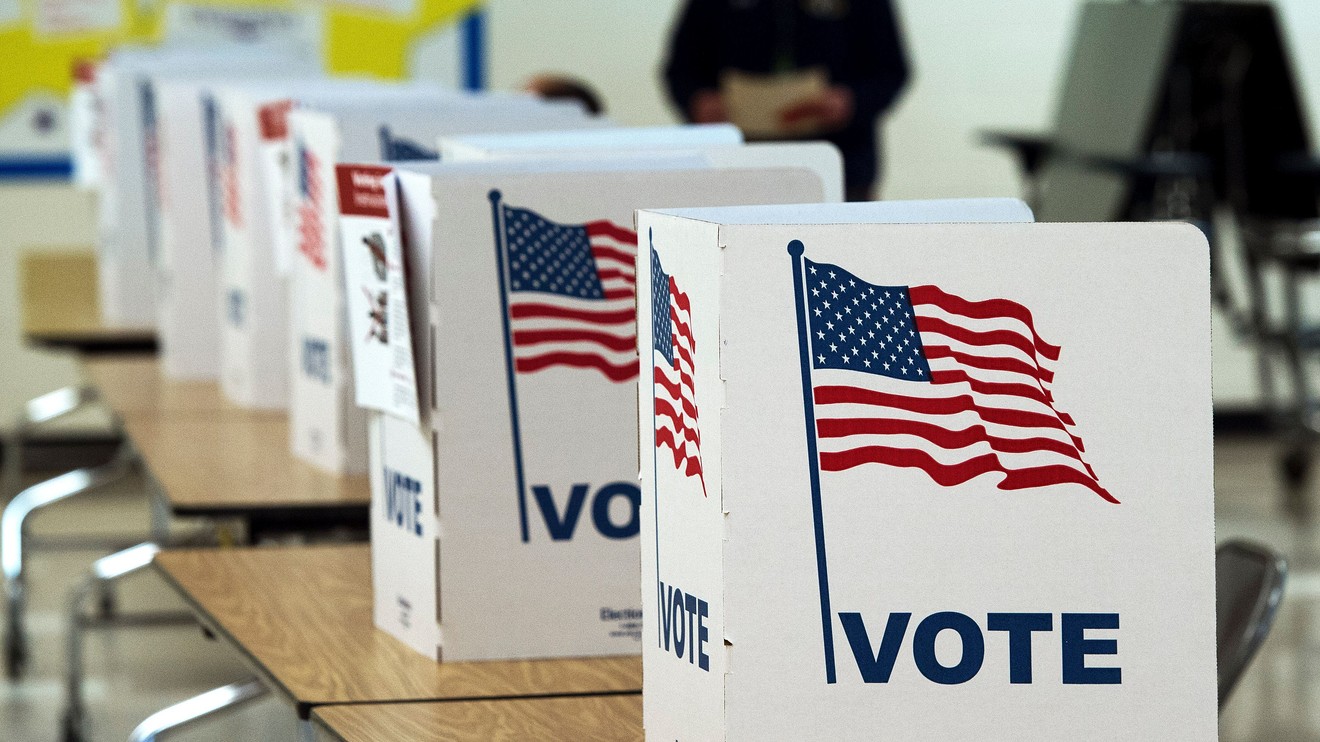
As American voters head to the polls on November 3, a quieter message has been travelling from Washington to Gulf capitals: prepare for what may come after the votes are counted. According to two diplomats briefed on the matter, U.S. diplomats and defense officials have advised several Middle Eastern countries and regional allies to brace for possible renewed military action against Iran once the midterm elections are over, and to prepare for the likelihood that Tehran will strike back at them.
The diplomats stress that President Donald Trump has not made a final decision. But the warnings, together with the president’s own repeated public remarks that he is weighing new strikes after Election Day, have pushed the region onto a heightened state of alert. The White House and U.S. officials have declined to comment.
An election calendar shaping a war calendar
The timing shows how closely domestic politics and foreign policy are now intertwined in Washington. The war with Iran, which began in late February and is now in its eighth month, has become a heavy burden for Republican candidates. Rising gasoline prices, a direct consequence of the conflict, have rippled through nearly every sector of the global economy and left voters fatigued. The Pentagon’s latest estimate to Congress puts the cost of the war to American taxpayers at $47.1 billion.
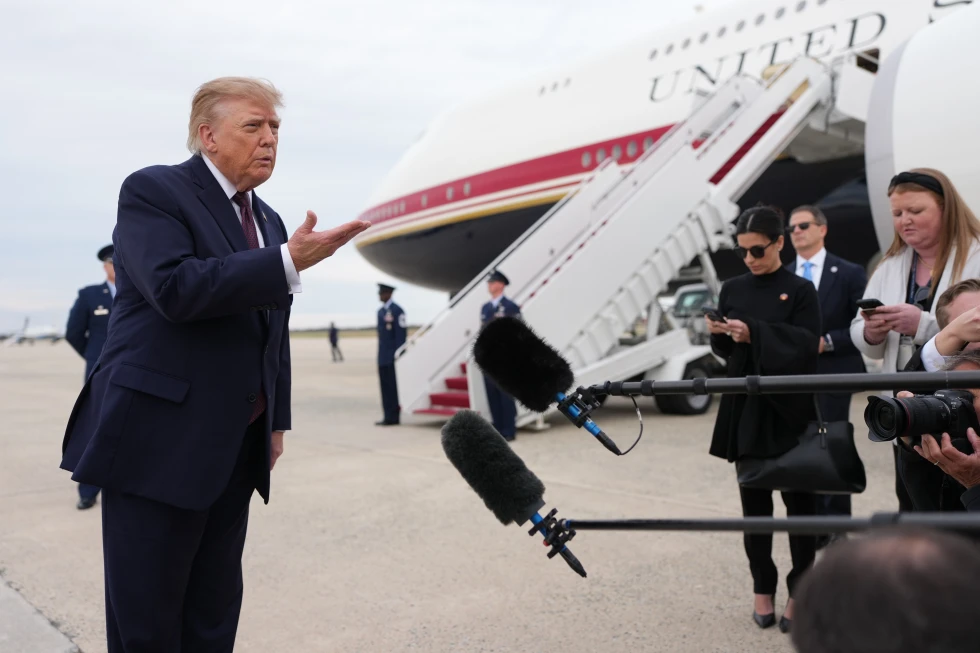
On the campaign trail, Trump has delivered two messages at once. He has assured voters that the end of the war is near, telling a rally in Lubbock, Texas, that a conclusive end could come “in a couple of weeks.” In the same breath, he has signalled that another round of bombing could follow the election, insisting the war must end “properly,” with a definitive guarantee that Iran will never acquire a nuclear weapon. When asked when the war would end, he answered that it would end whenever he wanted it to.
The dual messaging appears designed to reassure an anxious electorate while keeping military pressure on Tehran. For Gulf states, however, it creates deep uncertainty: they must plan for a war that may be ending, or about to intensify, depending on decisions made after a domestic vote in which they have no voice.
The Gulf in the line of fire
What makes the latest warnings particularly significant for the region is their focus on retaliation. U.S. officials have reportedly told allies that a new round of strikes could last several days, but regional officials expect Iran and its proxy networks to respond in ways that could prolong the fighting well beyond that. Allies have been urged to take precautions on the assumption that Iranian retaliation will target energy facilities and other critical infrastructure.
This is no abstract concern. The conflict has already spread beyond its original theatre. Iran-backed Houthi forces have attacked Saudi Arabia’s oil infrastructure and airports, and a Saudi-led coalition has answered with deadly strikes on Houthi-held territory in Yemen. A renewed American campaign could widen these existing fronts rather than open new ones, placing Gulf economies, energy exports and civilian infrastructure directly at risk.
The United Arab Emirates has responded with a clear call for restraint. Its foreign ministry urged all sides to exercise wisdom and pursue political solutions to contain tensions and prevent a return to full-scale operations. The statement reflects a broader Gulf interest: these states host American forces and depend on stable energy markets, yet they would bear much of the immediate cost of any Iranian counterstrike.
Military build-up signals seriousness
Although the United States has not struck Iran since early September, its force posture suggests preparations are well advanced. Late last month the Pentagon dispatched the USS Theodore Roosevelt, along with amphibious landing ships carrying Marines, roughly 9,000 troops in total, from San Diego to the Persian Gulf. One U.S. official said at the time that the deployment could bring the American naval presence to more than 20,000 sailors and Marines and hundreds of aircraft, a concentration seen only a handful of times in two decades. In April, the Navy had three carrier strike groups in the Middle East for the first time since 2003.
It remains unclear how quickly after Election Day the U.S. military would be ready to resume strikes. But a deployment of this scale is rarely made without the intention of keeping the option open.
Tehran’s diplomatic window and the risk of pre-emption
Iran, for its part, is publicly emphasising diplomacy. Foreign Minister Abbas Araghchi said Tehran continues to give diplomacy a chance to succeed and is working with mediators on ideas from a proposal it floated last month. Trump rejected that proposal outright, but Iran still wants it to serve as the basis for a return to a ceasefire. Whether that channel can gain traction in the coming days may determine whether the post-election period brings negotiation or escalation.
There is also a more unsettling possibility. Jonathan Schanzer of the Foundation for Defense of Democracies, a hawkish Washington think tank, argues that Tehran may not wait for an American move at all. If Iran believes U.S. action is imminent, he suggests, it could act first in an attempt to seize the advantage. Such a scenario would compress the timeline and leave even less room for mediation.
What lies ahead
The coming weeks present the region with three broad paths. A diplomatic breakthrough, built on mediated revisions to Iran’s proposal, could restore a ceasefire and ease pressure on energy markets. A short, sharp American campaign could follow the elections, with Gulf states absorbing whatever retaliation Iran and its proxies can deliver. Or Tehran could move pre-emptively, triggering a confrontation before Washington’s chosen moment.
For now, the decisive variable lies in a single office in Washington. Supporters of the administration’s approach would argue that the credible threat of force, backed by an exceptional military build-up, is precisely what may push Tehran toward meaningful concessions on its nuclear programme. Critics would counter that tying the timing of war to an electoral calendar subordinates regional security to domestic politics, and that the countries asked to prepare for retaliation are the ones with the most to lose and the least say in the decision. What is beyond dispute is that the Gulf is being asked to brace for consequences of a choice still to be made, and the UAE’s call for wisdom and political solutions speaks for a region that has already seen how quickly this war can spread.