 11
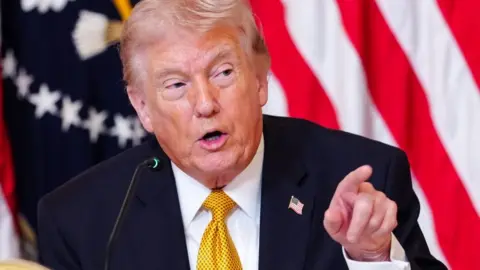
WASHINGTON: U.S. President Donald Trump has confirmed that he was secretly moved from Air Force One to another aircraft after last month’s NATO summit in Turkey because the Secret Service and U.S. military had identified a potential threat.
Trump told reporters on Tuesday that security officials wanted him to travel on a different aircraft following the summit in Ankara. He said he was not particularly concerned about the threat, noting that he receives numerous threats.
The confirmation followed a report by The Washington Post that Trump had been covertly transferred to a smaller military aircraft as part of an elaborate security operation prompted by what was described as a credible Iranian assassination threat. The Associated Press reported that it had not independently confirmed the original report.
According to the reports, the operation involved Trump leaving the airport area aboard a catering vehicle and boarding an alternate aircraft while Air Force One departed Turkey with White House officials, support personnel and members of the press traveling under the impression that the president was aboard. Trump later secretly rejoined the presidential aircraft after a stop in Britain.
Trump played down the danger involved, saying he did not ask extensively about the nature of the threat and insisting that he was not frightened. He also suggested that the aircraft he ultimately traveled on may have been at greater risk than the plane that departed Turkey as a decoy.
The unusual security operation has raised questions about presidential travel protocols and transparency. Presidential trips to conflict zones or locations facing security threats have previously involved secrecy and the use of alternate aircraft, but experts cited by AP described the decision to conceal the president’s whereabouts for an extended period as highly unusual.
The incident occurred after Trump attended the NATO summit in Ankara and traveled aboard a newly retrofitted aircraft provided by Qatar. The aircraft has attracted attention because it does not initially have all the missile-detection and countermeasure capabilities associated with traditional presidential aircraft.
The White House and security agencies have faced renewed scrutiny over the circumstances surrounding the operation, particularly regarding the potential risks to personnel and journalists who remained aboard the decoy aircraft. The episode underscores the heightened security environment surrounding the U.S. president amid escalating tensions between Washington and Tehran.