 11
11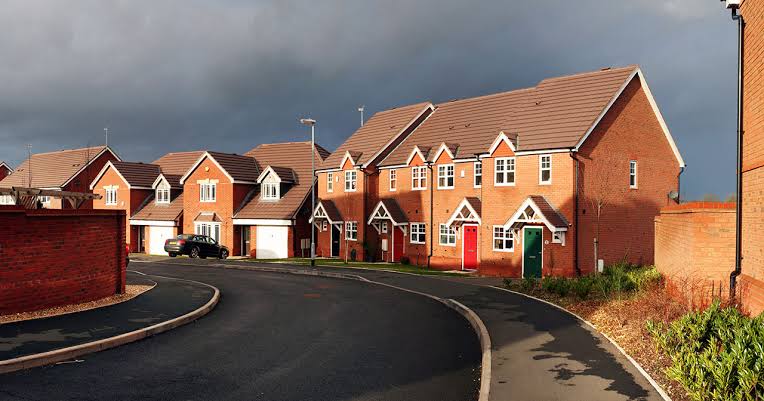
LONDON — Britain’s housing market remained largely stagnant in July, with house prices showing no monthly growth as higher borrowing costs and uncertainty surrounding the war in Iran weighed on buyer demand, mortgage lender Lloyds said on Friday.
House prices were flat in July, compared with a 0.2% increase in June and below the 0.1% rise expected by economists in a Reuters poll. On an annual basis, prices were just 0.1% higher, marking the weakest year-on-year growth since November 2023 and falling well short of the 0.7% increase recorded in June.
Lloyds said affordability remained a significant challenge for prospective buyers. Mortgage rates, which had eased earlier in the summer, have begun rising again following developments in the Middle East, adding to borrowing costs and weakening demand in the housing market.
Amanda Bryden, head of mortgages at Lloyds, said affordability continued to constrain potential buyers, while recent geopolitical developments had contributed to a renewed increase in mortgage rates.
The slowdown represents a marked change from the stronger start to 2026, as higher financing costs and economic uncertainty have increasingly affected activity in the residential property market.
Despite the weaker price performance, data previously released by the Bank of England showed that mortgage lenders approved more home loans than expected in June. However, the continued increase in borrowing costs could weigh on housing activity in the months ahead.
Financial markets are also reassessing the outlook for UK interest rates. Investors were fully pricing in a quarter-percentage-point increase in the Bank of England’s main interest rate in December, reflecting concerns that geopolitical tensions and their economic consequences could keep inflationary pressures elevated.
The latest figures suggest that Britain’s housing market is entering a more cautious phase, with affordability pressures, higher mortgage rates and geopolitical uncertainty combining to restrain both price growth and buyer demand.
Analysts will closely monitor mortgage approvals, borrowing costs and inflation developments in the coming months to assess whether the July stagnation represents a temporary slowdown or the beginning of a more prolonged period of weakness in the UK property market.