 11
11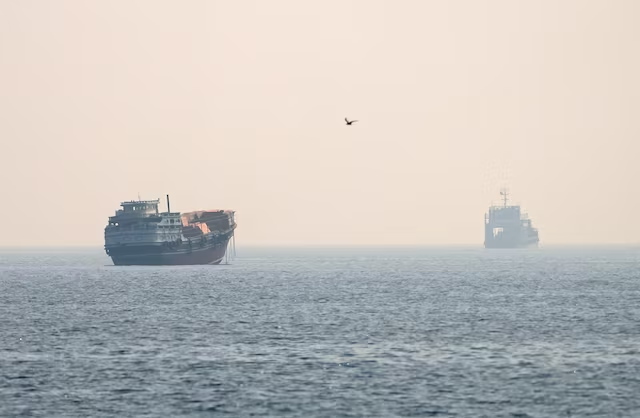
The latest confrontation between the United States and Iran presents a paradox: while military exchanges are becoming more intense, diplomatic channels remain open. Recent developments suggest that both Washington and Tehran are attempting to improve their negotiating positions through calibrated military pressure rather than seeking an all-out regional war.
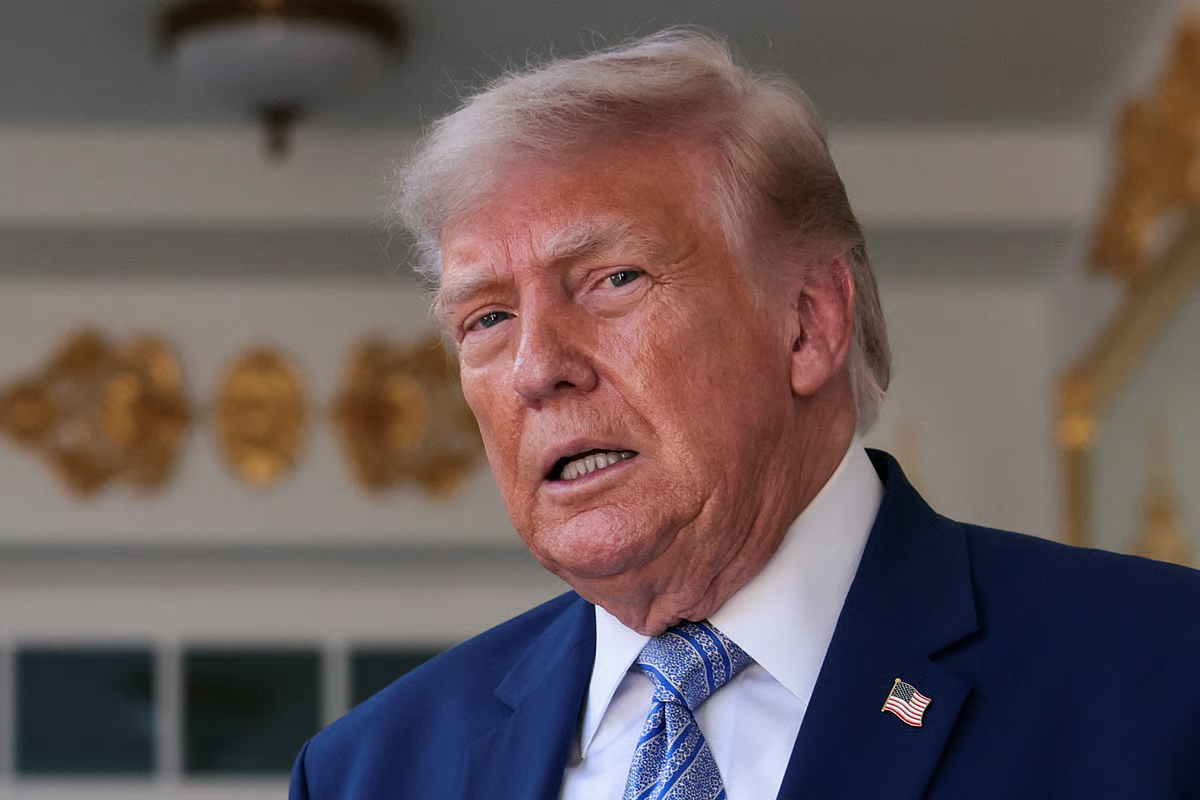
The United States has resumed strikes against Iranian military assets, citing the need to protect commercial shipping in the Strait of Hormuz after attacks on merchant vessels. President Donald Trump has declared that the interim ceasefire is effectively over, while simultaneously leaving open the possibility of renewed negotiations. This combination of coercion and diplomacy reflects a strategy designed to strengthen Washington’s bargaining position without committing to a prolonged conflict.
Iran, meanwhile, has responded with missile and drone attacks on U.S. military facilities in Bahrain and Kuwait. These retaliatory actions demonstrate Tehran’s willingness to impose costs on the United States while avoiding attacks that could trigger a full-scale invasion. Analysts argue that Iran’s leadership is also seeking to enter any future negotiations from a position of perceived strength rather than vulnerability.
The current crisis resembles previous episodes in U.S.-Iran relations in which periods of military escalation have eventually been followed by diplomatic engagement. Both governments have historically used limited military action to reinforce deterrence and influence negotiations, while avoiding steps that would make de-escalation impossible. Reuters notes that recent developments fit this recurring pattern of “escalate to negotiate.”
The strategic importance of the Strait of Hormuz remains central to the crisis. Reports of attacks on shipping and vessels altering course due to security concerns have heightened fears of disruption to one of the world’s most critical energy corridors. Even limited instability can affect oil prices, insurance costs, and global supply chains, increasing pressure on both Washington and Tehran to prevent an uncontrolled escalation.
Regional mediators—including Gulf states that maintain communication with both Washington and Tehran—continue to encourage restraint. However, each new military exchange complicates diplomatic efforts by increasing domestic political pressure on both governments to demonstrate resolve. While neither side appears eager for a prolonged war, both face political constraints that make compromise increasingly difficult.
Despite increasingly hostile rhetoric, neither government has completely closed the door to diplomacy. Analysts believe that the coming weeks could determine whether the latest escalation becomes a prelude to renewed negotiations or evolves into a broader regional conflict. The outcome will largely depend on whether both sides judge that they have gained sufficient leverage to return to the negotiating table without appearing to concede.
The United States and Iran appear to be pursuing a strategy of controlled escalation rather than unlimited confrontation. Military operations are serving not only tactical objectives but also diplomatic ones, with each side seeking stronger leverage ahead of potential talks. The principal challenge is that every exchange of fire increases the risk of miscalculation, making it progressively harder to separate coercive diplomacy from the onset of a wider regional war.