 11
11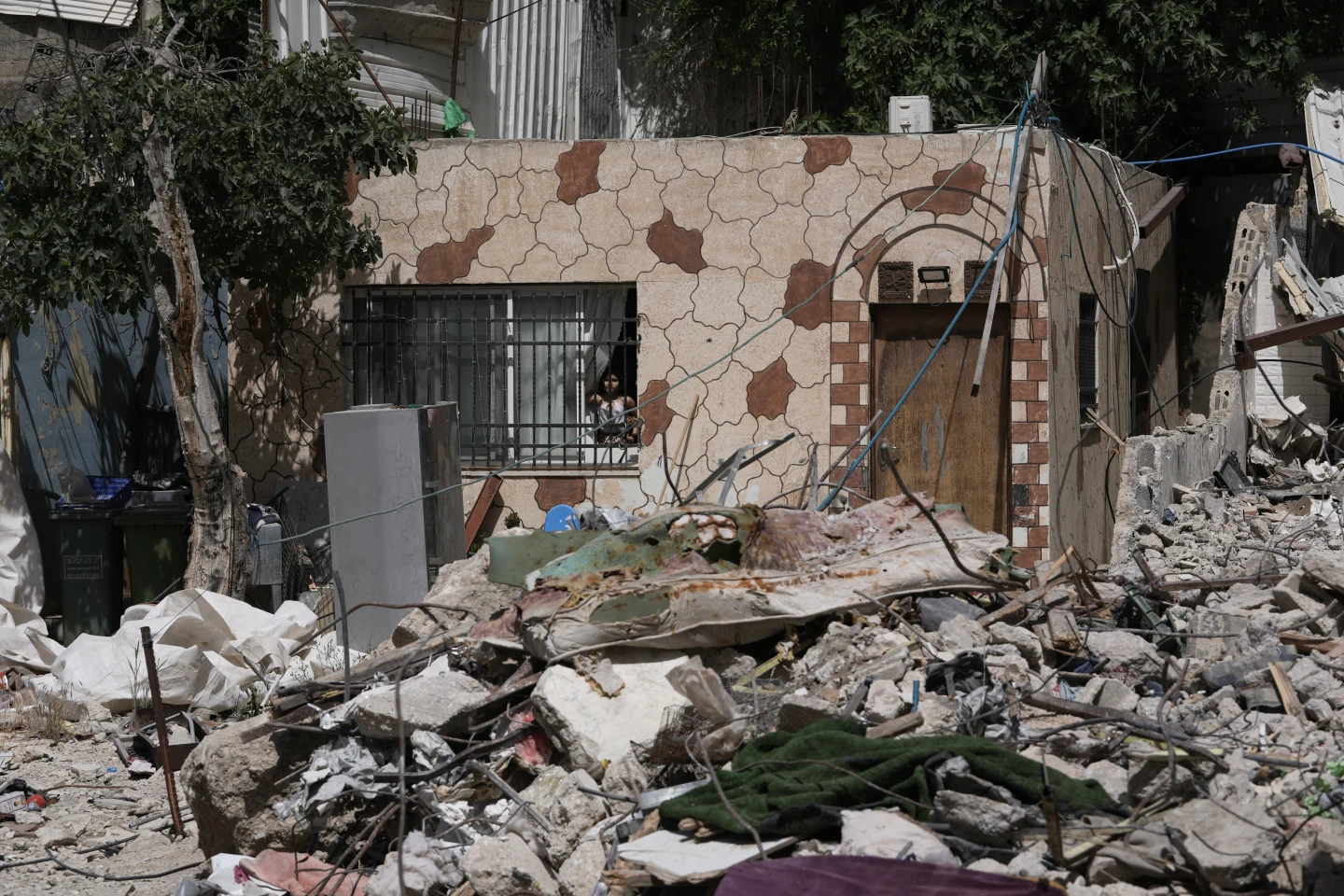
JERUSALEM: Palestinian resident Fakhri Abu Diab has spent decades trying to preserve his family home, but says he was ultimately unable to prevent Israeli authorities from demolishing it two years ago using bulldozers.
He and his wife now live amid the remnants of their former home, surrounded by personal belongings and fragments of their past, including a bicycle that once stood in his bedroom and a portrait of his late mother recreated from a lost photograph. Their temporary mobile shelter, placed among the rubble, has also been marked for removal.
“They are trying to erase my memories, my childhood, my history,” Abu Diab said, expressing grief over the loss of his home and heritage.
The case comes amid a broader pattern of demolition and displacement in annexed East Jerusalem, where Israeli authorities have long pursued policies aimed at expanding Jewish presence in the area, a focal point of the Israeli-Palestinian conflict and home to major religious sites for Muslims, Christians, and Jews.
According to the Israeli rights group Ir Amim, more than 260 homes and structures were demolished in 2025, marking a 70% increase compared to three years earlier. The organization also reported at least 116 demolitions so far this year alone.
Activists say demolition activity has intensified in recent years, with limited international pressure contributing to an escalation in settlement expansion and evictions across several East Jerusalem neighborhoods.
Researcher Aviv Tatarsky described the current situation as unprecedented, saying the scale of demolitions reflects a broader policy shift in which entire neighborhoods are increasingly vulnerable to clearance and redevelopment plans.
Officials and rights groups continue to disagree sharply over the legality and intent of such measures, while affected Palestinian families warn of deepening displacement and the erosion of longstanding community ties in the city.