 11
A playful parody casting British politics as a television game show lands a serious point: the players believe the drama, while the public has long since seen through it
Satire often tells the truth more efficiently than analysis, and a recent comic column reimagining British politics as a series of the BBC hit The Traitors is a case in point. Set aboard a steam train in Scotland, the piece casts Westminster’s leading figures as contestants in “Political Traitors”, a game in which nobody quite knows what is happening except the audience at home. Behind the jokes lies a sharp diagnosis of a political culture that has become performance first and governance second.
The budget as a staged task
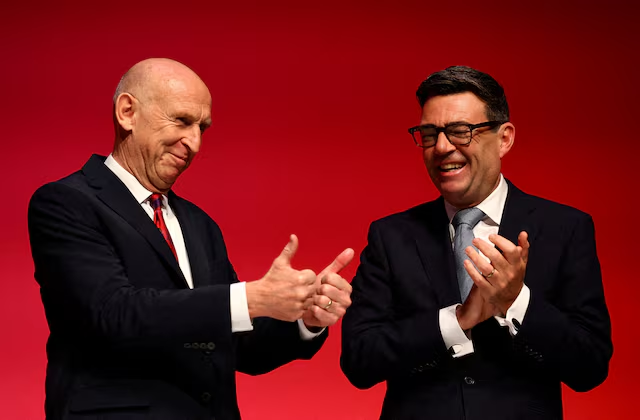
The column opens with the week’s challenge: assemble a “budget” of small, popular giveaways quietly offset by tax rises nobody is supposed to notice. The timing is pointed. Chancellor John Healey delivered his first budget on 28 October, the first under Prime Minister Andy Burnham, and the satire mocks the ritual that now surrounds every fiscal event, in which ministers loudly insist they have met their fiscal rules in the third year of the forecast period.
The joke is that viewers know this claim means very little. Fiscal rules judged on projections several years out are easily satisfied on paper and easily missed in reality, and the public has watched successive chancellors perform the same incantation. The criticism is not aimed at one government but at a system that rewards the appearance of discipline over its substance.
Psychology inside the bubble
The most perceptive part of the column concerns self-deception. Contestants on the real show report that, inside the castle, the game feels utterly real. Politicians, the piece suggests, suffer the same immersion. Liz Truss is cast as the contestant who should never have passed the safeguarding checks, her brief and chaotic 2022 appearance followed by ever more fanciful pronouncements.
Conservative leader Kemi Badenoch receives the gentlest but most revealing treatment. After Keir Starmer’s removal earlier this year, she is portrayed as convinced her own interrogations at the “roundtable” brought him down, when the other players had simply concluded he was loyal but unelectable. The column treats her confidence almost affectionately, noting that she lacks the polls and by-election results that viewers can see. The underlying point is serious: political leaders often build narratives of their own effectiveness that the evidence does not support.
Clues no one connects
The satire’s sharpest barbs are reserved for Reform UK. Nigel Farage, the column suggests, has repeatedly appeared to reveal himself as a “traitor”, while his former ally Nathan Gill was genuinely unmasked, a reference to Gill’s conviction for taking bribes to make pro-Russian statements. Yet, the piece observes, the other players never put the pieces together. This is a pointed commentary on how scandals that would once have been fatal now struggle to stick.
Liberal Democrat leader Ed Davey is cast as the contestant who flies so far under the radar that viewers forget he is playing at all, despite his much-publicised water slide stunts. Boris Johnson’s 2022 downfall becomes the episode in which almost every player walked out to force a confession, only for Nadine Dorries to remain loyal to the end.
Impersonating the dead
Perhaps the cleverest passage concerns party conference season, reimagined as a task in which contestants must imitate the cry of a departed teammate. Badenoch channels Margaret Thatcher, though the result reads as pastiche. Burnham prefers Harold Wilson and rejects any comparison to Tony Blair, yet cannot entirely shake suspicion that he is merely doing an impression of Starmer.
Here the column touches a genuine weakness in contemporary politics: the reliance on borrowed identities. Rather than articulating new programmes, leaders reach for nostalgic archetypes, hoping voters will transfer old loyalties to new faces. It is a striking observation coming so soon after Burnham’s attempts to revive Labour’s industrial and social democratic traditions.
A global franchise
The satire widens its lens to note that the format has been exported abroad. France’s version features a runoff, Israel’s is incomprehensible except that Benjamin Netanyahu keeps winning, and the American edition is louder, costlier and played by contestants who somehow miss the most obvious traitor despite endless clues. The jab at the United States is the bluntest in the piece and reflects widespread bewilderment abroad at the durability of Donald Trump’s political standing.
The only constant in the British edition is the host, Commons Speaker Sir Lindsay Hoyle, whose robes and cries of “Order! Order!” are, the column jokes, making him a national treasure.
The serious point beneath the laughter
It would be easy to dismiss the piece as light entertainment, but its value lies in the gap it identifies between what politicians perform and what the public perceives. Voters increasingly experience politics as spectacle: rapid turnover of leaders, scripted fiscal theatre, recycled slogans and scandals that never seem to matter. The players, absorbed in their own narratives, appear unaware that the audience has stopped believing them.
That gap carries real consequences. When citizens see politics as a game played by insiders for their own advantage, trust erodes and anti-establishment movements flourish, which is precisely the terrain on which figures like Farage thrive. For Burnham, who came to office promising to restore faith in government, the lesson is clear. Winning the game at the roundtable is not enough; the real test is whether the audience at home believes the show is about them at all.
As the host would put it, the time for talk is over. Whether Britain’s political class is prepared to stop performing and start governing remains the most important question of this series.