 11
11
The recent crisis in Ceuta has exposed a deeper vulnerability within Europe: the European Union can be remarkably cohesive when facing an external challenge, yet surprisingly divided when migration becomes a domestic political weapon. The events surrounding the Spanish enclave demonstrate that the continent’s migration debate is no longer simply about border management. It is increasingly about political narratives, national interests, misinformation and the future of European solidarity.
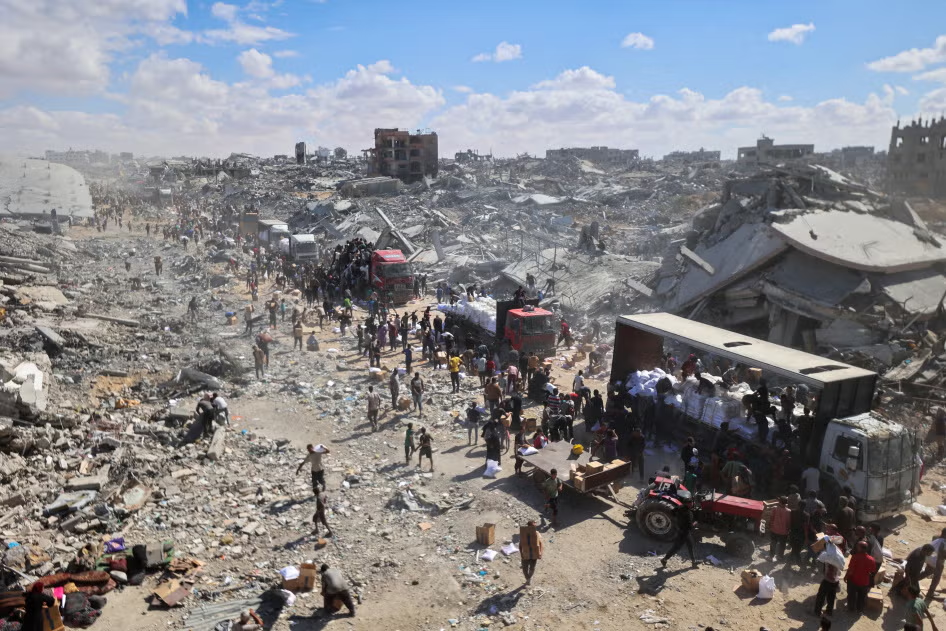
The speed with which the Ceuta episode became a wider European political confrontation is perhaps its most important feature. Images of large crowds attempting to cross the border created an impression of an uncontrolled invasion, even though the majority of those who entered subsequently returned to Morocco after realizing that reaching mainland Europe was not straightforward.
This illustrates the extraordinary influence of social media and visual politics. A complex migration event can be transformed within hours into a simplified narrative of “open borders,” governmental failure or national insecurity. Once such a narrative becomes politically established, factual clarification often struggles to catch up.
The danger for European policymakers is that migration policy can increasingly be dictated by the most emotionally powerful image rather than by long-term evidence.
One of the most striking aspects of the episode is the contrast between the EU’s response to Ceuta and its previous reactions to migration pressure from Belarus and Turkey.
When Poland and Lithuania experienced a sudden influx of migrants from Belarus in 2021, EU institutions rallied behind them and imposed sanctions on Minsk over accusations that migrants were being used as a geopolitical instrument. Similarly, the EU deployed Frontex to assist Greece during migration pressure along its border with Turkey.
In Ceuta, however, European governments rapidly turned their criticism toward another EU member — Spain.
This difference matters because it raises a fundamental question about European solidarity: does the EU have a common migration policy, or does solidarity depend on which member state is under pressure and what domestic political incentives exist in other capitals?
The crisis also cannot be understood exclusively through the European migration debate.
The Guardian analysis highlights questions surrounding Morocco’s role. More than 72,000 Moroccans, predominantly young men, reportedly attempted the crossing while Moroccan border guards apparently did little to prevent the movement. The incident also coincided with Morocco’s Throne Day and King Mohammed VI’s presence in nearby Tétouan.
That does not by itself establish that the episode was deliberately orchestrated by Rabat. But it does raise legitimate geopolitical questions.
Ceuta and Melilla remain politically sensitive territories in Morocco-Spain relations. Consequently, migration pressure can potentially become a tool of diplomatic leverage, whether intentionally or through the calculated relaxation of border controls.
This is precisely why the EU needs a coordinated external migration policy. Individual European states negotiating separately with North African partners are more vulnerable to pressure than a bloc acting collectively.
The response from European governments also demonstrates how migration has become deeply intertwined with domestic electoral competition.
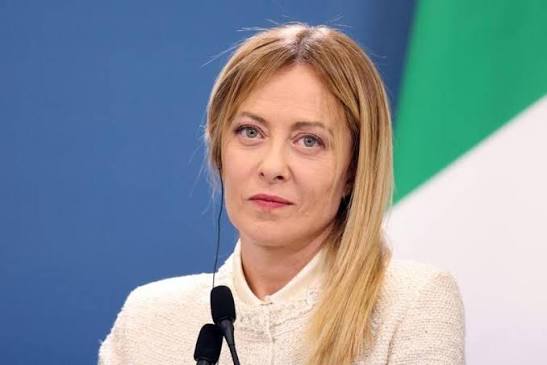
Italian Prime Minister Giorgia Meloni emerged as one of the prominent critics of Spanish Prime Minister Pedro Sánchez, while politicians from Spain and the United Kingdom travelled to Ceuta to capitalize politically on the dramatic scenes. Denmark’s centre-left Prime Minister Mette Frederiksen also joined calls for an emergency European response and suggested consideration of measures involving Spain’s participation in the Schengen system.
This is a critical development.
Migration policy traditionally requires long-term cooperation because border management, asylum, labour markets and demographic change cannot be solved through short electoral cycles. Yet politicians have powerful incentives to present migration as an immediate threat requiring immediate action.
The result is a policy contradiction: European countries collectively benefit from cooperation, but individual governments may gain politically from criticizing that cooperation.
The dispute between Italy and Spain demonstrates how quickly migration politics can spill over into Europe’s internal free-movement system.
Following the Ceuta crisis, Italy and Spain introduced reciprocal checks affecting travellers between the two countries.
Even if temporary, such measures carry symbolic importance. The Schengen system is one of the EU’s most visible achievements and is economically important because businesses, workers and tourists depend on relatively frictionless movement across internal borders.
If every migration incident produces renewed internal border controls, Europe risks creating a cycle in which external border pressures gradually weaken internal European integration.
Another lesson from Ceuta is that misinformation should no longer be treated merely as a communications problem.
The claim that “Spain is open” appears to have played a major role in motivating the mass movement. The subsequent political debate also involved disputed or misleading descriptions of Spain’s programme allowing undocumented migrants already working in the country to seek legal status. The Guardian notes that some European politicians portrayed the measure as granting Spanish or EU citizenship, whereas it involved opportunities to apply for temporary work visas.
This distinction is crucial.
When inaccurate information becomes the basis for national policy decisions, misinformation can directly affect border security, diplomatic relations and public confidence. Governments therefore need rapid, credible communication mechanisms capable of countering false claims before they become political facts.
The broader strategic implication may be the most serious.
If external actors learn that relatively small border pressures can trigger major disputes between EU governments, migration becomes a potential instrument of geopolitical influence. The Guardian analysis argues that Russia, Turkey and Morocco may all observe how quickly European governments can turn against one another when confronted with dramatic migration scenes.
This is where migration policy intersects with European security.
A resilient EU must be capable of distinguishing between genuine humanitarian emergencies, organized smuggling, spontaneous migration movements and deliberate attempts to exploit political divisions. Treating every incident exclusively as a national security crisis can unintentionally create precisely the divisions that external actors may seek to exploit.
Europe faces what political scientists describe as a collective-action problem.
All EU members have an interest in protecting external borders, maintaining Schengen’s internal freedom of movement, combating people-smuggling and creating legal migration channels. At the same time, individual governments may find short-term political advantage in taking unilateral action or adopting harder rhetoric.
The Ceuta episode demonstrates the consequences of that contradiction.
Europe cannot simultaneously demand collective management of its external borders and allow national political competition to undermine trust between member states.
The lesson from Ceuta should not simply be that Europe needs tougher borders. It is that Europe needs smarter and more coordinated border governance.
First, the EU should establish a rapid-response mechanism for major migration incidents, ensuring that member states receive verified information before national narratives harden.
Second, European institutions should strengthen cooperation with North African partners while making clear that border management cannot become a tool for political pressure.
Third, the EU should improve legal migration pathways. Europe’s ageing population and labour shortages make controlled legal migration economically necessary, while safer routes can reduce the incentives for dangerous irregular crossings.
Finally, European governments need to protect Schengen from becoming the automatic casualty of every migration dispute. Temporary controls may sometimes be necessary, but they should remain exceptional and proportionate.
The significance of Ceuta extends far beyond a single border crisis. It has exposed the fragile intersection of migration, domestic politics, misinformation and European geopolitical strategy.
The central challenge for the EU is not simply preventing people from crossing its borders. It is preventing migration incidents from becoming instruments that fracture European cooperation.
If Europe responds to every dramatic border event with accusation, unilateral action and political grandstanding, it risks weakening the very institutions designed to protect its collective interests.
Ceuta therefore offers a warning: Europe’s greatest vulnerability may not be the pressure at its external borders, but the ease with which that pressure can be converted into division inside the EU.
The strategic answer is not less European cooperation. It is more of it — particularly when political pressure makes cooperation most difficult.