 11
11
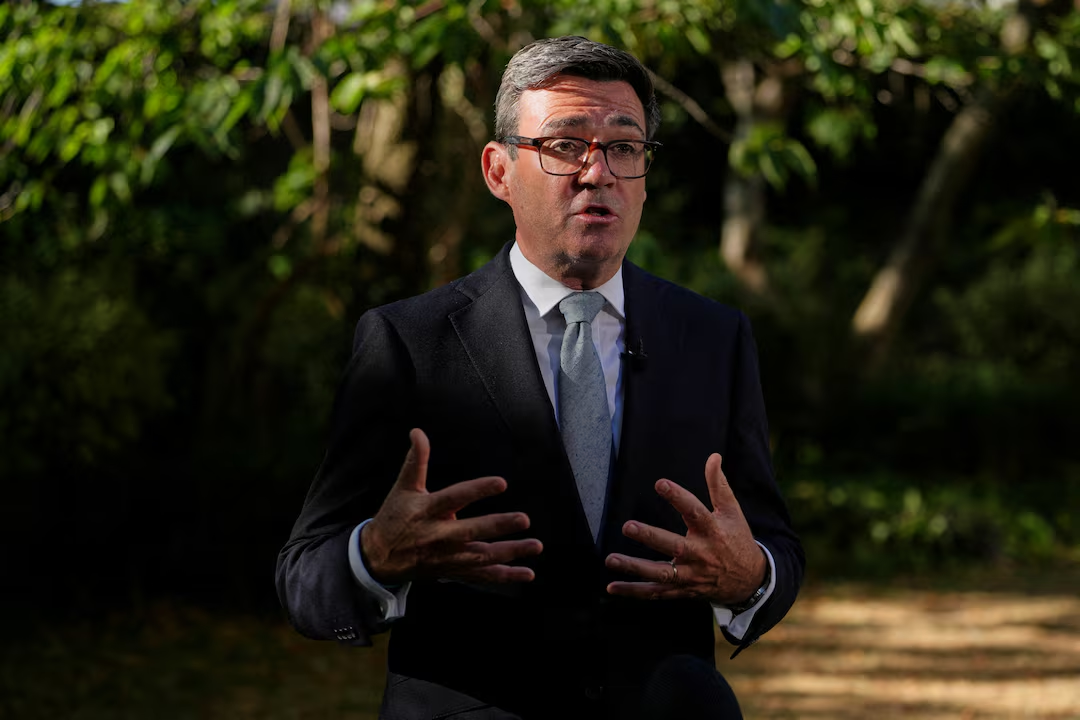
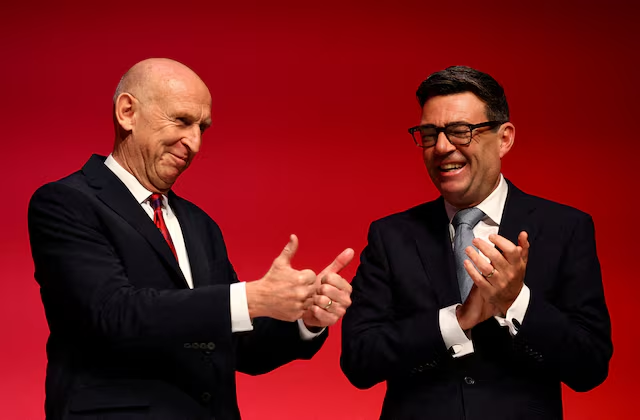
The debate over Britain’s defence spending has rapidly become one of the first and most consequential policy challenges facing incoming Prime Minister Andy Burnham. Defence Secretary Dan Jarvis has publicly urged Burnham to set out a credible pathway to meet NATO’s new target of spending 3.5% of GDP on defence by 2035, arguing that Britain’s allies require clear assurances about the country’s long-term military commitment.
Jarvis’s appeal comes at a particularly sensitive moment. Britain has already unveiled a four-year £298 billion Defence Investment Plan, including £1.5 billion in additional funding and £600 million earmarked for expanding drone capabilities and modern warfare technologies. However, nearly £25 billion a year in additional spending will ultimately be required to reach NATO’s target, leaving a significant financial challenge for Burnham’s incoming administration.
The timing is no coincidence. NATO members are under increasing pressure to strengthen military capabilities amid continued Russian aggression against Ukraine, instability in the Middle East, and growing concerns over China’s expanding military influence. With the alliance meeting in Ankara this week, Britain’s defence commitments have become an important measure of its credibility among allies.
For Burnham, however, the issue extends well beyond defence policy. He inherits an economy constrained by sluggish growth, high public debt, and limited fiscal flexibility. His government has already pledged increased investment in housing, infrastructure, regional development and public services while maintaining Labour’s fiscal discipline. Financing a substantial rise in military expenditure without undermining those domestic priorities presents an immediate political and economic dilemma.
Several financing options exist, but each carries political costs. Raising taxes could slow economic activity and provoke voter resistance. Increasing borrowing may unsettle financial markets and conflict with Labour’s commitment to fiscal responsibility. Redirecting spending from other departments risks reducing investment in transport, education, healthcare and regional regeneration—areas central to Burnham’s political agenda.
Jarvis has attempted to strengthen Burnham’s position by negotiating additional defence funding before the leadership transition. Nevertheless, much of the long-term financing remains unresolved, effectively leaving the incoming prime minister responsible for making the difficult fiscal decisions in his first budget. Critics argue that this postpones rather than resolves the underlying funding challenge.
The broader significance is that defence is becoming increasingly intertwined with economic strategy. Modern military investment is no longer limited to conventional armed forces; it encompasses cybersecurity, artificial intelligence, advanced manufacturing, drone technology and resilient industrial supply chains. If managed effectively, higher defence spending could stimulate domestic industries, create skilled jobs and strengthen Britain’s technological base. However, achieving those wider economic benefits will require careful industrial planning rather than simply expanding military budgets.
Ultimately, the debate highlights a wider strategic question facing Britain: how to balance growing international security responsibilities with pressing domestic economic demands. Burnham’s response will shape not only Britain’s standing within NATO but also public confidence in his government’s ability to reconcile national security with economic renewal. His first decisions on defence spending are therefore likely to serve as an early indicator of both his fiscal philosophy and his broader governing priorities.