 11
11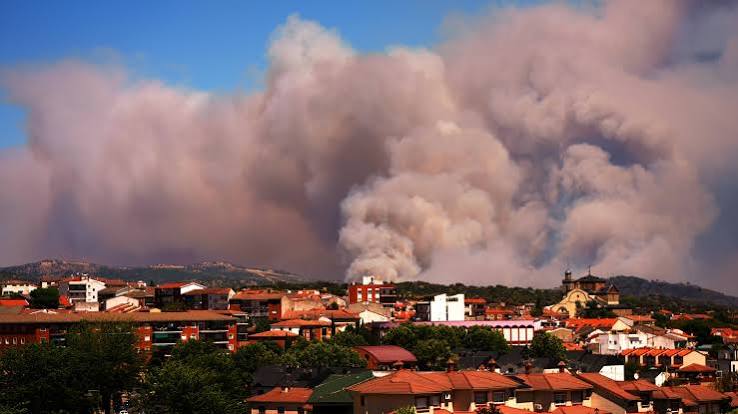
The rapidly spreading wildfires across southwestern France and central Spain are no longer isolated seasonal disasters—they are becoming a defining feature of Europe’s changing climate. The evacuation of tens of thousands of residents from areas near Bordeaux, coupled with Spain’s first-ever national wildfire emergency, illustrates how extreme weather is increasingly overwhelming traditional disaster response systems.
The crisis reflects a convergence of three powerful factors: prolonged heatwaves, persistent drought, and strong winds. Together, these conditions have transformed forests and vegetation into highly combustible fuel, allowing fires to spread with unprecedented speed. French authorities have described the battle as one of the country’s most challenging wildfire emergencies, while Spain has mobilized national resources as multiple blazes continue to threaten communities.
Beyond the immediate humanitarian impact, the economic consequences are substantial. Large-scale evacuations have disrupted transport networks, tourism, agriculture, and local businesses in regions that are vital to both countries’ economies. The deployment of military aircraft, thousands of firefighters, and emergency personnel demonstrates that wildfire management is increasingly becoming a matter of national security rather than solely environmental protection.
The fires also expose the limitations of existing preparedness strategies. While Europe has significantly improved cross-border cooperation in disaster response, the scale and frequency of these events suggest that emergency services are struggling to keep pace with rapidly changing climatic conditions. Investment in early warning systems, forest management, fire-resistant infrastructure, and climate adaptation measures will become increasingly critical as extreme weather events intensify.
Scientists have consistently warned that rising global temperatures increase the likelihood of hotter, drier conditions that prolong wildfire seasons and intensify fire behavior. Although no single wildfire can be attributed solely to climate change, the broader pattern across Europe points toward a future in which such disasters become more frequent, larger in scale, and more destructive.
The current wildfire emergency serves as a reminder that climate resilience is no longer a long-term policy objective but an immediate necessity. Governments across Europe will need to balance emergency response with long-term investments in environmental management, urban planning, and emissions reduction if they are to mitigate the growing human, economic, and ecological costs of increasingly severe wildfire seasons.