 11
11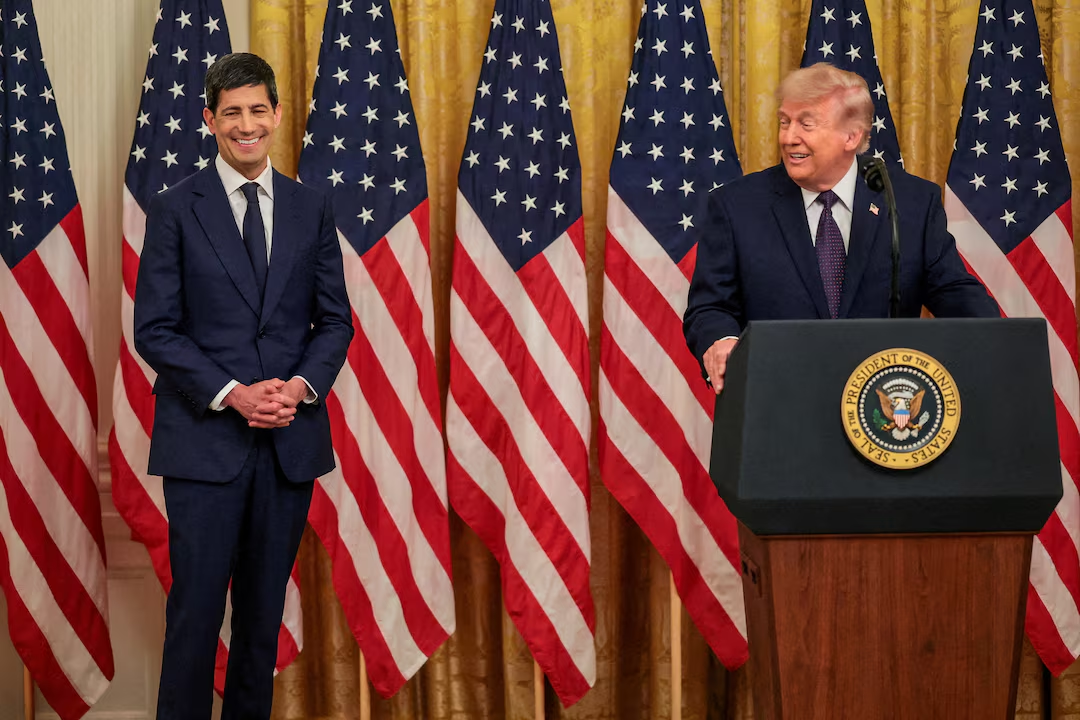
WASHINGTON: Federal Reserve Chairman Kevin Warsh is set to face two major tests in the early days of his leadership this week, with a closely watched appearance at the European Central Bank’s annual conference and an anticipated U.S. Supreme Court ruling that could shape the future independence of the Federal Reserve.
The Supreme Court is expected to rule on whether President Donald Trump had the authority to dismiss Federal Reserve Governor Lisa Cook. Lower courts have so far allowed Cook to remain on the Fed’s Board of Governors, finding that her legal challenge has merit. A ruling in Cook’s favor would reinforce legal protections for Federal Reserve officials and could strengthen the institution’s independence from political interference.
At the same time, Warsh is scheduled to participate in the European Central Bank’s annual forum in Sintra, Portugal, alongside leading global central bankers. Investors and economists will closely monitor his remarks for clues about the future direction of U.S. monetary policy and his communication strategy as Fed chairman.
Unlike his predecessors, Warsh has indicated that he intends to reduce the Federal Reserve’s reliance on forward guidance, arguing that financial markets should respond to incoming economic data rather than policymakers’ projections. His approach marks a significant departure from recent Fed practice and has generated debate over how markets will adapt to less explicit policy signaling.
Warsh assumed leadership of the central bank earlier this month and kept interest rates unchanged at his first policy meeting, while launching a broad review of the Federal Reserve’s operations and communications. Policymakers also projected that inflation—currently running above the Fed’s 2% target—may require tighter monetary policy later this year.
Financial markets are expected to closely watch both the Supreme Court’s decision and Warsh’s appearance at the ECB forum, as the twin developments could influence perceptions of the Federal Reserve’s independence and the direction of U.S. monetary policy during the new chairman’s tenure.