 11
BRIGHTON – The Green Party of England and Wales adopted a policy on Saturday to mutualise the BBC, giving licence-fee payers a direct role in running the national broadcaster. The vote came on the second day of the party’s autumn conference, a day after leader Zack Polanski told members that voting Green was the most effective way to push the Labour government to act.
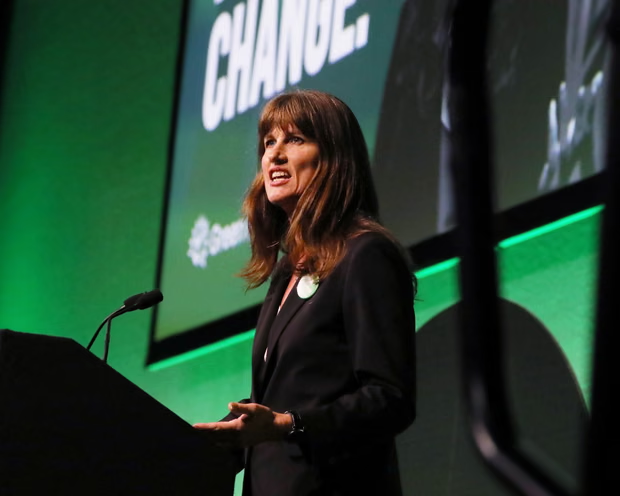
Under the motion approved on 3 October, the BBC would remain a publicly funded public service broadcaster. However, the licence fee would be replaced with direct government funding designed to protect the corporation’s independence. Citizens would gain a formal role in its governance through representative members’ forums with powers over editorial strategy and regional output. The public would also be able to direct part of the BBC’s budget towards projects of their choosing. Charter reviews would be shaped by citizens’ assemblies. Deputy Leader Rachel Millward said the reforms would keep the BBC strong and impartial, and shield it from both private interests and political pressure.
Conference also passed motions on food affordability and UK food security and set out the party’s commitments on the National Health Service. Deputy leaders Rachel Millward and Mothin Ali both addressed delegates on Saturday.
The weekend has been shaped by Polanski’s keynote speech at the Brighton Centre on Friday. He opened by celebrating what he called a remarkable year for the party, with record membership, more than a thousand councillors, a first breakthrough in the Senedd and the party’s first-ever Westminster by-election victory.
His main policy announcement was a call for a three-year emergency brake on private rents. Under the plan, increases would be capped at the lowest of inflation, wage growth or 2 percent. In the longer term, the party would introduce a national Fair Rents Guarantee. Polanski argued that billions of pounds in housing benefit currently subsidise private landlords and could instead fund council housebuilding. He also accused ministers of dismissing rent controls despite the evidence.
On climate, Polanski pointed to this summer’s wildfires in England. He urged the government to rule out new oil and gas drilling in the North Sea, including the Rosebank and Jackdaw fields. He claimed that recent delays in approving those projects reflected ministers’ fear of losing votes to the Greens. He set out plans for nationwide home insulation and a major expansion of community energy, and repeated the party’s call for a wealth tax and a windfall tax on bank profits.
The loudest response of the speech came when Polanski called for the ban on Palestine Action to be lifted and for charges against protesters to be dropped. He also argued that Green pressure had contributed to the government’s ban on trade with illegal Israeli settlements in the West Bank. Polanski did not mention a contentious motion on Zionism that is scheduled for debate on Sunday, the final day of the conference.
Summing up his approach, Polanski said that while general elections change governments, Greens can change the government’s direction between elections. He framed the party as the main progressive challenger to Labour under Prime Minister Andy Burnham. Critics, however, have questioned whether the party’s spending commitments are affordable.