 11
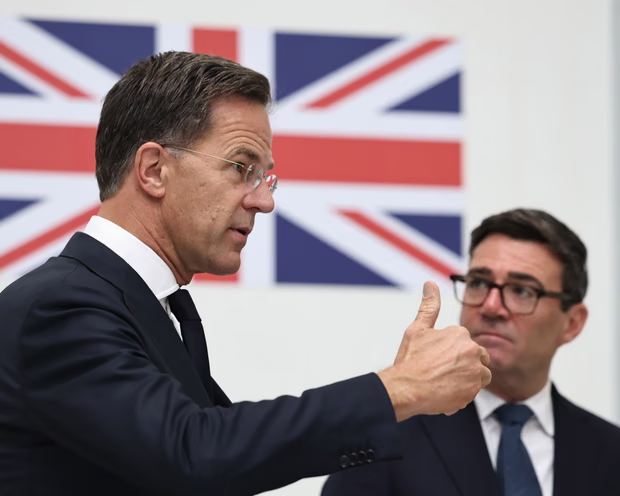
LONDON — NATO Secretary General Mark Rutte has warned that the alliance is confronting the “most dangerous and complex security environment in a generation,” citing conflicts in Europe and the Middle East, terrorism and wider geopolitical shifts.
Speaking during a visit to the United Kingdom, Rutte called for greater defence investment by European NATO members and stressed the need for the alliance to strengthen its collective capabilities in response to an increasingly challenging security environment.
Rutte said NATO needed greater European contributions while maintaining its transatlantic character. He argued that a stronger European role was necessary as the alliance adapts to changing security circumstances and as European countries assume greater responsibility for their own defence.
The NATO chief reiterated the alliance’s target of increasing defence spending, with allies committed to reaching 3.5% of gross domestic product on core defence requirements by 2035 under the agreement reached at the 2025 NATO summit. The broader spending framework also includes defence- and security-related expenditure beyond core military budgets.
Rutte said the United Kingdom remained an important contributor to NATO and praised its role in supporting the alliance and Ukraine. Britain currently plans to raise defence spending to 2.7% of GDP by the end of the next decade, below the 3.5% core-defence target.
The warning comes as NATO members face a range of security challenges. The alliance identifies Russia’s war against Ukraine as a central threat to European security, while also highlighting terrorism, cyberattacks, attacks on critical infrastructure and other hostile activities against allied countries.
Rutte also emphasized the importance of European security to the wider transatlantic relationship, arguing that a secure Europe, Atlantic region and Arctic are important not only for NATO members but also for the long-term security interests of the United States.
The NATO secretary general’s comments followed a series of recent incidents involving Russia and NATO countries, including airspace and maritime encounters in northern Europe and increased military activity connected to the war in Ukraine. NATO has been strengthening air and missile defence, surveillance and other capabilities in response to evolving threats.
Rutte’s remarks underline the alliance’s continuing effort to increase military readiness and distribute defence responsibilities more broadly among its members as NATO responds to a changing European and global security environment.