 11
Discussions of pandemic preparedness usually revolve around science: detecting pathogens early, diagnosing infections quickly, understanding how diseases behave, and developing vaccines and treatments. Each of these steps represents progress built on innovation, investment and careful planning. The World Health Organization (WHO), for instance, regularly convenes experts to identify and prioritise emerging disease threats and to gather the evidence needed to confront them. Yet recent events in Russia have exposed an uncomfortable truth: the most sophisticated scientific toolkit is of little value if governments are unwilling to share what they know.
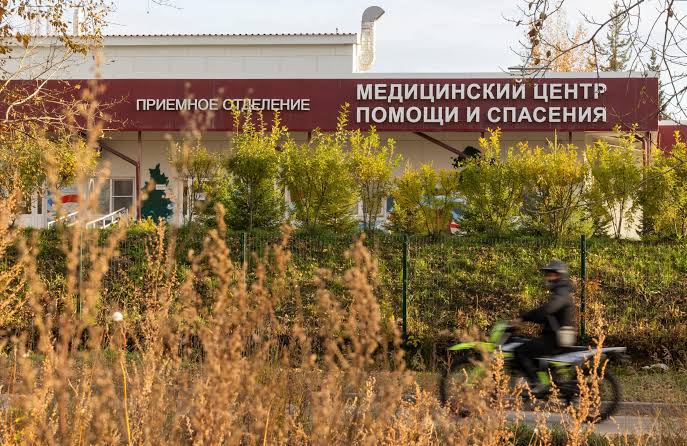
The death of a 28-year-old laboratory worker in the Siberian city of Irkutsk on 2 October has drawn international attention far beyond what a single fatality would normally attract. The WHO screens thousands of possible disease signals around the world every month, so the scale of the reaction may at first appear excessive. What sets this case apart is not the number of victims but the circumstances: an opaque response from Russian authorities, combined with long-standing suspicions about biological weapons research.
The worker died after developing severe pneumonia. She was employed at the Irkutsk Anti-Plague Research Institute, founded in 1934, which studies plague alongside other dangerous pathogens such as anthrax and cholera, and which has long been rumoured to have links to biological weapons work. Prof Ashish Jha, the former White House Covid-19 response coordinator, publicly noted that US intelligence believes Russian scientists are still developing biological weapons capabilities in secret programmes that face no outside inspection, and where insiders have little incentive to admit mistakes.
Early local media reports suggested she had died of pneumonic plague following a laboratory accident, possibly involving a broken test tube. Pneumonic plague, caused by the bacterium Yersinia pestis, spreads through respiratory contact and is invariably fatal without treatment. It is, however, largely curable if antibiotics are administered within the first 24 hours of symptoms, or even before symptoms appear following a known exposure. This raises an obvious question: if she was aware of an exposure, why was treatment not given in time? It is worth noting that pneumonic plague is distinct from the more familiar bubonic plague, which is transmitted through flea bites.
Russian health authorities have rejected the plague diagnosis, describing the illness as pneumonia of unknown origin. Yet their actions told a different story. Around 200 of the worker’s contacts were swiftly placed in quarantine, a measure difficult to reconcile with an ordinary respiratory infection. Officials later stated that no high-threat pathogens had been detected and that monitoring had concluded. The WHO subsequently referred to a possible second linked case, which Moscow denied. To date, the cause of death has not been confirmed.
The WHO has asked the Russian government for confirmation of the diagnosis, details of its investigations, an explanation for the large-scale quarantine and further information on the reported second case. None of this has yet been provided.
There is some reassurance in the timeline. Had the infection been spreading, further cases would likely have surfaced by now, and the testing and release of contacts suggests any transmission has, for the moment, been contained. Even so, with an incubation period of one to three days, continued vigilance remains essential.
If the illness was indeed pneumonic plague, three hypothetical scenarios stand out.
The first is a straightforward laboratory accident. The worker may have been exposed during her research and either failed to realise it or chose not to report it out of fear of the consequences. By the time she fell ill, the narrow window for effective treatment had closed.
The second, more troubling possibility is exposure to an antibiotic-resistant strain. While this may sound like the stuff of conspiracy theories, senior academics have raised the concern seriously, pointing to the history of the Soviet biological weapons programme and the potential for pathogens to be engineered for hostile use.
The third explanation has been put forward by Dan Singer, the former White House director for countering biological threats. He has suggested the worker may have received an outdated live-attenuated plague vaccine, available only in Russia and not approved by the WHO or most other countries. Such vaccines use a weakened form of the bacterium; they do not always confer protection and can, in some cases, cause disease themselves.
The honest conclusion is that no one outside Russia knows which, if any, of these scenarios is correct. Establishing the truth would require access to laboratory and clinical evidence, including genomic sequencing, pathogen identification and details of the worker’s research. Without that, the world is left with speculation in a situation that demands scientific certainty.
As a WHO member state, Russia is bound by the International Health Regulations, which require countries to report events that are unusual or unexpected, that carry serious public health consequences, that pose a significant risk of international spread, or that could affect trade and travel. The Irkutsk case arguably meets several of these criteria.
The weakness, as with much of international law, lies in enforcement. There is no mechanism to compel compliance. The system rests instead on a shared understanding that openness about disease outbreaks serves the interests of every nation, and on the willingness of governments to act accordingly.
Washington has also pressed Moscow for answers. President Donald Trump said he would raise the matter with President Vladimir Putin, and the US State Department formally requested information under the International Health Regulations. The irony is striking: the United States withdrew from the WHO in January 2026, yet now finds itself invoking the very framework it chose to abandon. The episode underlines how indispensable multilateral health institutions remain, even for those who walk away from them.
The Irkutsk case offers a clear lesson. Investment in better diagnostics, faster genomic sequencing, more effective vaccines and accessible treatments is necessary, but none of it can make up for a failure to share the basic information needed to identify a pathogen in the first place. Scientific capacity is only as useful as the political will to deploy it openly.
Pandemic preparedness, therefore, is as much a test of governance and trust as it is of laboratory science. Until states treat transparency as a non-negotiable obligation rather than a matter of discretion, global health security will continue to move one step forward and two steps back.