 11
11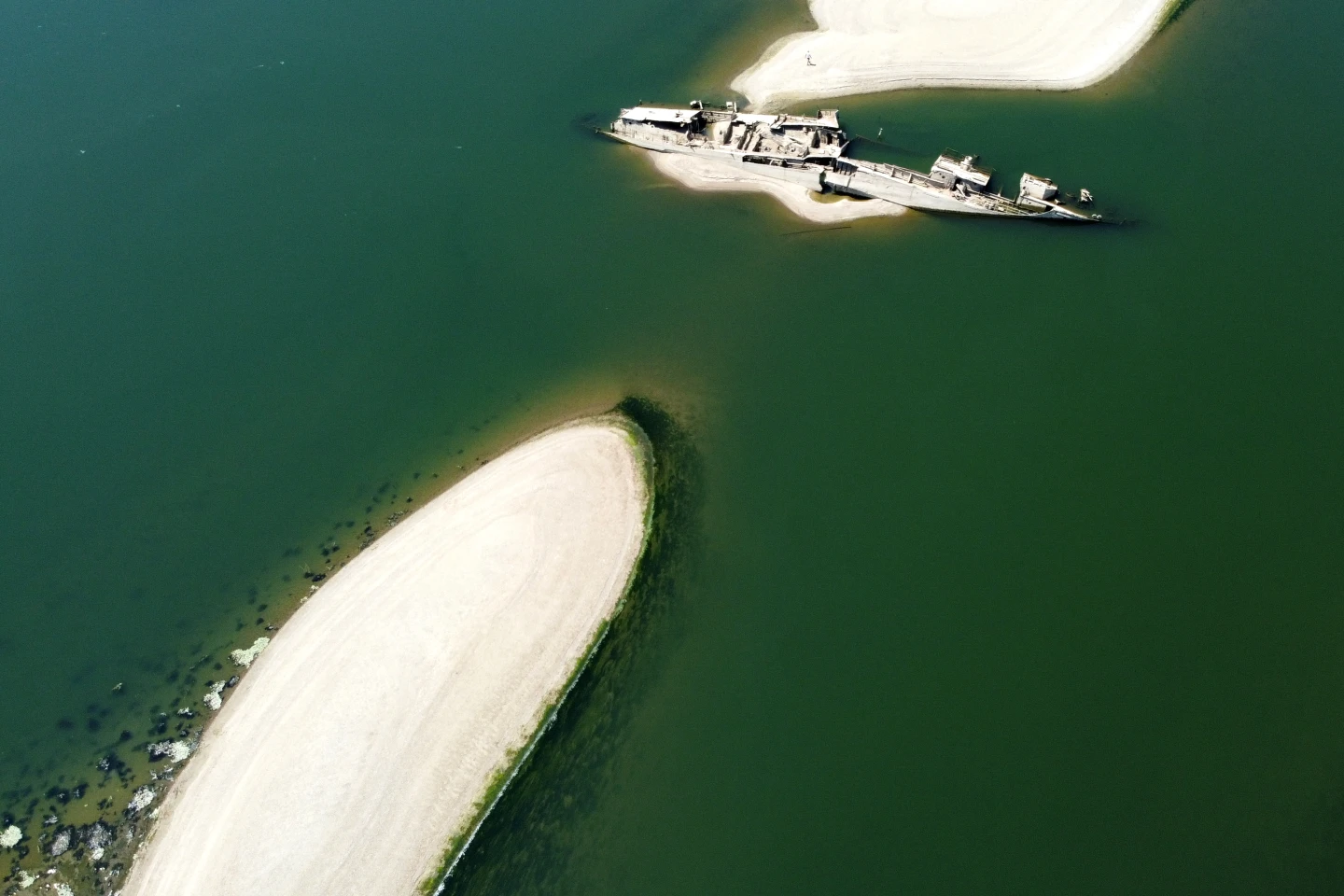
BELGRADE: Record-low water levels on the Danube River have exposed dozens of sunken World War II German warships in eastern Serbia, underscoring the severe impact of an ongoing drought that is disrupting river transport, threatening energy supplies and revealing long-submerged relics of Europe’s wartime past.
The vessels, located near the Serbian town of Prahovo, were deliberately scuttled in 1944 by retreating Nazi German forces to obstruct the advancing Soviet Army. Many of the wrecks remain partially submerged and still contain unexploded ammunition, posing significant hazards to navigation and complicating salvage operations.
Authorities have been working for years, with financial support from the European Union, to remove or secure some of the wrecks. However, the presence of live ordnance and the technical complexity of the operation have slowed progress, leaving many ships on the riverbed. The exceptionally low water levels have now exposed more of the vessels than usual.
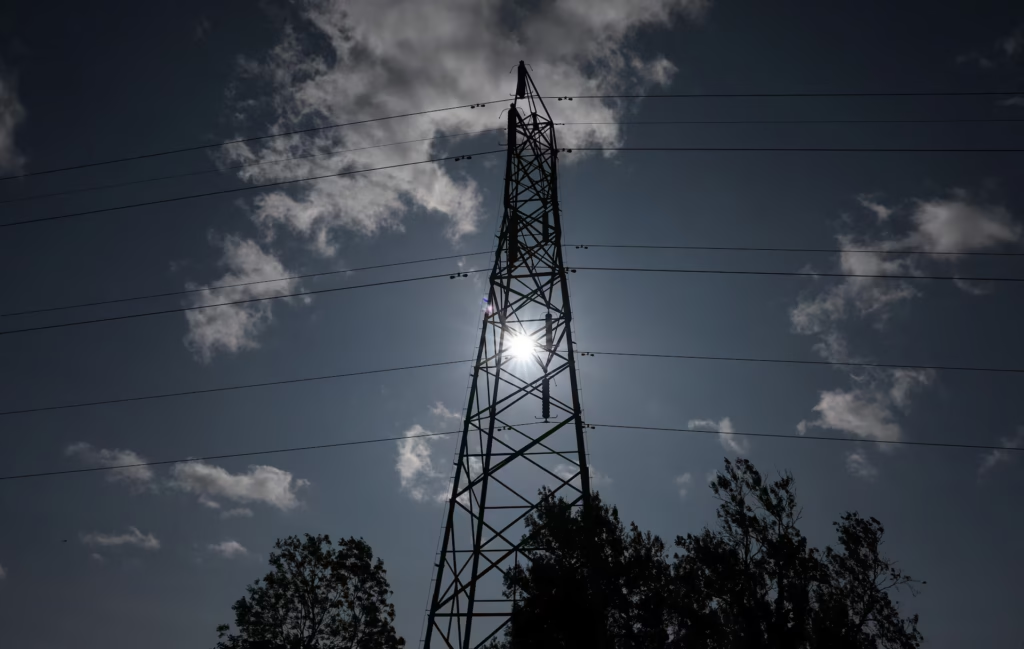
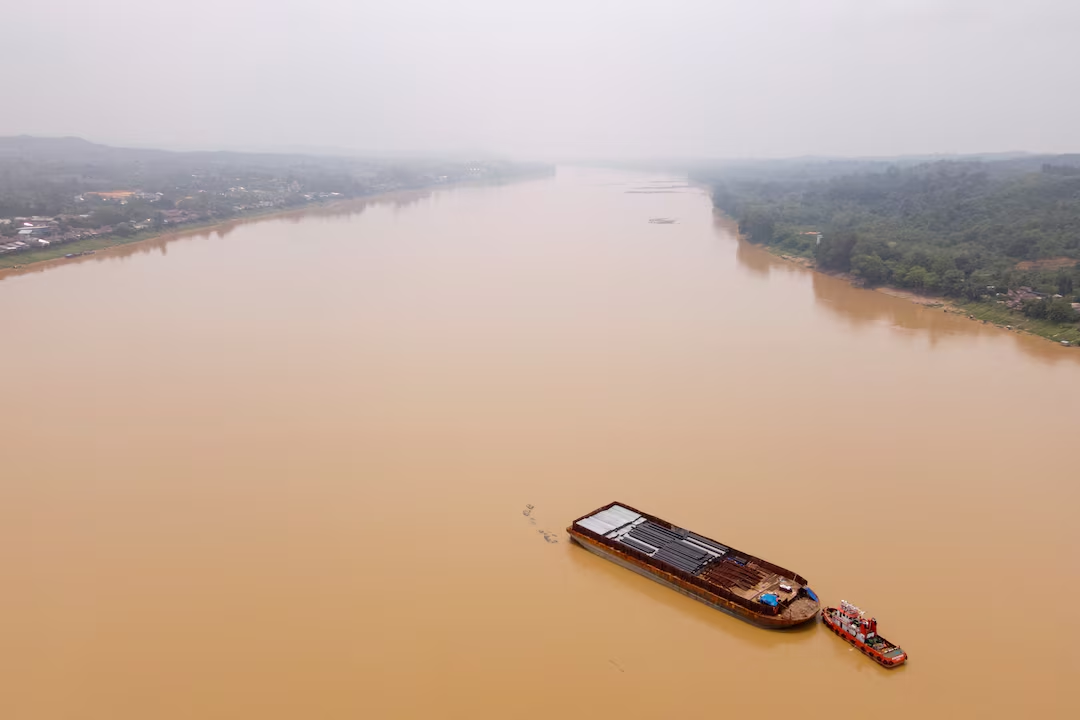
The drought has also severely disrupted commercial navigation along the Danube, one of Europe’s busiest inland waterways. Shallow waters have restricted cargo traffic, stranded vessels and reduced the movement of goods across several countries. In Serbia, the falling river level has further strained hydroelectric power generation, while neighbouring Hungary and Romania are also grappling with energy challenges linked to the shrinking Danube.
Scientists attribute the prolonged low water levels to extreme heat and persistent drought affecting much of Central and Eastern Europe, conditions that have become more frequent and severe due to climate change. The environmental crisis has affected agriculture, transport and electricity production, while also bringing hidden wartime remnants back into view after more than eight decades beneath the river’s surface.