 11
11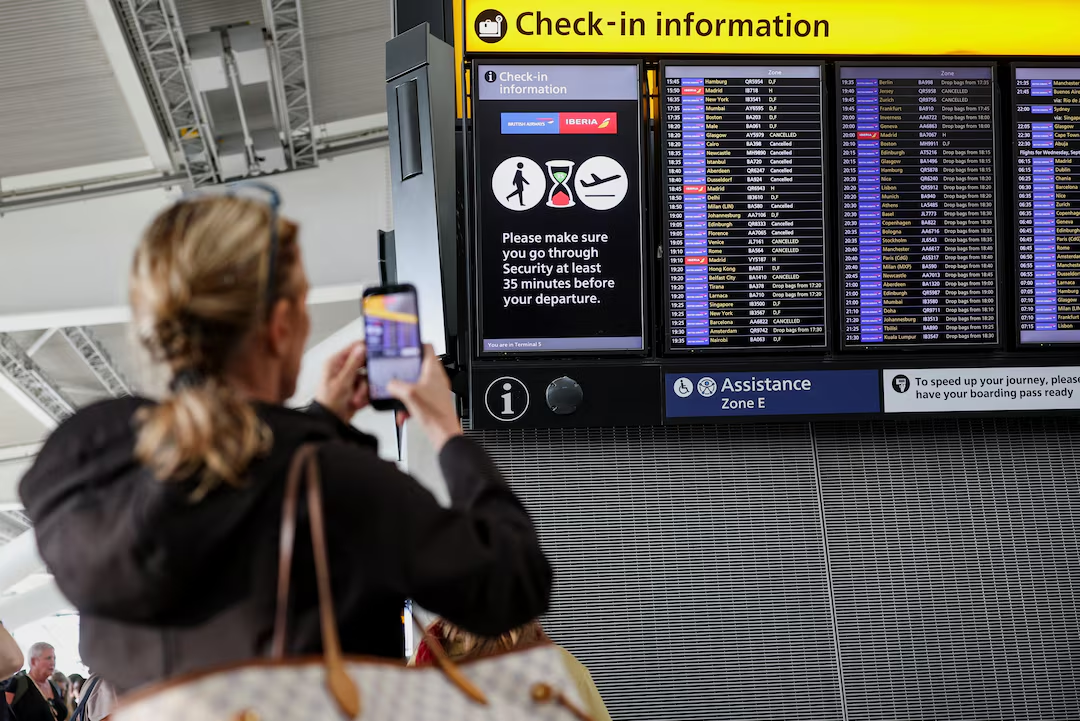
LONDON — A technical failure at Britain’s air traffic control provider NATS caused widespread disruption at major UK airports on Tuesday, with more than 1,000 flights cancelled and hundreds more delayed, prompting renewed concerns over the resilience of the country’s aviation infrastructure.
NATS said the fault affected its flight data processing system and was resolved later in the day. The organisation said safety had not been compromised, but warned that clearing the resulting backlog would take time because of the complexity of the recovery process.
Heathrow, Gatwick, Manchester and Stansted were among the airports affected. Heathrow later suspended arrivals for the remainder of Tuesday, while departures resumed but continued to face disruption.
According to Flightradar24 data cited by Reuters, around 1,300 flights to and from UK airports were cancelled on Tuesday, while a further 177 flights had been cancelled for Wednesday, most of them at Heathrow.
The disruption prompted strong criticism from airlines. Ryanair said around 150,000 of its passengers had been affected by delays of up to eight hours and called for NATS Chief Executive Martin Rolfe to resign. Wizz Air also called for urgent reforms, arguing that repeated technical failures should not be allowed to bring the aviation system to a standstill.
NATS Chief Executive Martin Rolfe said the organisation had not yet completed its investigation into the cause of the failure and that it did not yet know exactly what had gone wrong.
The UK Civil Aviation Authority said it had contacted NATS and expected the organisation to provide a full report on the incident. The regulator will then consider whether further measures are required to ensure the reliability of the country’s air traffic control system.
The latest disruption has renewed scrutiny of NATS following previous technical problems, including a major flight-plan processing failure in 2023 that caused widespread disruption across British airports. The incident highlights the vulnerability of highly interconnected aviation networks, where even a relatively short technical outage can trigger extensive delays and cancellations.